The Fascinating Blue Tourmaline Indigolite
What is blue tourmaline indigolite?
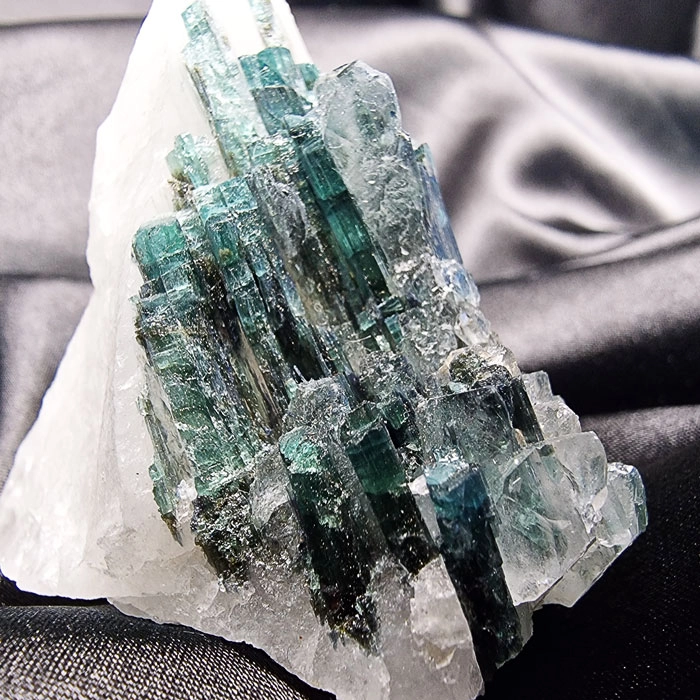
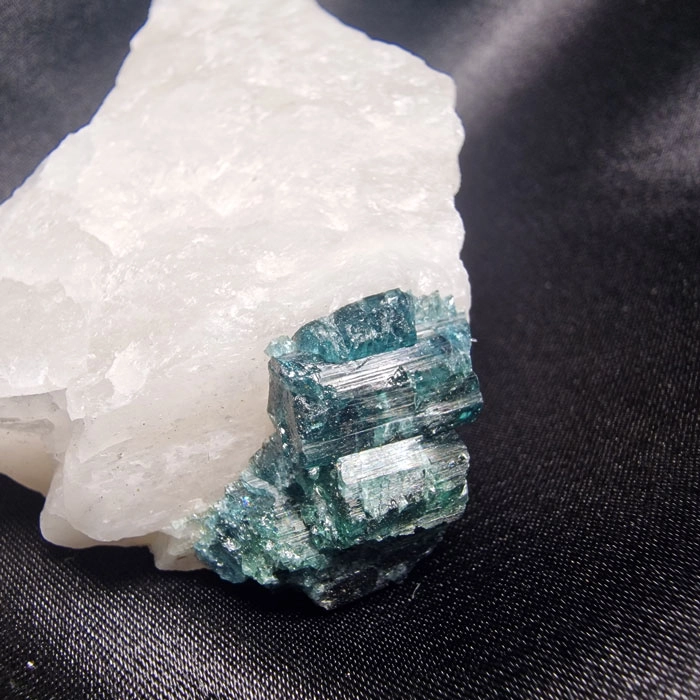
Blue tourmaline indigolite is one of the most prized varieties of the tourmaline mineral group. Its deep blue color, often with greenish hues or even dark blue bordering on black, is due to the presence of iron in its chemical composition. This stone belongs to the elbaite series within the tourmaline group, sharing characteristics with other varieties such as rubellite (pink or red) and verdelite (green).
The name "indigolite" comes from the term "indigo," referring to its characteristic dark blue tone. It is considered a rare stone, as the combination of the necessary chemical elements for its formation is uncommon in nature. Depending on the amount of iron present in its structure, its color can range from sky blue to an intense blue with dark flashes.
Where is blue tourmaline indigolite found?
The most important deposits of indigolite are found in various locations around the world, with the most notable being:
- Brazil: Especially in Minas Gerais, one of the world's richest regions for tourmaline deposits. High-quality indigolites are extracted here, some with exceptional transparency.
- Madagascar: Known for producing tourmalines with deep blue tones and excellent color saturation.
- Afghanistan: In the Nuristan region, vibrant blue indigolite specimens have been found, although not in large quantities.
- Nigeria and Mozambique: African countries that have emerged as important sources of high-quality tourmalines.
Occasionally, specimens have been found in other countries such as the United States and Russia, but their availability is very limited.
Discovery and recognition of indigolite
Tourmalines have been used since ancient times, although their identification as an independent mineral group occurred in the 18th century. It was during this period that they began to be classified according to their colors and physical properties. Indigolite, having a color that could be mistaken for sapphire or blue spinel, was not recognized as a distinct tourmaline until mineralogical studies advanced.
In the 19th century, geologists began documenting its structural and chemical differences, determining that blue tourmaline was not a variety of sapphire but a unique mineral with its own composition. Its hardness on the Mohs scale ranges between 7 and 7.5, making it durable and suitable for jewelry use.
Blue tourmaline indigolite in jewelry
Indigolite is one of the most valued tourmalines in the jewelry world. Its deep blue color makes it an ideal stone for rings, pendants, bracelets, and earrings. It is often cut in oval or emerald shapes to enhance its color and clarity. The highest-quality gems typically exhibit great transparency and a uniform blue tone without greenish hues.
Due to its rarity, gemstone-quality blue tourmalines can reach high prices in the market. The most sought-after ones are those with a pure blue color, without evident secondary tones and with high transparency.
Some high-end jewelry pieces have incorporated this stone into exclusive designs. Its beauty and depth of color have led to its use in collections by prestigious jewelry houses, often combined with diamonds and precious metals such as white gold and platinum.

 670-61-16-63 cmd@cristalljoia.com In the heart of Barcelona and online