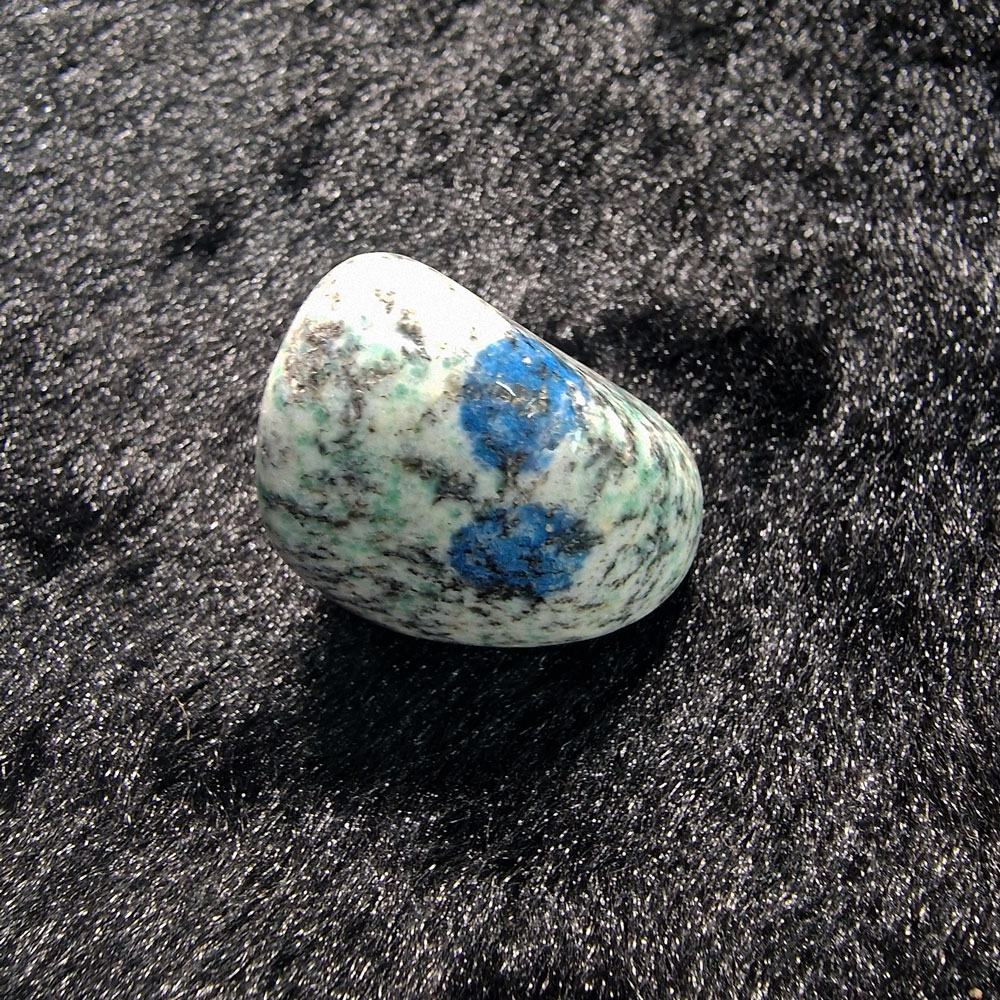
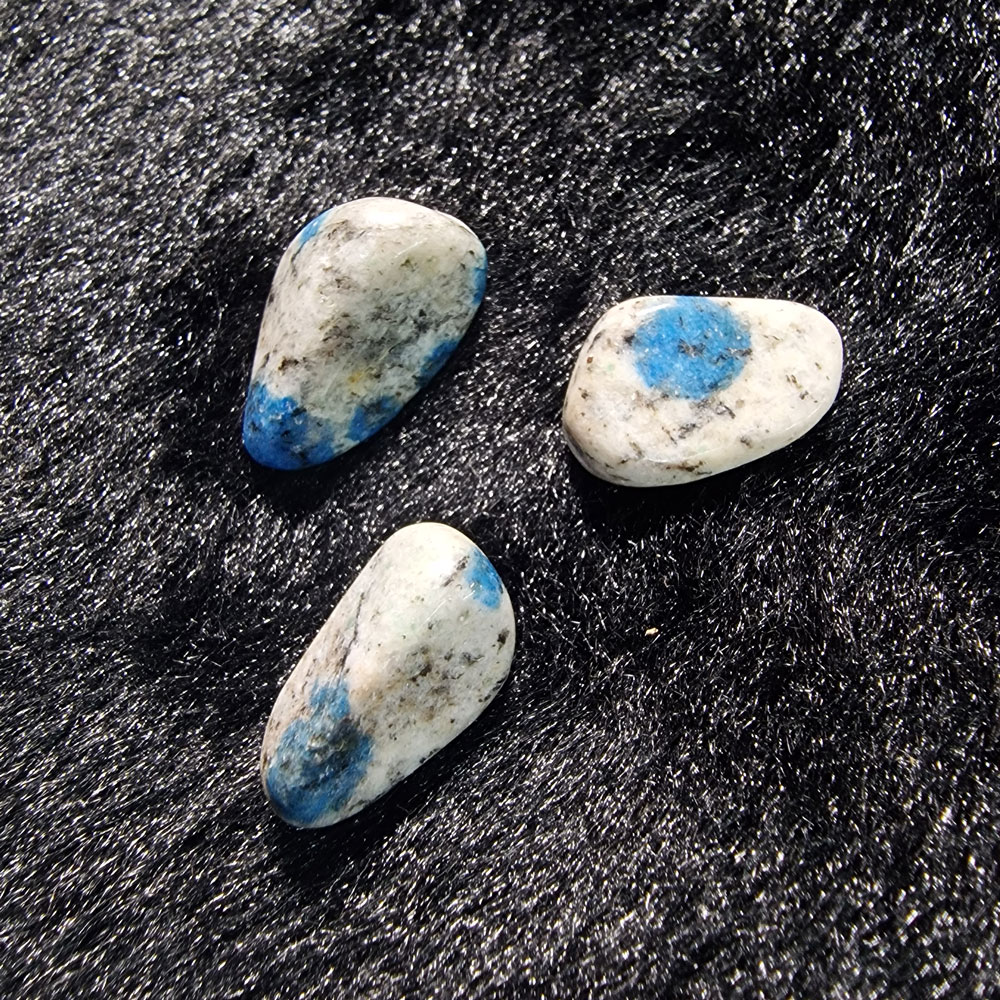
The K2 stone, also popularly known as "grazurite", is one of the most fascinating minerals discovered in recent decades. This gem has captured the imagination of collectors, jewelers, and mineral enthusiasts alike due to its impressive appearance and enigmatic geological origin.
Origin and Discovery
The K2 stone is found in the Karakoram region, one of the most remote and difficult-to-access areas in Pakistan, near K2, the second-highest mountain in the world. This extreme location not only adds an aura of mystery to the stone but also limits its availability, making it a relatively rare gem in the global market. Its discovery was a notable event in the world of mineralogy, as nothing similar had been found in that region before.
Composition and Unique Characteristics
What makes the K2 stone so special is its composition. Essentially, it is a white or light gray granite speckled with intense blue azurite spots. This combination of minerals is extremely rare. Granite, an igneous rock composed primarily of quartz, feldspar, and mica, is quite common in the Earth's crust. However, the presence of azurite, a copper mineral that typically forms in hydrothermal alteration zones within sedimentary rocks, is what truly distinguishes the K2 stone.
The azurite in the K2 stone appears as rounded shapes or scattered spots on the granite background. This color contrast creates a striking visual effect, with the deep blue azurite standing out impressively against the light granite. Additionally, it is interesting to note that azurite is a much softer mineral than granite, making the combination of the two in a single stone geologically unusual.
Challenges in Handling
Working with the K2 stone presents unique challenges due to the disparity in the hardness of its components. While granite is a hard and durable rock, azurite is much more delicate. This means that artisans and jewelers must be extremely careful when cutting, polishing, and shaping the stone to avoid fragmenting the azurite spots or causing them to lose their vibrant color. This challenge makes jewelry and objects carved from K2 stone true works of art that require a high degree of skill and precision.
Applications in Jewelry and Art
Despite its recent entry into the market, the K2 stone has quickly gained popularity in high-end jewelry and among mineral collectors. Jewelry made with K2 is especially valued for its uniqueness and beauty. Rings, pendants, and earrings made from K2 stone are not only striking but also tell a story of origin from one of the most unexplored regions of the planet.
In addition to its use in jewelry, the K2 stone has also been used in sculptures and decorative objects. Its distinctive appearance makes it a popular choice for display pieces in mineral collections and natural history museums.
Common Confusions
Due to its unique appearance, the K2 stone is often mistaken for other minerals, especially those with similar blue tones, such as sodalite or lapis lazuli. However, closer inspection reveals the differences: sodalite and lapis lazuli tend to have a more uniform blue color and lack the characteristic granite background of the K2 stone. The uniqueness of K2 lies in its combination of a light granite with scattered azurite spots, something not found in any other stone.

 670-61-16-63 cmd@cristalljoia.com In the heart of Barcelona and online