Moldavite: the only green gem born from an impact

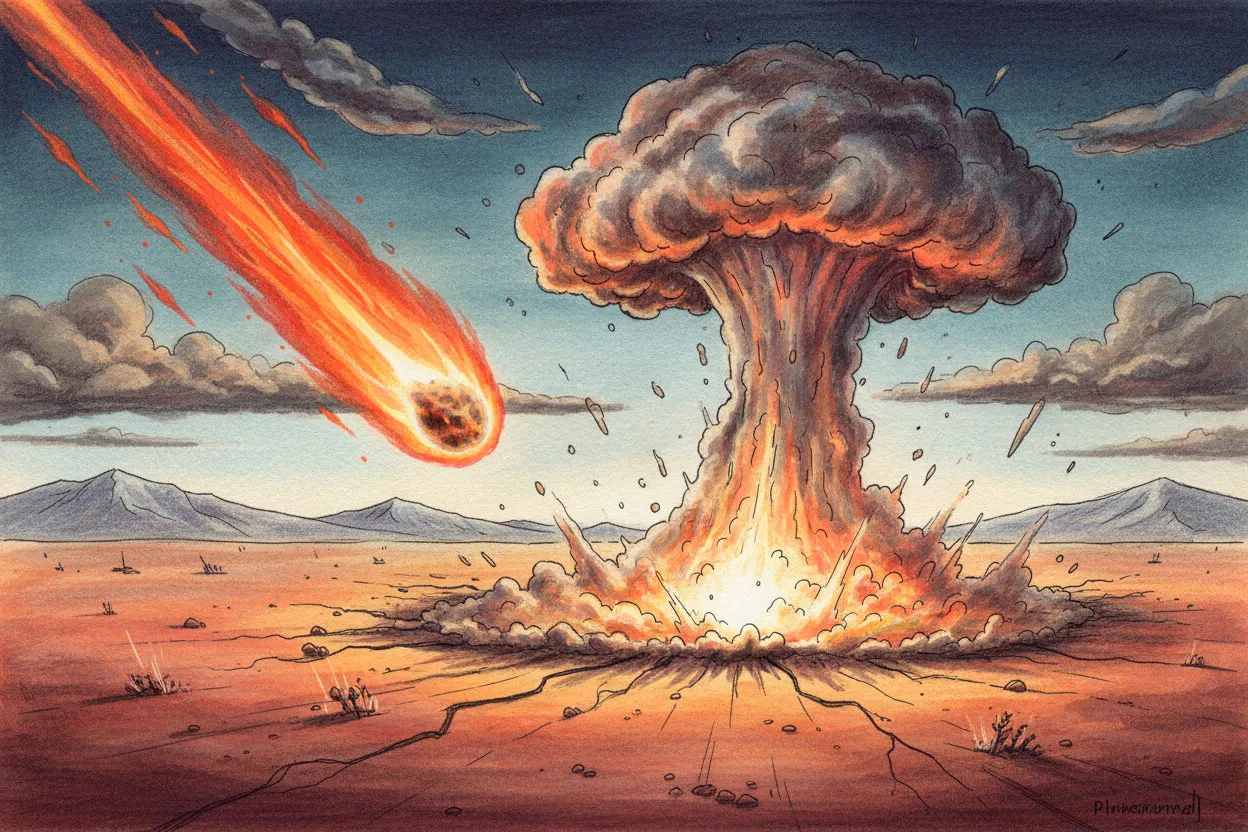
Few pieces tell a story as extraordinary as moldavite. Its intense bottle green, its transparency and its etched surface make it one of the most sought-after gems in the world. But the truly fascinating part is not its appearance, but its origin: it was born from an extraterrestrial impact that melted the Earth and hurled its matter into the air millions of years ago.

In one sentence: moldavite is terrestrial matter transformed by a cosmic collision. Neither an ordinary mineral nor a meteorite: something in between and utterly unique.

What exactly is moldavite?

Moldavite is a tektite: a type of natural glass formed from terrestrial rocks that melted under the extreme heat of a meteorite impact and then cooled very rapidly. It is composed mainly of silica (silicon dioxide), with varying proportions of aluminium and other elements that give it its green hue.

Unlike minerals, which have an ordered crystalline structure, moldavite is amorphous: its atoms were "frozen" in disorder as it cooled so quickly, just as happens with glass. That is why, in the strict mineralogical sense, it is not a mineral, but a glass of natural origin.

The tektite group. Moldavite is not alone: it belongs to a family of impact glasses spread across different areas of the planet. However, it is the only one with a translucent green tone prized in jewellery. Other tektites tend to be opaque and brown or black in colour.

The origin: an impact that crossed two countries

Approximately 15 million years ago, a large meteorite struck what is now Nördlingen, in Bavaria (Germany), forming an enormous crater known as the Ries crater. The energy released was colossal: it instantly melted the surface rocks and projected drops of molten material tens of kilometres away.

Those drops of liquid glass travelled through the air and cooled in mid-flight, taking on twisted shapes and etched surfaces. They fell mainly in the region of Bohemia, in the present-day Czech Republic. In other words: the impact occurred in Germany, but most moldavites are found in Czech territory.

Geological curiosity: the Ries crater is so singular that it once served as a training ground for astronaut training, because its geology resembles the lunar surface.

moldavita

The origin: an impact that crossed two countries

Approximately 15 million years ago, a large meteorite struck what is now Nördlingen, in Bavaria (Germany), forming an enormous crater known as the Ries crater. The energy released was colossal: it instantly melted the surface rocks and projected drops of molten material tens of kilometres away.

Those drops of liquid glass travelled through the air and cooled in mid-flight, taking on twisted shapes and etched surfaces. They fell mainly in the region of Bohemia, in the present-day Czech Republic. In other words: the impact occurred in Germany, but most moldavites are found in Czech territory.

Geological curiosity: the Ries crater is so singular that it once served as a training ground for astronaut training, because its geology resembles the lunar surface.

Why is it called "moldavite"?

The name can be misleading, but it has nothing to do with the country Moldova. It comes from the Moldau riverVltava in Czech—, which runs through the region of Bohemia where most of the pieces are found. Thus, the gem took the name of the river that flows through its land of origin.

The first documented scientific description of moldavite dates back to the late 18th century, when this curious green glass, which did not fit any known mineral, began to be studied.

A glass with an unmistakable surface

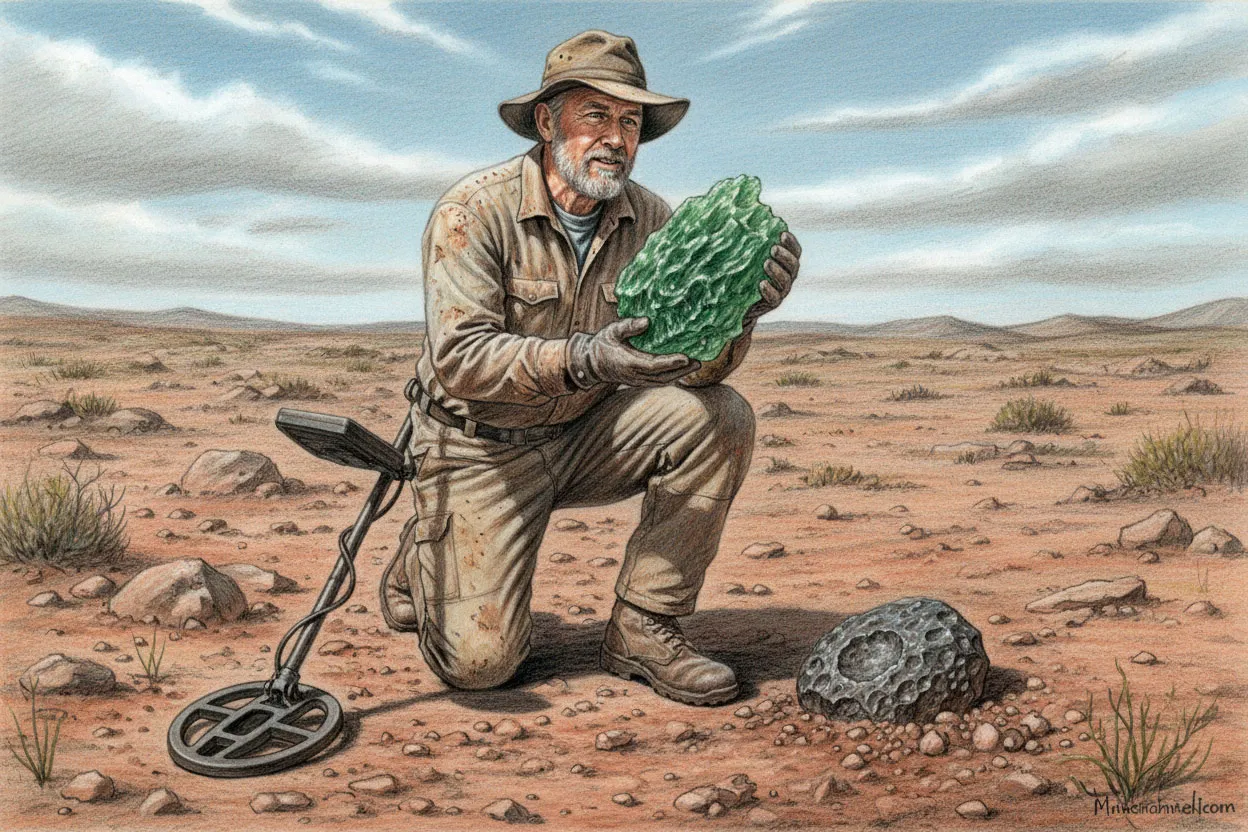
One of moldavite's most striking features is its etched texture. Its surface shows natural grooves, dimples and folds, the result of the molten rock's flight and cooling. These marks mean that no two pieces are identical: each moldavite is literally unrepeatable.

  • Colour: from olive green to bottle green, translucent to the light.
  • Appearance: glassy, with a characteristic sheen and a rough surface.
  • Formation: impact glass (tektite), not a mineral crystal.
  • Age: around 15 million years.

A growing rarity. Coming from very specific and limited deposits in Bohemia, moldavite is increasingly scarce. It is a finite material: no new moldavite is forming; all that exists fell in that single event.

moldavita

Moldavite in history and culture

Fascination with this green glass is not recent. Worked pieces of moldavite have been found in Palaeolithic sites, indicating that the prehistoric peoples of Central Europe already collected and valued it, probably for its unusual colour and its sheen.

Over the centuries, its rarity and its "fallen from the sky" origin surrounded it with a special aura in Central European folklore. In modern times, it also became popular as a collector's stone and as a jewellery gem, valued precisely for the extraordinary nature of its story.

Did you know…? One of the most famous moldavites is associated with the jewellery offered by European royalty, which helped spread its fame as an exclusive gem beyond Bohemia.

Frequently asked questions about moldavite

Is moldavite a meteorite?

Not exactly. It is terrestrial matter transformed by a meteorite impact: the meteorite melted the surface rocks, and those rocks, once molten, gave rise to moldavite. That is why it is said to have been born from a meteorite, but is not one.

Is moldavite a mineral?

In the strict sense, no. It is a natural glass (a tektite) of amorphous structure, without the ordered crystalline lattice that defines minerals. It shares this feature with obsidian, although its origin is different.

Where does moldavite come from?

Almost all of it comes from the region of Bohemia, in the Czech Republic, although the impact that created it occurred in Nördlingen (Germany), hundreds of kilometres away.

Why is it so highly valued?

For the combination of its rarity, its unique origin linked to a cosmic impact and its characteristic translucent green colour. Moreover, it is a finite resource: no more moldavite is forming.

How old is moldavite?

It formed around 15 million years ago, at the moment of the impact that created the Ries crater. All the moldavite that exists comes from that single event: no new moldavite is forming.

Why is moldavite green?

Its green tone comes from the composition of the rocks that melted during the impact, rich in silica and with small amounts of iron and other elements. That "cocktail", melted and cooled rapidly, resulted in the characteristic translucent bottle green.

Why is its surface rough and dimpled?

Because the molten rock travelled through the air and cooled in mid-flight. That process left natural grooves, folds and dimples on the surface. It is one of moldavite's hallmarks and means that each piece is different.

What is the difference between moldavite and obsidian?

Both are natural glasses, but of different origin: obsidian forms when volcanic lava cools very quickly, whereas moldavite is born from the impact of a meteorite. Obsidian is usually dark; moldavite, green and translucent.

Was moldavite known in antiquity?

Yes. Worked pieces of moldavite have been found in Palaeolithic sites, indicating that the prehistoric peoples of Central Europe already collected and appreciated it, probably for its unusual colour and its sheen.

Why is it called "moldavite" if it does not come from Moldova?

The name comes from the Moldau river (Vltava in Czech), which runs through the region of Bohemia where most of the pieces are found. It has no connection with the country Moldova.

Looking for a specific mineral?

At our physical store in the centre of Barcelona we have many more options than what you see online.

If you can't find what you're looking for online, message me on WhatsApp at +34 670 61 16 63.

I'm Jéssica and I'll be happy to help.

visita virtual 3D

Related products

Product added to wishlist
Product added to compare.

Looking for a mineral? Write us