Mother’s Day: An Ancient Tribute with a Mineral Soul
The celebration of Mother’s Day has deep roots that go far beyond the modern commercial gesture. Throughout history, various cultures have honored the maternal figure not only as a giver of life but also as a source of wisdom, protection, and spiritual power. This very special day is, at its core, an ancient legacy of gratitude toward the feminine energy that sustains and transforms the world.
Origins of Mother’s Day: A Millennia-Old Tribute to the Feminine
Though today we associate it with flowers, breakfast in bed, or gifts, Mother’s Day is a celebration that has evolved over centuries, with roots in ancient civilizations that already revered the maternal figure as a symbol of fertility, life, and sacred power.
Divine Mothers in Antiquity
In Classical Greece, festivals were held in honor of Rhea, mother of the Olympian gods: Zeus, Hades, Poseidon, Hera, Hestia, and Demeter. She was considered the great creator mother, protector of fertility and the natural cycle. During these celebrations, people offered flowers, songs, and offerings in temples as a symbol of gratitude for life and abundance.
Later, the Romans inherited this tradition with feasts dedicated to Cybele, the mother goddess associated with fertile land and growth. These celebrations—known as Hilaria—took place during the spring, a time of renewal and rebirth, and paid tribute to the feminine power to give life, both physically and spiritually.
Even in other cultures, such as the Egyptian or Celtic, the figure of the Great Mother Goddess or female deities like Isis or Danu played a central role in spiritual beliefs. These goddesses represented not only biological motherhood but also knowledge, protection, creation, and connection to the sacred.
From Sacred Symbolism to Modern Recognition
After the Christianization of Europe, many of these pagan festivals were transformed. During the Middle Ages, some countries celebrated “Mothering Sunday,” a day for returning to the church where one had been baptized. Though more religious in tone, it still carried the idea of returning to one's roots and paying homage to a nurturing figure.
The concept closest to today’s Mother’s Day emerged in the 19th century. In the United States, social activists like Ann Reeves Jarvis organized “Mothers’ Work Days” to bring together women committed to peace and caring for families. Her daughter, Anna Jarvis, carried on the cause and fought to establish an official day to honor mothers.
In 1914, President Woodrow Wilson declared the second Sunday of May as Mother’s Day in the U.S., and since then the date has spread to many countries around the world, including Spain, where it is celebrated on the first Sunday of May.
Beyond Gifts: A Connection to the Ancestral
While today Mother’s Day is often marked by chocolates, perfumes, and flowers, its deeper origin reminds us that it is an opportunity to honor feminine energy in all its forms: the biological mother, the wise woman, the caregiver, the protector, the creator of life, ideas, and transformation.
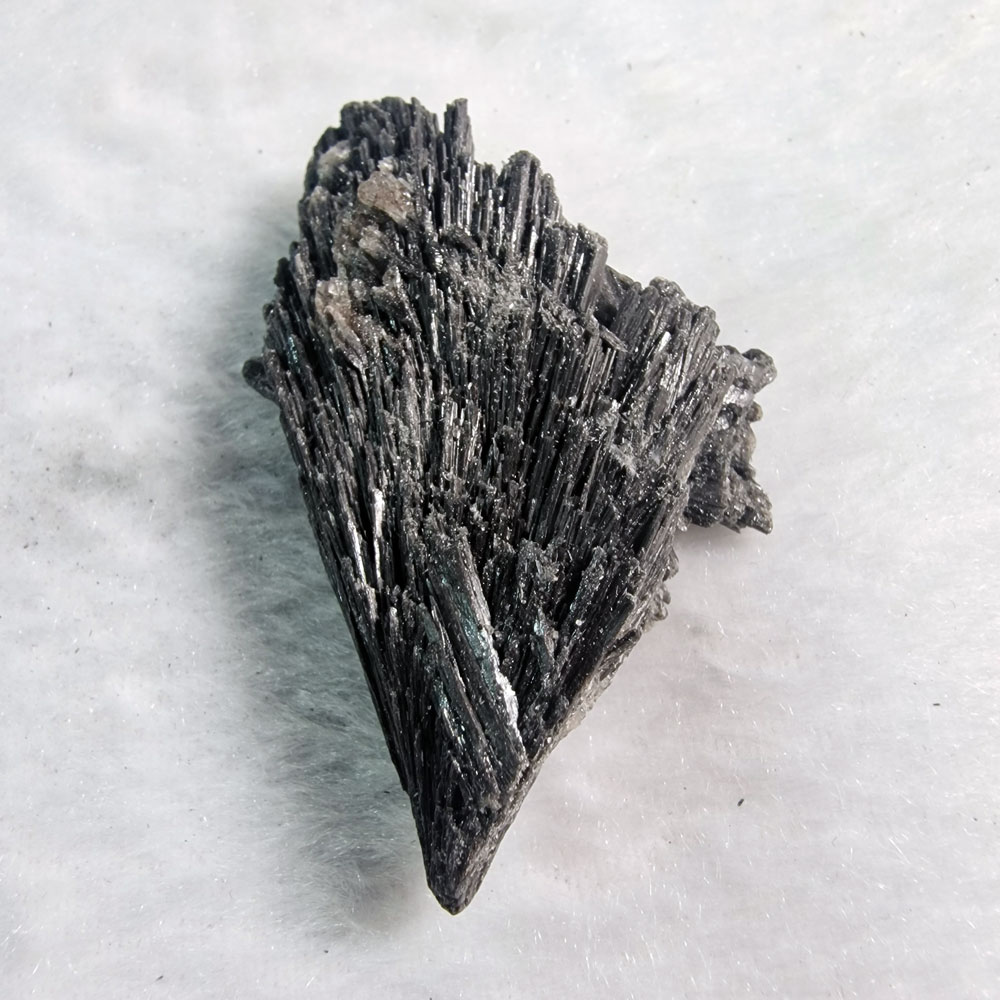
That’s why reconnecting with older symbols—such as gifting a meaningful mineral like a black kyanite or “witch’s broom”—can be a beautiful way to return to that essence and offer a tribute filled with intention.
Black Kyanite: The Witch’s Broom as a Symbol of Respect and Power
In this context of homage, there is one very special gift that transcends the material: black kyanite, also known as the witch’s broom due to its natural shape, which resembles ancient ritual brooms. This dark and elegant mineral carries powerful symbolism, especially linked to protection, energetic cleansing, and connection to inner wisdom.
Historically, the witch’s broom was not a superstitious object, but rather a ritual tool used by wise women to symbolically cleanse spaces—both physical and energetic. It is associated with ancestral feminine power, with the figure of the witch as a free, intuitive, and protective woman, and not the dark stereotype imposed by patriarchal history.
Black kyanite shares that symbolism. It is said to:
- Help align and protect the energy field.
- Provide grounding during times of change or challenge.
- With its natural hardness and raw beauty, it represents women who—like the mineral—are strong, essential, and authentic.
A Soulful Gift to Honor Women
Gifting a witch’s broom made of black kyanite on Mother’s Day is more than a pretty detail: it is a deeply meaningful tribute. It is recognizing that woman—whether mother, grandmother, partner, sister, or friend—as a spiritual guide, protector, and bearer of wisdom, in tune with the ancient tradition that regards femininity as sacred.
Additionally, kyanite does not require energetic cleansing, making it an ideal stone to gift even to those unfamiliar with the mineral or metaphysical world. Its discreet yet powerful presence can be placed on a bedside table, a personal altar, or simply carried in a bag as a silent token of strength.
This Year, Gift History, Symbol, and Power
Instead of only offering flowers that wilt or gifts without soul, why not offer a symbolic object that connects with the roots of the celebration? Black kyanite, in the form of a witch’s broom, is a tangible reminder that feminine strength not only gives life but also protects, guides, and transforms.
This Mother’s Day, make a gift of history, intention, and soul. Because all women carry within them the energy of ancient goddesses, the wise women of the past... and the guardians of the present.

 670-61-16-63 cmd@cristalljoia.com In the heart of Barcelona and online