Aqua aura quartz: when modern alchemy dresses an ancient crystal in light

An ancient crystal, a shimmer that looks like it belongs to another world

Few minerals capture attention as quickly as aqua aura quartz: those iridescent flashes, ranging from turquoise blue to gold and yellow, that seem to shift tone depending on the light. It's a common sight at gem fairs, mineral shops and collections, sitting alongside clear quartz, amethyst or citrine. But its story is quite different from that of its display-case neighbours, and knowing it doesn't take away any of its beauty — if anything, it explains it.

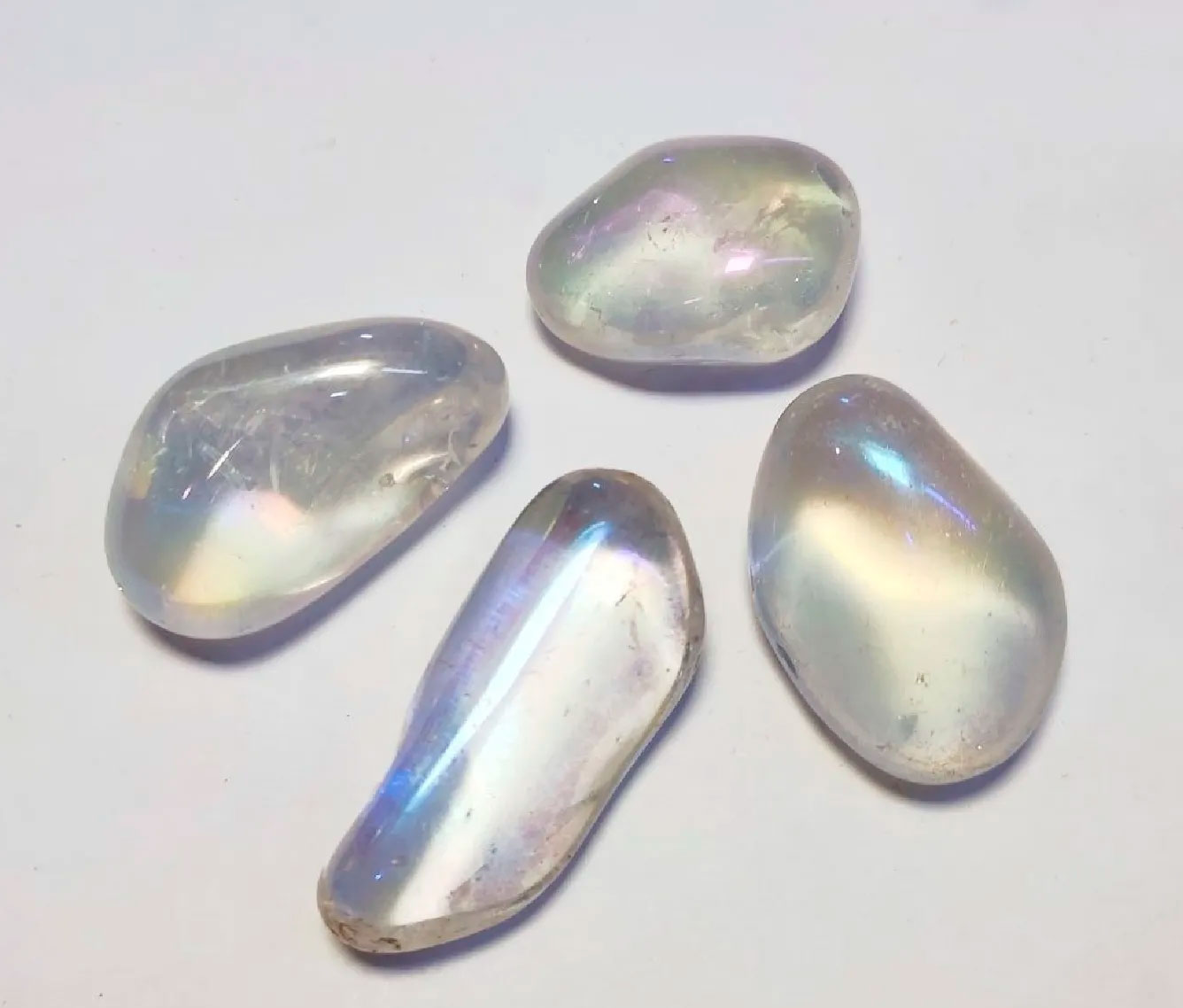
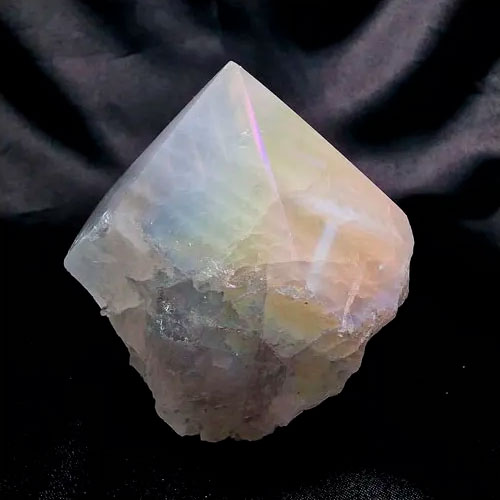
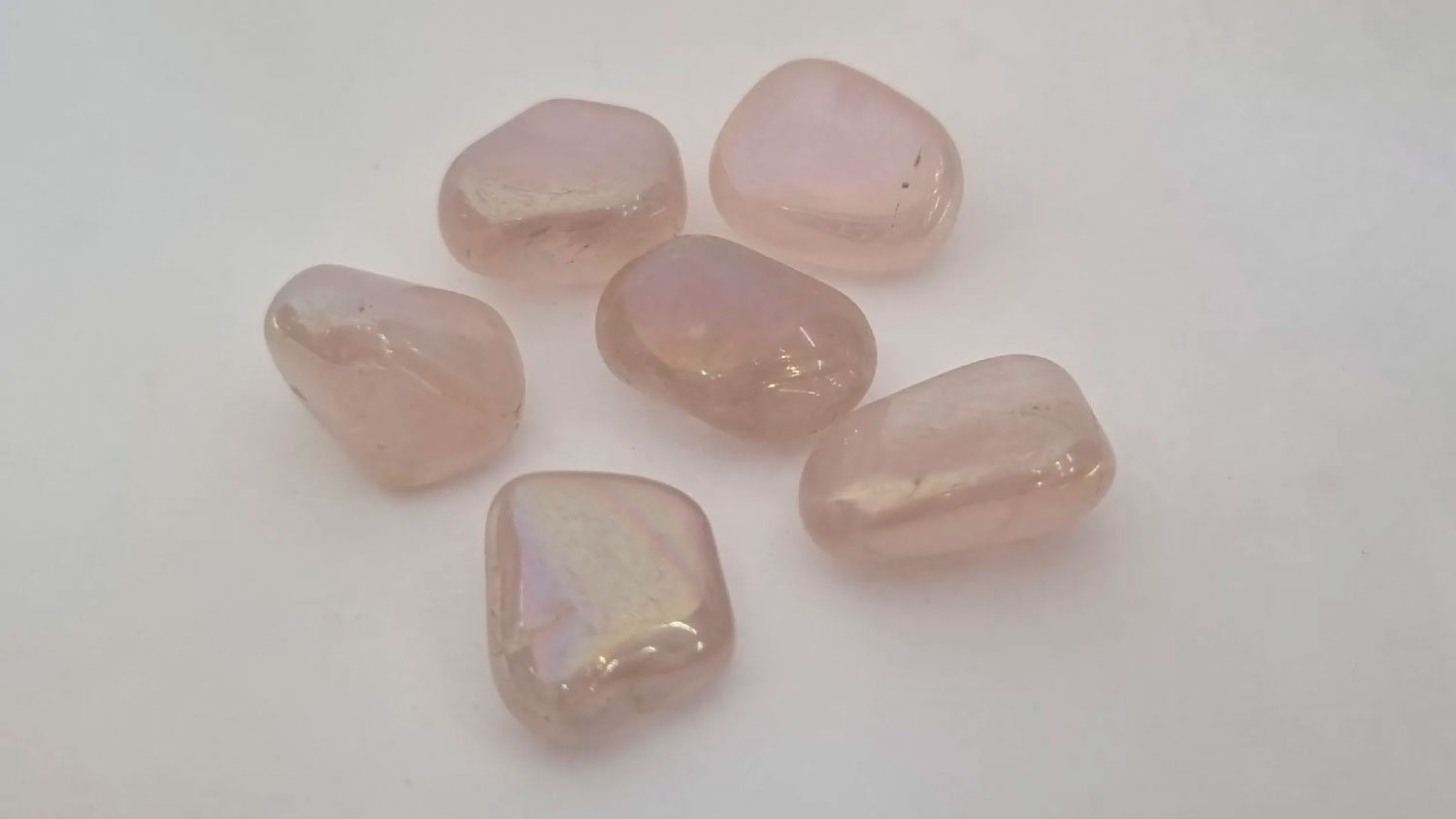
Key fact: aqua aura always starts from a natural quartz crystal, almost always clear quartz, though it's also found on rose quartz. Its shimmer, ranging from turquoise blue to gold and yellow, comes from a process developed in the late 20th century that bonds the crystal with an extremely thin layer of precious metal.
Aqua Aura Cristalljoia

Where does that shimmer come from?

The process is called vapor deposition. Quartz crystals, almost always clear though it's also used on rose quartz, already shaped by nature over thousands or millions of years, are placed in a vacuum chamber and heated to a high temperature. Inside that chamber, vaporised gold is introduced (sometimes combined with titanium, platinum or other metals), which bonds to the surface of the crystal in a layer just a few atoms thick.

The result is that distinctive iridescence, which depending on the metal used and the thickness of the layer can appear as turquoise blue, golden tones, or yellow, varying in intensity from piece to piece. The interior of the crystal, its quartz crystalline structure, doesn't change at all: the transformation happens only on the mineral's skin.

In short: nature and technique meet halfway. The quartz is genuine and ancient; the colour is a recent human intervention, designed to create something nature alone doesn't produce in quartz.
Aqua Aura Cristalljoia

Where geology meets technique

Unlike stones such as amethyst or rose quartz, whose colour is already written into their formation underground, aqua aura adds a more recent chapter to its story: one shaped by human hands. The same family of vacuum-coating technologies used in optics or certain industrial finishes, applied delicately to quartz, is what makes this particular palette of reflections possible.

It is, at its core, a dialogue between two timescales: the crystal, which took centuries to form underground, and the shimmer on its surface, the result of a contemporary technique. That contrast is exactly what makes aqua aura so distinctive within the world of quartz.

A good way to observe this is to look at the crystal's surface from different angles of light: the metallic iridescence and the almost oily sheen are the best visual clue that the colour comes from an outer layer, not from the quartz itself. It's the very same principle that gives colour to soap bubbles or a drop of oil on water.
Aqua Aura Cristalljoia

What about the properties of the original quartz?

Quartz is one of the most common and versatile minerals in the earth's crust, and the quartz used as the base for aqua aura keeps its hardness, its crystal system and its internal structure fully intact. The only thing added is that fine metallic skin on the surface. That's why many collectors think of it as a decorative variety within the world of quartz, rather than as a separate mineral with its own entry in classic mineralogy books.

Practical tip: precisely because the colour lives in such a thin surface layer, aqua aura deserves gentle care. Cleaning it with scouring pads, abrasive products, or exposing it to knocks can wear down that film and dull its characteristic shine.

Frequently asked questions

Is aqua aura a natural mineral?

The base crystal, quartz, is entirely natural. Its characteristic shimmer, on the other hand, comes from a vapor deposition treatment with gold (and sometimes other metals), a process developed by humans rather than something that happens spontaneously in nature.

Why is this treatment done?

Mainly for its aesthetic result: the iridescence it produces, whether in turquoise blue, gold or yellow, is highly prized in jewellery and decorative collecting, and it isn't found naturally in any quartz deposit.

Can aqua aura be cleaned like any other quartz?

It's best to avoid abrasives or scouring pads, since the colour sits in an extremely thin metallic layer on the surface. A soft cloth and lukewarm water are enough to keep it shining.

Are all turquoise-blue quartz crystals aqua aura?

Not necessarily: it's worth distinguishing aqua aura (treated with vapor-deposited metal) from other minerals that naturally show blue or turquoise tones, such as true turquoise, chrysocolla, or certain varieties of apatite.

Looking for a specific mineral?

At our physical store in the centre of Barcelona we have many more options than what you see online.

If you can't find what you're looking for online, message me on WhatsApp at +34 670 61 16 63.

I'm Jéssica and I'll be happy to help.

visita virtual 3D
Product added to wishlist
Product added to compare.

Looking for a mineral? Write us