Why such extraordinary fossils come from Morocco: the geological story behind every piece
Trilobites, orthoceras, ammonites, Spinosaurus teeth... the Moroccan Sahara isn't just desert: it's the floor of several ancient seas, now laid bare
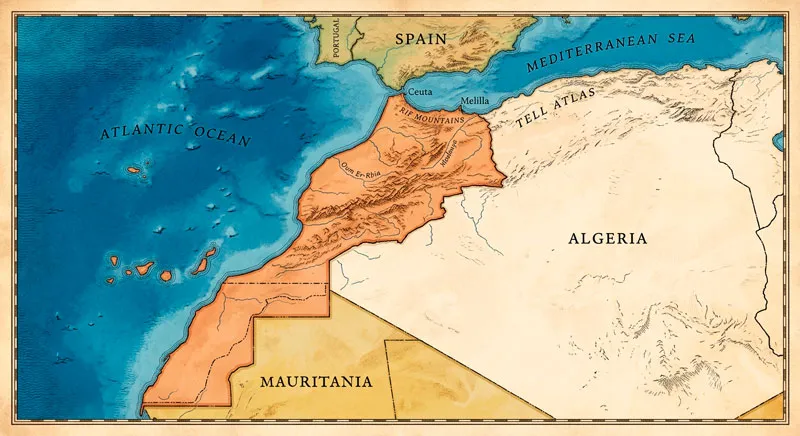
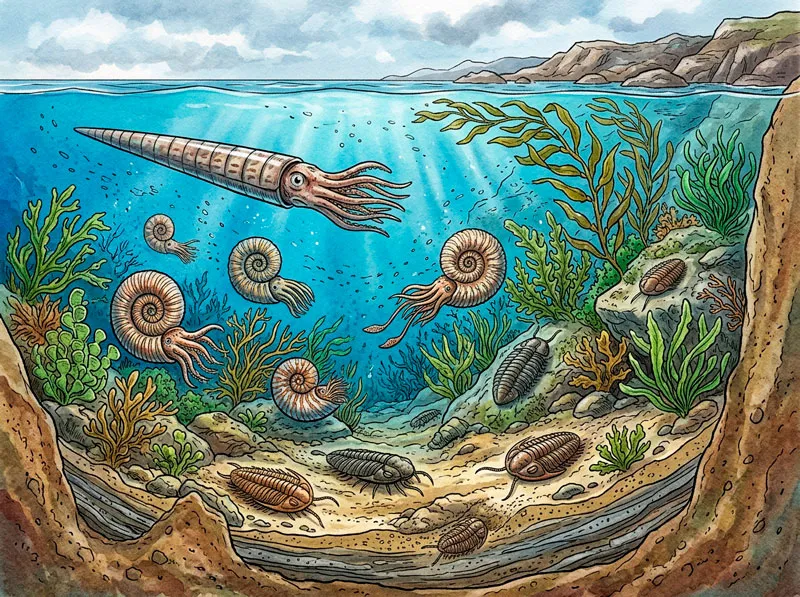
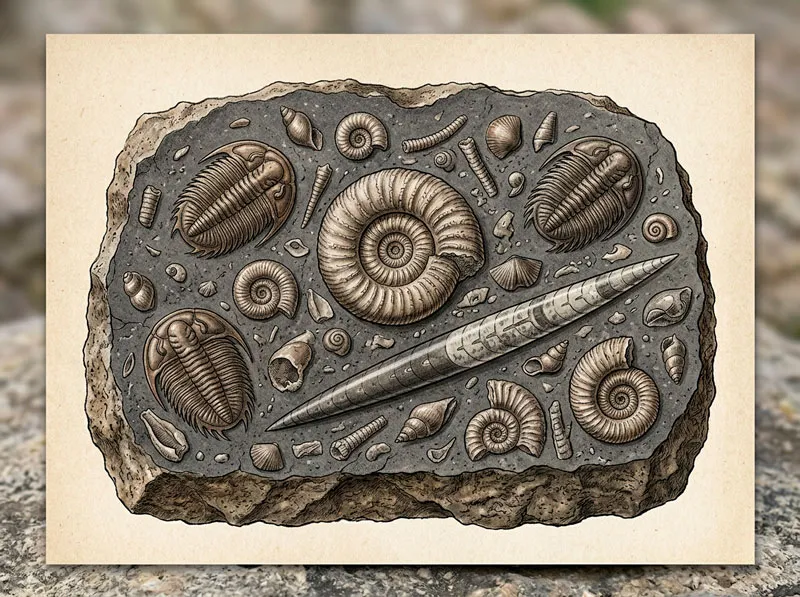
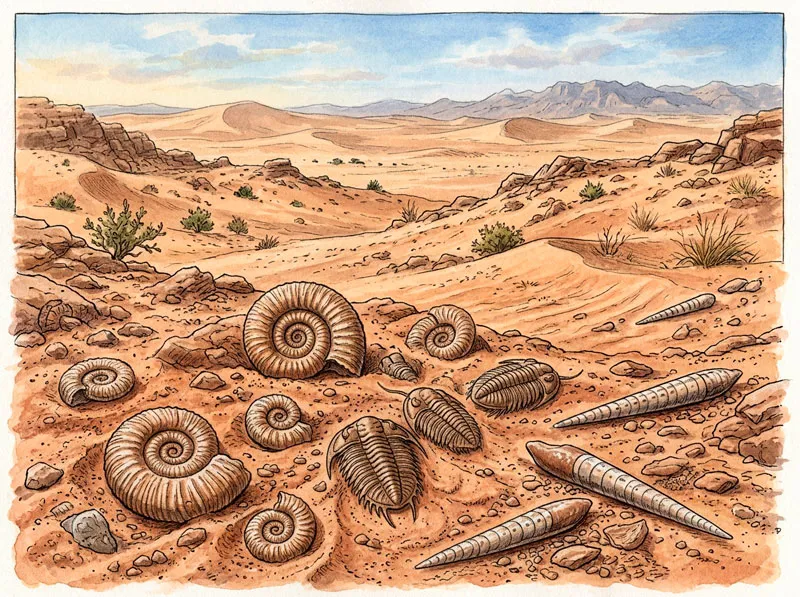
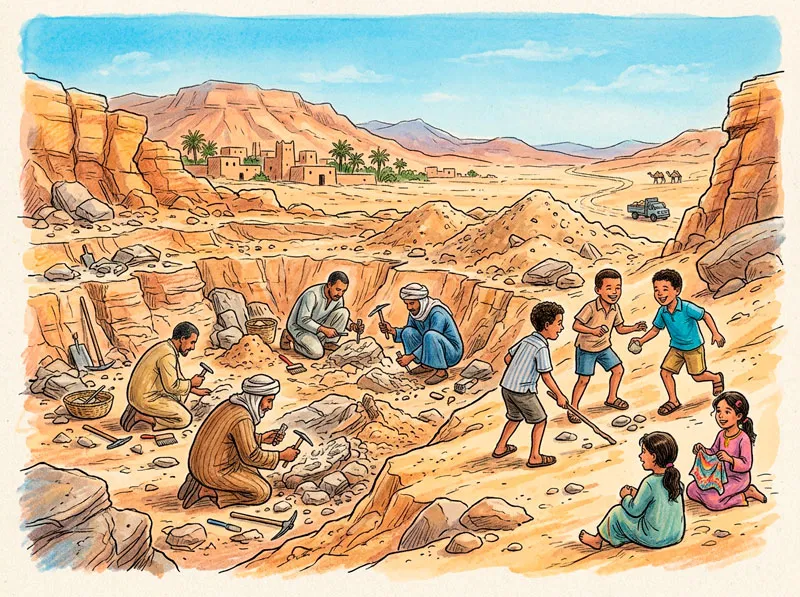
Anyone who has seen a black marble table with orthoceras embedded in it, or a trilobite perfectly preserved with its eyes and segmented shell intact, has asked the same question: why do so many come out of Morocco, and with that level of detail? The answer isn't chance or geographic luck. It's the combination of four factors that rarely coincide in the same place: that part of the Sahara lay under the sea for hundreds of millions of years — several times, in different eras —, the type of sediment deposited there preserves detail with unusual precision, today's climate, arid and almost devoid of vegetation, leaves the rock layers completely exposed, and there is a local tradition, spanning several generations, dedicated to extracting and preparing them.
None of these four factors on its own would explain the abundance and quality we see today in shops and collections. It's the sum of them that turns southeastern Morocco, and specifically the area around Erfoud, Alnif and Rissani, into one of the most fossil-rich territories on the planet.
In one sentence: Morocco holds extraordinary fossils because its territory was covered by ancient seas in several distinct eras (first Paleozoic seas more than 380 million years ago, later Cretaceous river deltas around 100 million years ago), because the type of rock that formed there — fine-grained limestone and silt — preserves detail with great precision, because erosion in today's desert leaves those layers exposed with barely any digging, and because a local artisanal industry exists, built on generations of experience, dedicated to locating, extracting and preparing them.

 670-61-16-63 cmd@cristalljoia.com In the heart of Barcelona and online