Gem or mineral: why they're not the same thing, even though they seem to be

What turns a mineral into a gem, why not every gem is a mineral, and exactly where the line between the two terms sits

In jewelry, we use "gem" and "mineral" almost as synonyms, and it's easy to see why: most of the gems we know—quartz, topaz, garnet, feldspar—are, in fact, minerals. But the two terms respond to completely different criteria, and mixing them up leads to common mistakes, like assuming amber or pearl are minerals when they actually aren't.

Before going into detail, it helps to start with the technical definitions. According to the Mindat.org glossary, a standard reference in mineralogy:

Mineral (Mindat.org): a naturally occurring inorganic element or compound having an orderly internal structure and characteristic chemical composition, crystal form, and physical properties.

Gem (Mindat.org): a stone (or hard organic stone-like material), usually cut and polished, that has intrinsic value and possesses the necessary beauty, durability, rarity, and size for use in jewellery as an ornament or for personal adornment; a jewel whose value is not derived from its setting.
Difference between gem and mineral Cristalljoia

What exactly is a mineral?

"Mineral" is a scientific category, defined by the International Mineralogical Association (IMA) with very specific criteria: it must be a naturally occurring substance (not manufactured), inorganic, with a defined chemical composition (or one that varies within a known range) and an orderly internal crystal structure.

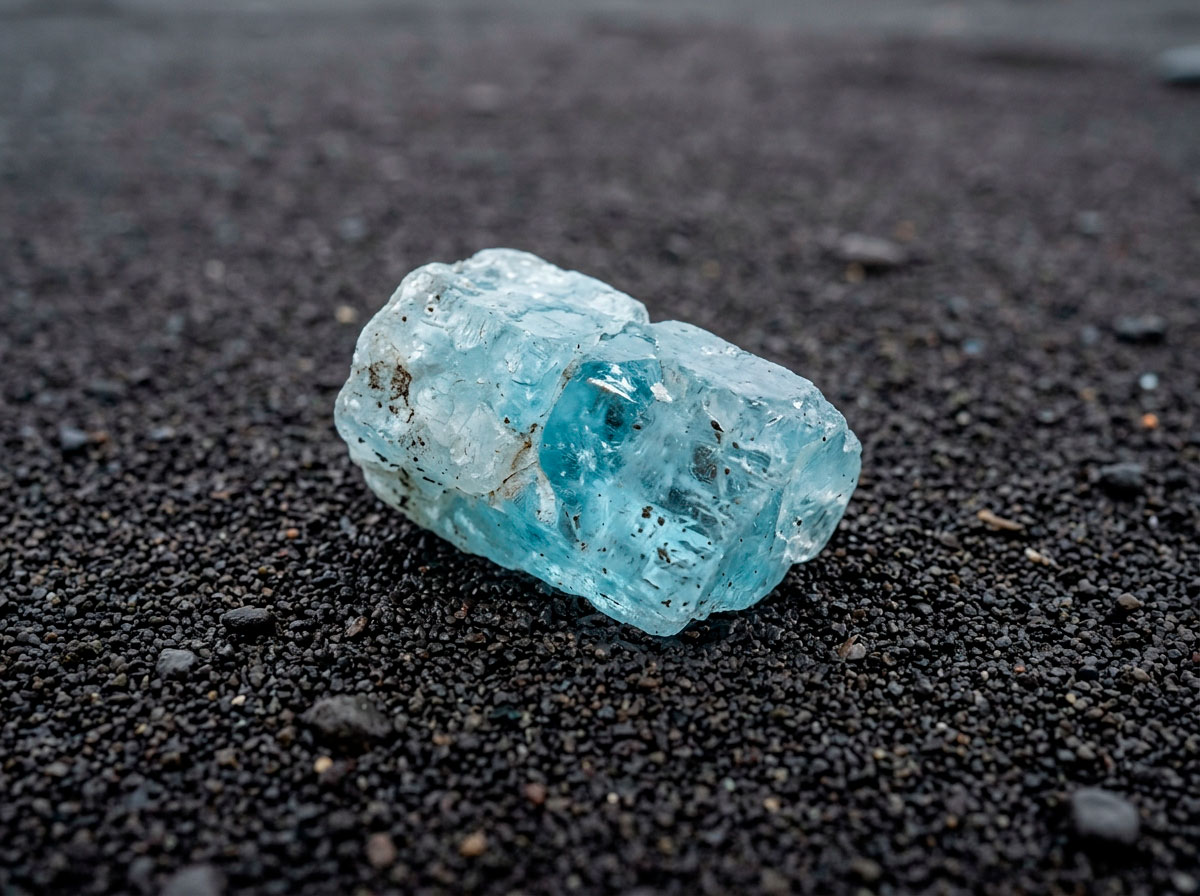
That crystal structure is the key: it's what forces a mineral to always grow with the same internal geometry, even if the piece in front of us is tiny, broken, or doesn't show visible flat faces at all. Quartz, calcite, and feldspar are minerals because they meet those four requirements, regardless of whether they end up in a collector's display case, in road asphalt, or in a ring.

A mineral is a mineral even if no one ever looks at it. Its status doesn't depend on its beauty or commercial value, but on its composition and internal structure.
Difference between gem and mineral Cristalljoia

So what is a gem, then?

"Gem" is not a scientific category, but a commercial and aesthetic one. A material is considered a gem when it brings together a set of qualities that make it desirable for jewelry: beauty (color, brilliance, transparency), durability sufficient for everyday wear, rarity, and, in some cases, enough size to be cut.

The same mineral can produce spectacular gems at one deposit and remain plain rock at another: what decides whether it's a gem is the specific quality of the individual piece, not the mineral species in the abstract.

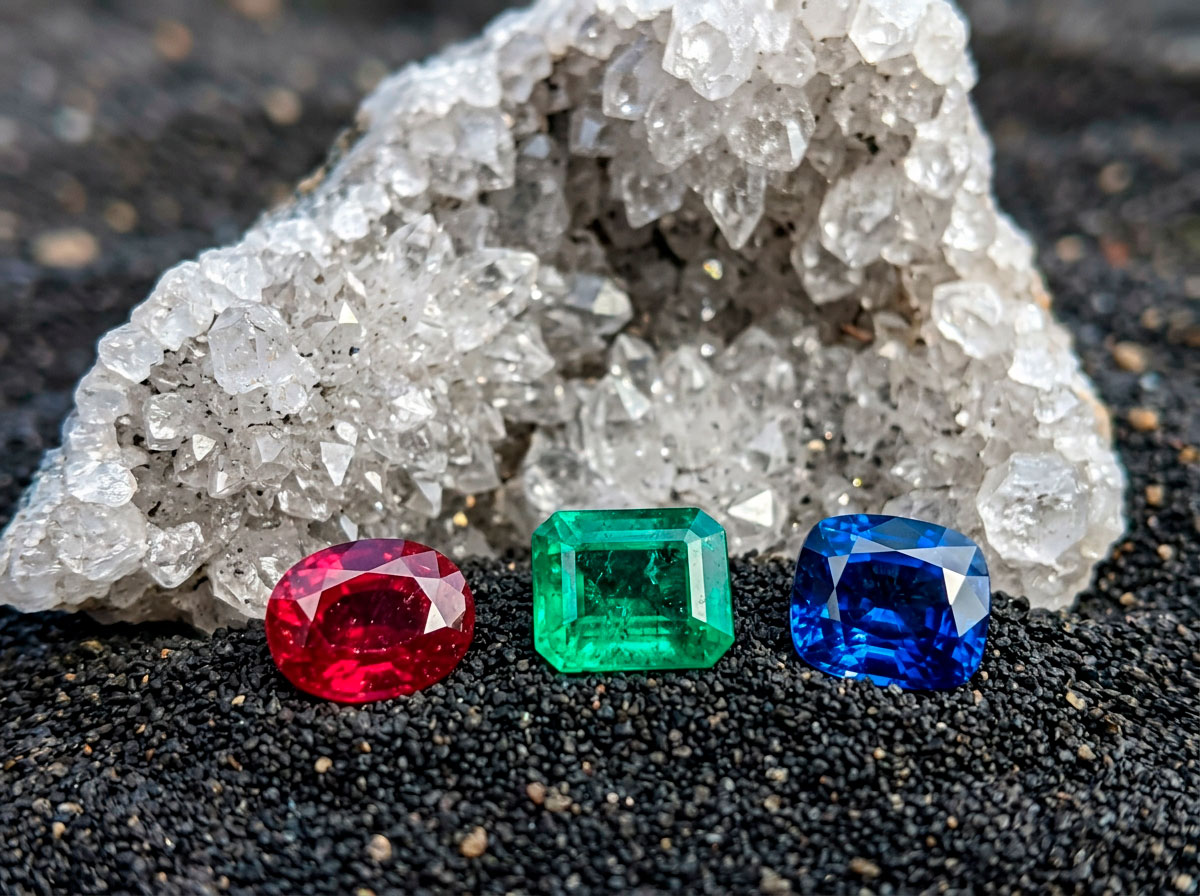
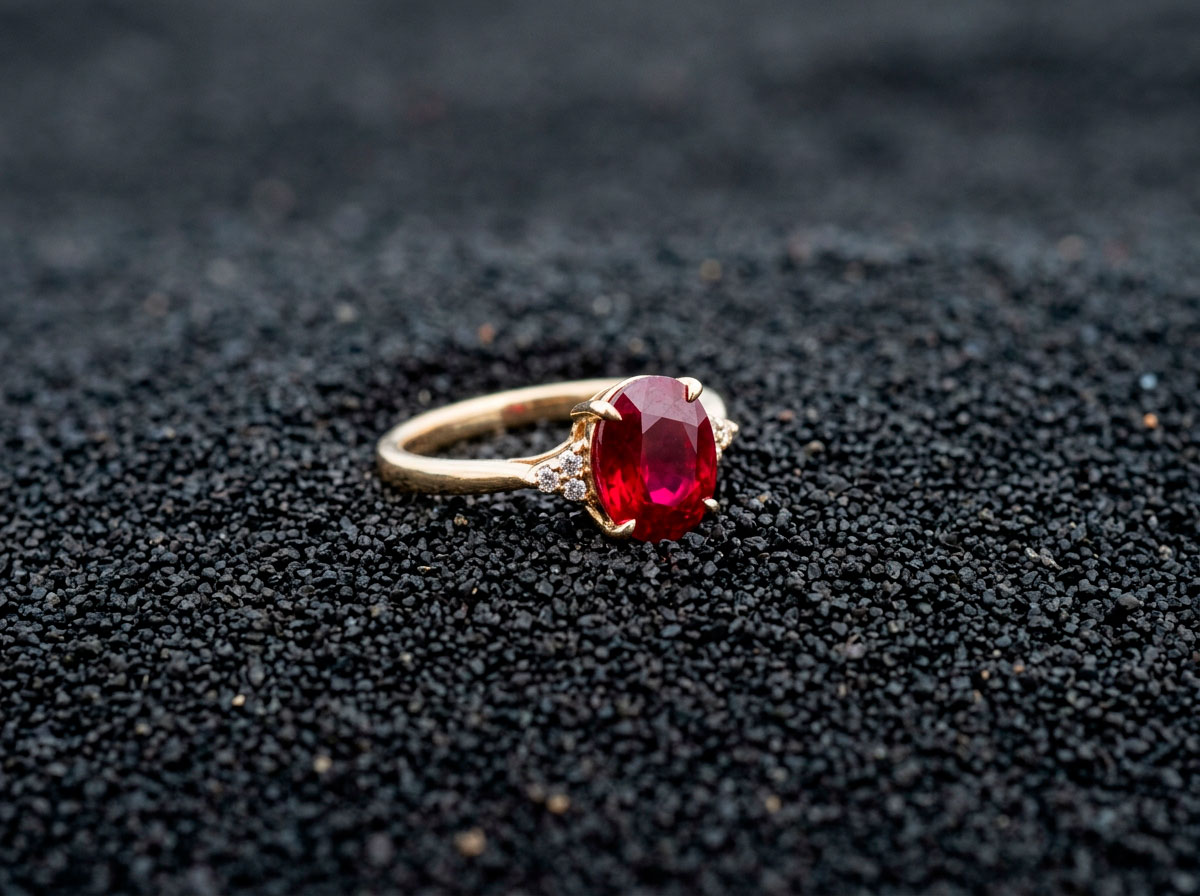
That's why corundum, as a mineral species, doesn't have to be a gem: only when it appears with the right color and transparency—and we then call it ruby or sapphire—does it enter that category. The same mineral, with opaque inclusions or dull color, remains plain industrial corundum.

Difference between gem and mineral Cristalljoia

So, is every gem a mineral?

No. This is the point that causes the most confusion. Mindat's own definition makes it clear by including "hard organic stone-like material": there are gems of organic origin that don't meet the requirement of being inorganic, and therefore aren't minerals in the strict sense.

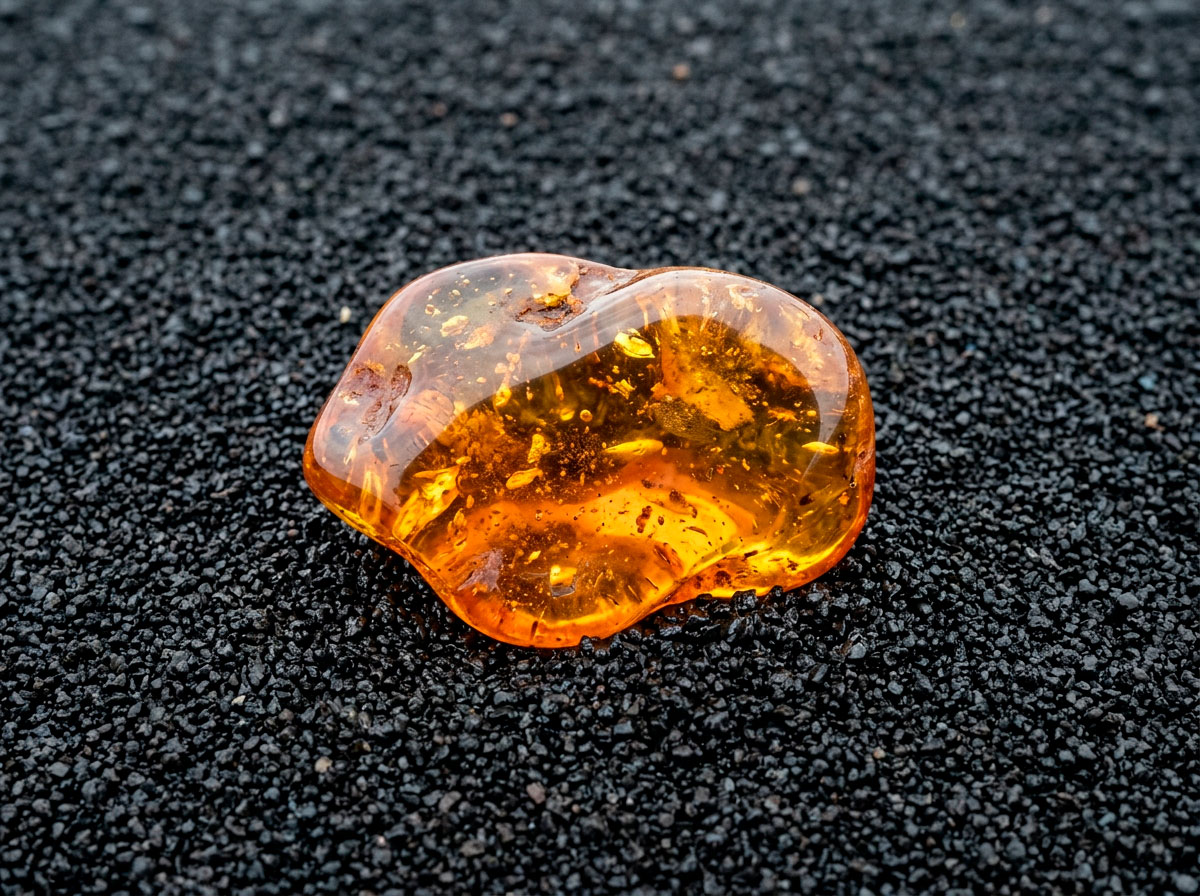
Amber is fossilized resin of plant origin; pearl forms inside a mollusk through the buildup of layers of nacre; coral is the calcareous skeleton of a marine organism. All three are sold and set as gems, but none of them is, technically, a mineral.

There are also amorphous materials—lacking that orderly crystal structure—that are likewise considered gems, such as opal or certain natural volcanic glasses. They're minerals "in practice" in commercial usage (or "mineraloids," to be precise), even though they don't quite fit the IMA's formal definition.

Difference between gem and mineral Cristalljoia

And the other way around: minerals that will never be gems

Of the more than 6,000 minerals currently recognized by the IMA, only a small fraction ever get used as gems. The vast majority are too soft, too opaque, too fragile, or simply too small in usable size to be cut.

Others are abundant but visually unappealing, or degrade with light or heat. Pyrite, for example, is a common and highly recognizable mineral, but it's rarely considered a gem: its interest lies more in mineralogy and in its raw aesthetic appeal than in gemology.

In short: "mineral" describes what a substance is at the chemical and structural level. "Gem" describes what a specific piece of that material—or of an organic material—is used for in jewelry. A mineral can exist without ever being a gem; a gem, on the other hand, always needs to start from a mineral, a mineraloid, or an organic material that meets certain standards of beauty and durability.

Frequently asked questions

What's the main difference between a gem and a mineral?

"Mineral" is a scientific classification based on chemical composition and crystal structure. "Gem" is a commercial and aesthetic classification that values the beauty, durability, rarity, and size of a specific specimen for use in jewelry.

Can a gem not be a mineral?

Yes. Amber, pearl, and coral are gems of organic origin, not minerals. There are also mineraloids without an orderly crystal structure, such as opal, which are used as gems without strictly meeting the mineralogical definition.

Can every mineral become a gem?

No. Only a small fraction of known minerals combine enough beauty, durability, and rarity to be cut as gems. Most are too soft, opaque, or visually unremarkable for that purpose.

Who officially decides what counts as a mineral?

The International Mineralogical Association (IMA) is the scientific authority that formally recognizes and classifies mineral species based on chemical composition and crystal structure.

Looking for a specific mineral?

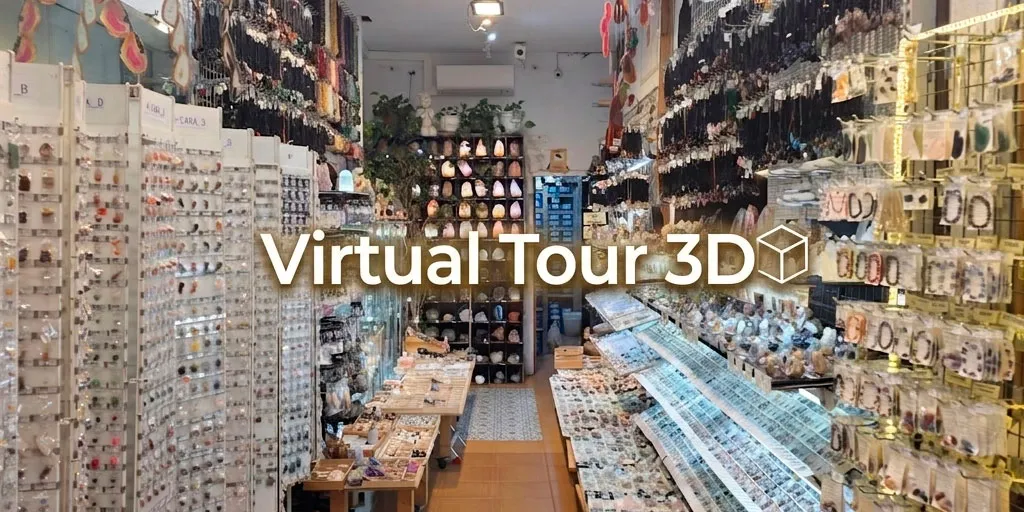
At our physical store in the centre of Barcelona we have many more options than what you see online.

If you can't find what you're looking for online, message me on WhatsApp at +34 670 61 16 63.

I'm Jéssica and I'll be happy to help.

visita virtual 3D
Product added to wishlist
Product added to compare.

Looking for a mineral? Write us