Adularia: the name that comes from a Swiss mountain
The technical name for moonstone's sheen, adularescence, doesn't come from the moon but from a very specific place: the Adula massif, in the Swiss Alps, on the border with Italy.
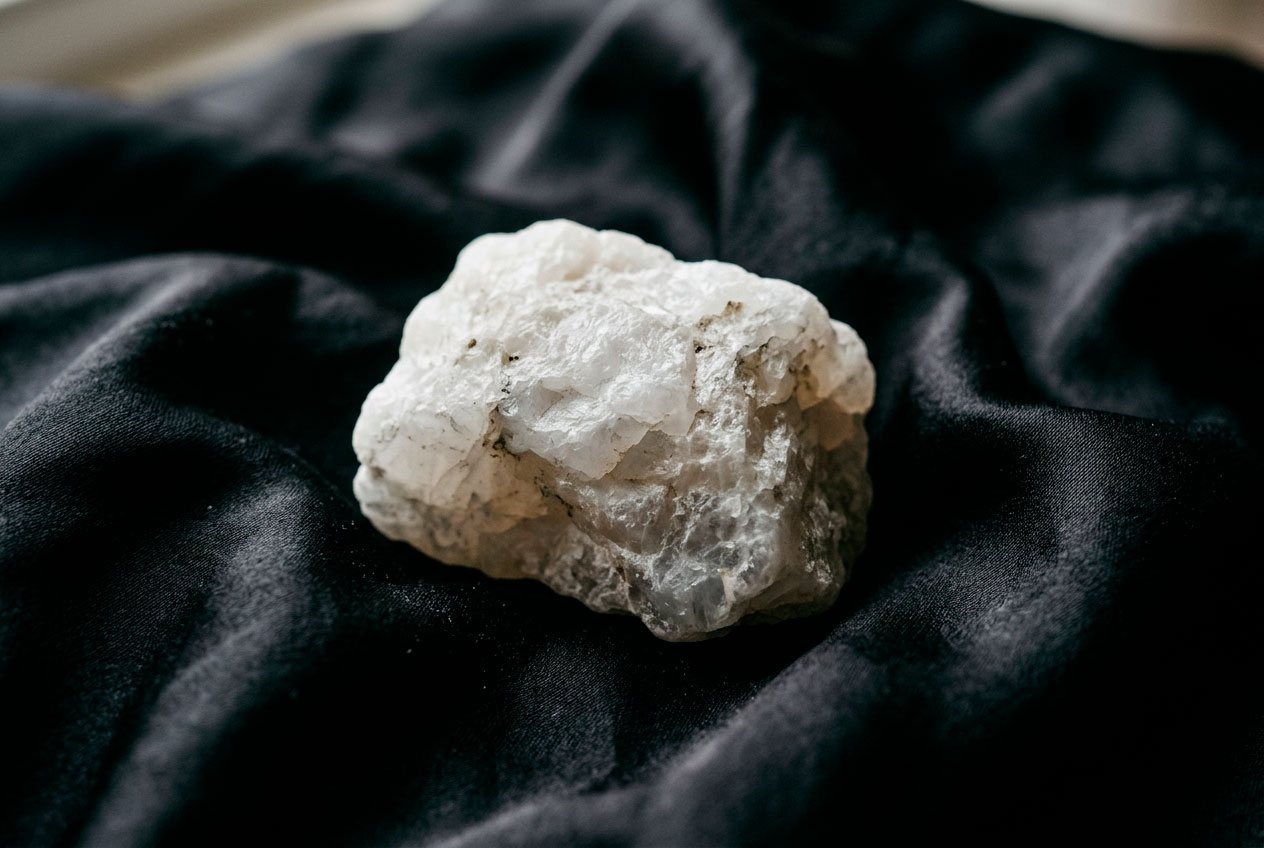
It was in those mountains that, starting in the 18th century, mineralogists documented the first crystals of this type of feldspar with that characteristic bluish sheen, and from there both the variety name "adularia" and the optical phenomenon it describes took their name.
When an old catalog refers to "adularia" instead of moonstone, it's not a mistake: it's its original name.
Over time, as moonstone deposits were discovered elsewhere in the world, the gemological term "moonstone" became widespread and is now the one used almost exclusively in jewelry, while "adularia" has remained more of a historical curiosity and the name still favored by some collectors and geologists.
Where it's found
The historic deposits are in the Alps (Switzerland, Austria, Italy, France), but today gem-quality moonstone —especially the blue-sheen kind— comes mainly from Sri Lanka, considered the world's reference source for decades.
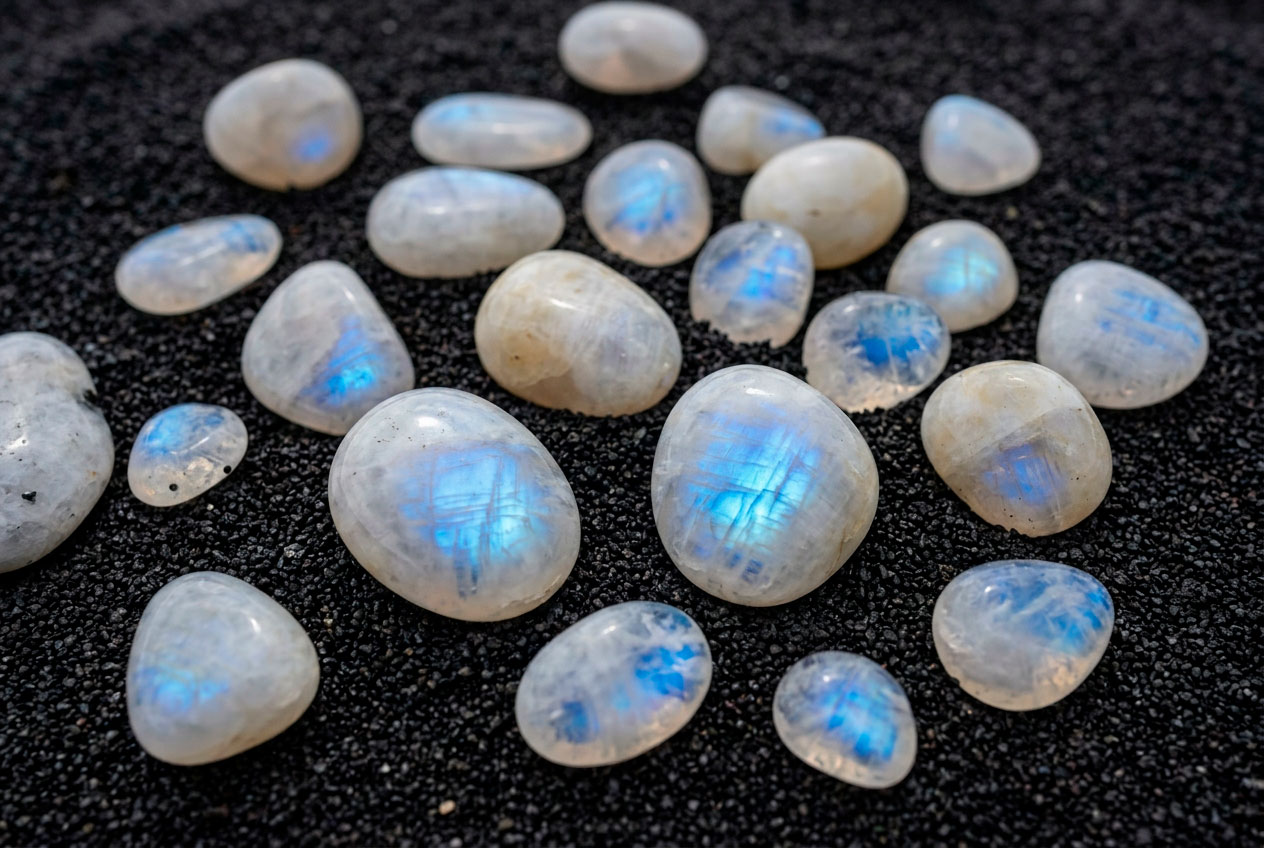
There are also important deposits in India, Myanmar, Madagascar, Brazil and the United States, each with its own variations in background color (from white and grey to peach or greenish tones) and sheen intensity.
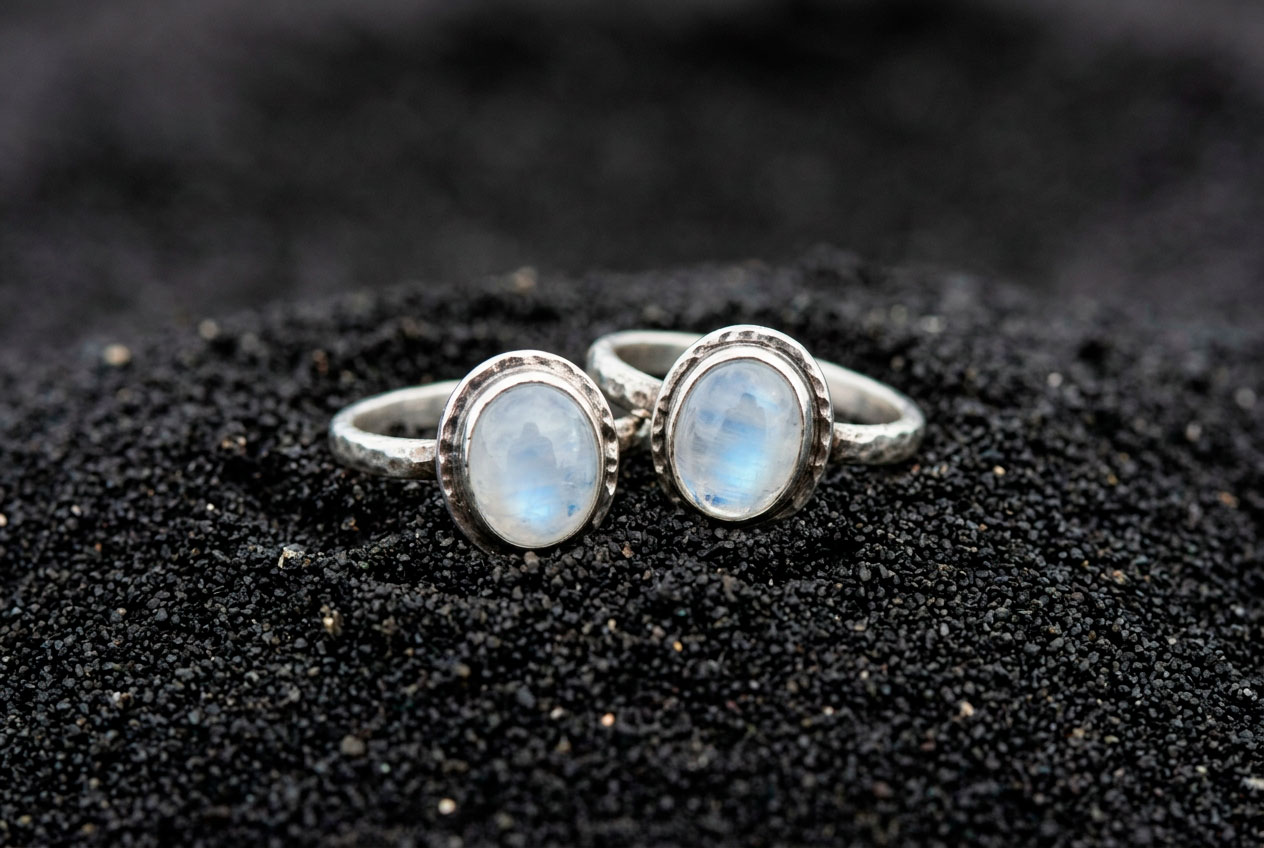
Being a relatively soft feldspar (somewhat harder than window glass, but considerably softer than quartz), moonstone is usually set in earrings, pendants or rings with a mount that protects it from knocks.
It's best to avoid contact with harsh cleaning products or everyday wear in rings exposed to constant friction.
Frequently asked questions
Is moonstone an independent mineral?
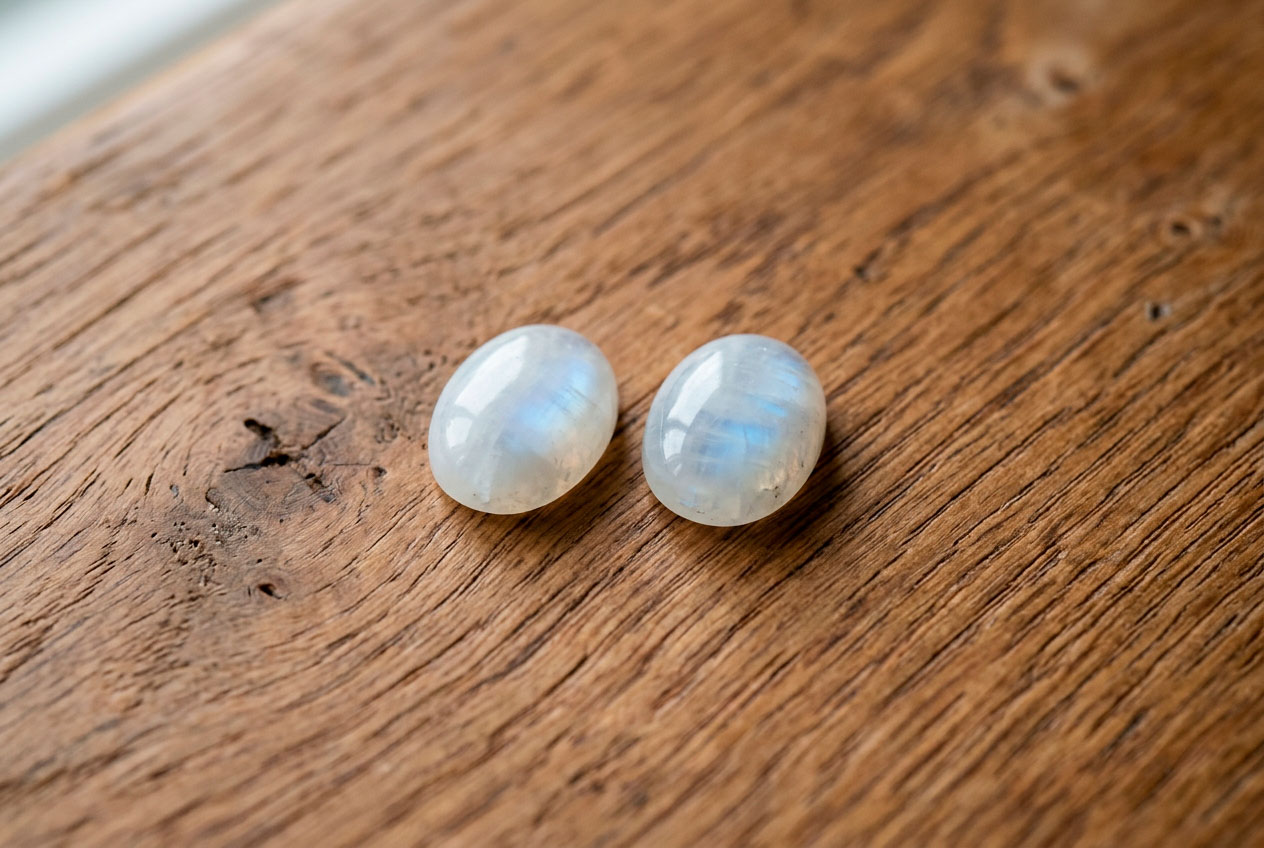
No. It's a gemological variety of orthoclase, a potassium feldspar, made up of alternating microscopic layers of two different feldspars. The name "moonstone" describes its optical effect, not a mineral species of its own.
Why do some moonstones glow blue and others white?
It depends on the thickness of the crystal's internal layers. Very thin layers scatter light toward blue, while thicker layers produce a duller, more common white or grey sheen.
What's the connection between moonstone and adularia?
Adularia is moonstone's historic name, taken from the Adula massif in the Swiss Alps, where its first quality crystals were documented in the 18th century. That's also where the term "adularescence" comes from, describing its sheen.
Where is the best-quality moonstone found?
Sri Lanka is today's reference source for the highest-quality blue moonstone. There are also notable deposits in India, Myanmar, Madagascar, Brazil and the United States, while the Swiss, Austrian and Italian Alps remain the historic source of the name adularia.

 670-61-16-63 cmd@cristalljoia.com In the heart of Barcelona and online