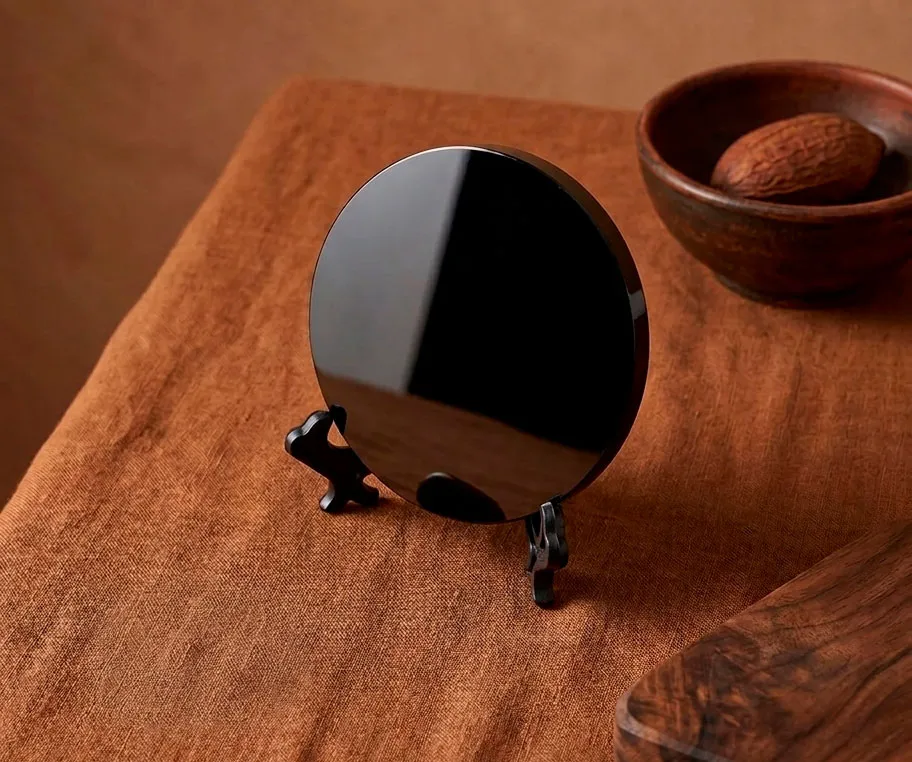
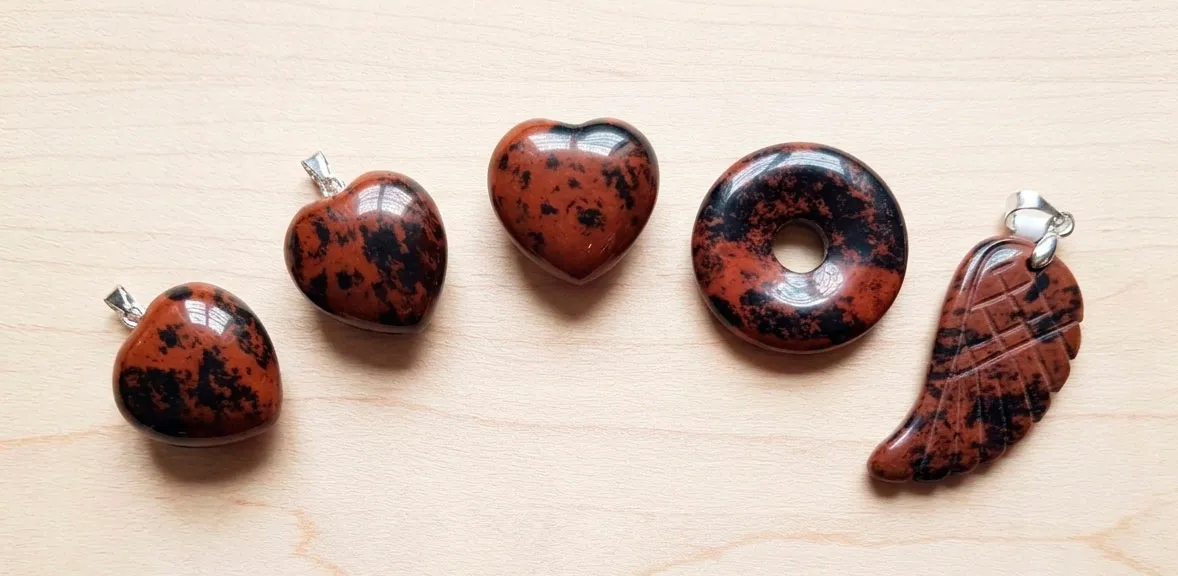
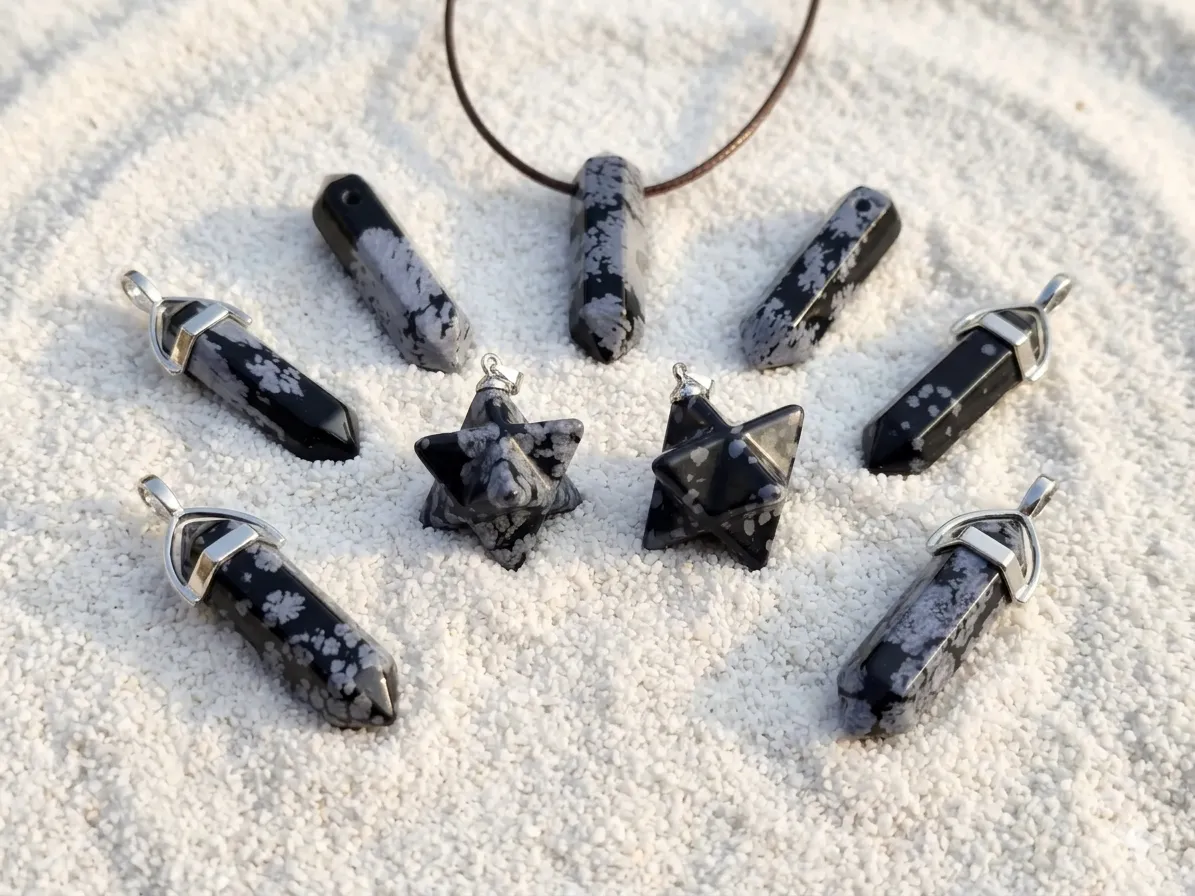
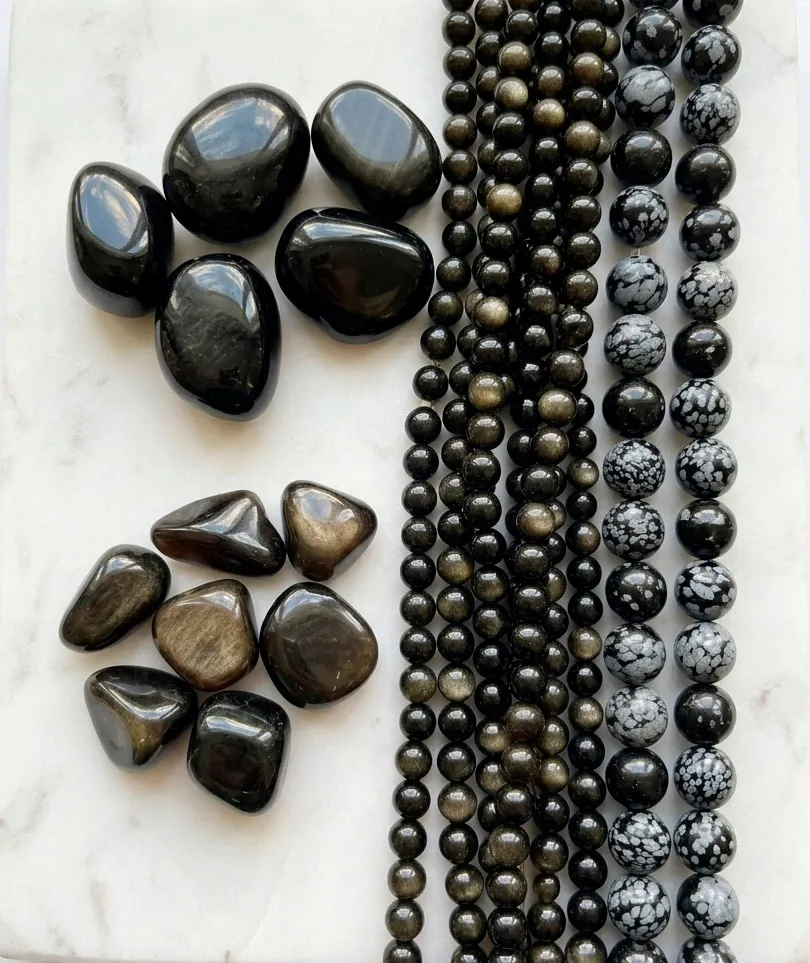
Is obsidian a mineral? The answer might surprise you
It's one of the questions we get most often in the shop, and it's a good one: obsidian is one of the most widely used stones in jewellery and decoration, and yet… technically it's not a mineral. How can that be?
What exactly is obsidian
Obsidian is a natural volcanic glass. It forms when lava from a volcano cools so rapidly that the atoms have no time to organise themselves into an ordered crystalline structure. The result is an amorphous solid — that is, one with no internal crystalline network.
And that's the key: for something to be a mineral, its atoms must be arranged internally in an orderly, repeating pattern — like bricks laid one by one following an exact design. That internal order is what creates crystals. Quartz, amethyst, fluorite… they all have that «brick order» inside. Obsidian doesn't: its atoms were «frozen» in the chaos of rapid cooling, with no time to organise. That's why scientists call it a mineraloid rather than a mineral.

 670-61-16-63 cmd@cristalljoia.com In the heart of Barcelona and online