Tools, Blades... and a Sword That Terrified the Conquistadors
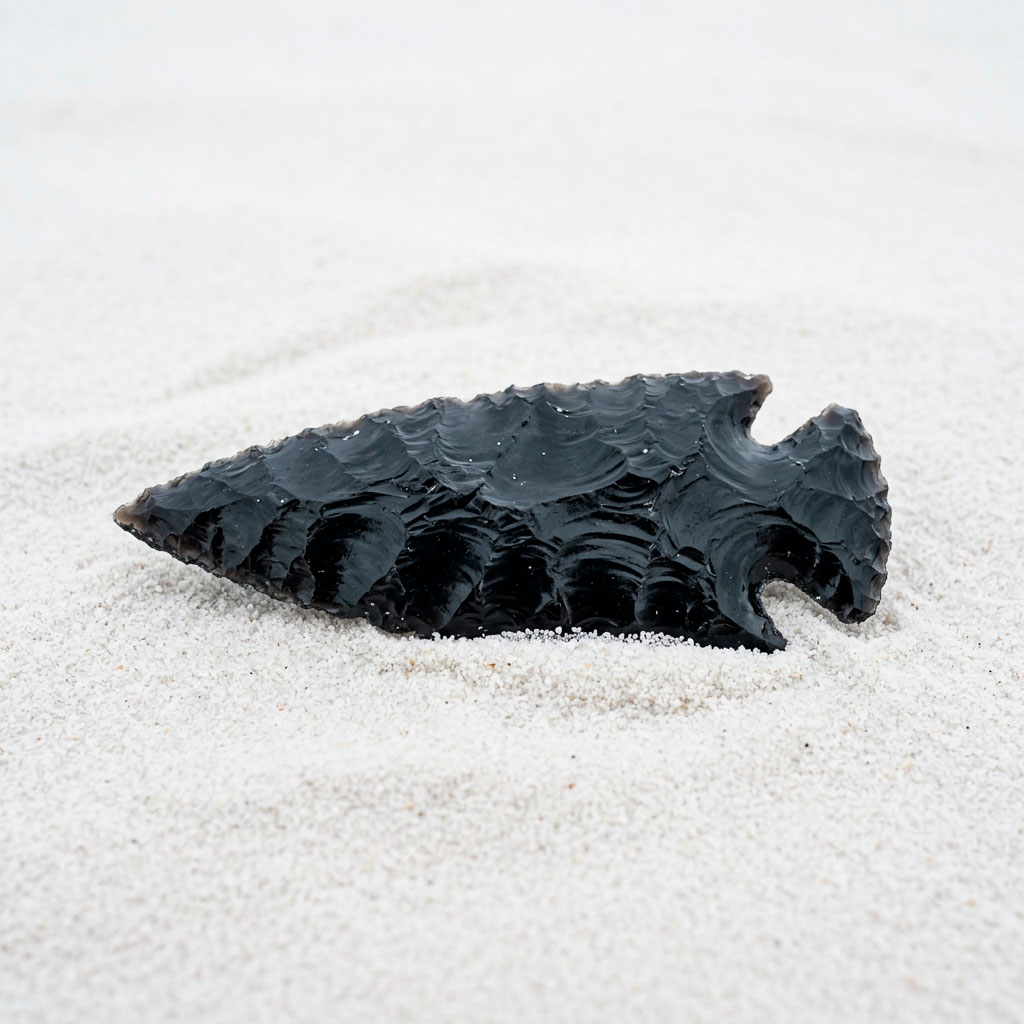
The edge was obtained through knapping, striking the core with stone or bone hammerstones to detach flakes and prismatic blades.
This technique produced blades and knives sharp enough for daily domestic tasks: cutting, scraping hides, preparing food. Also specialized scrapers for working the maguey plant to extract pulque, plus arrowheads and spearheads for hunting.
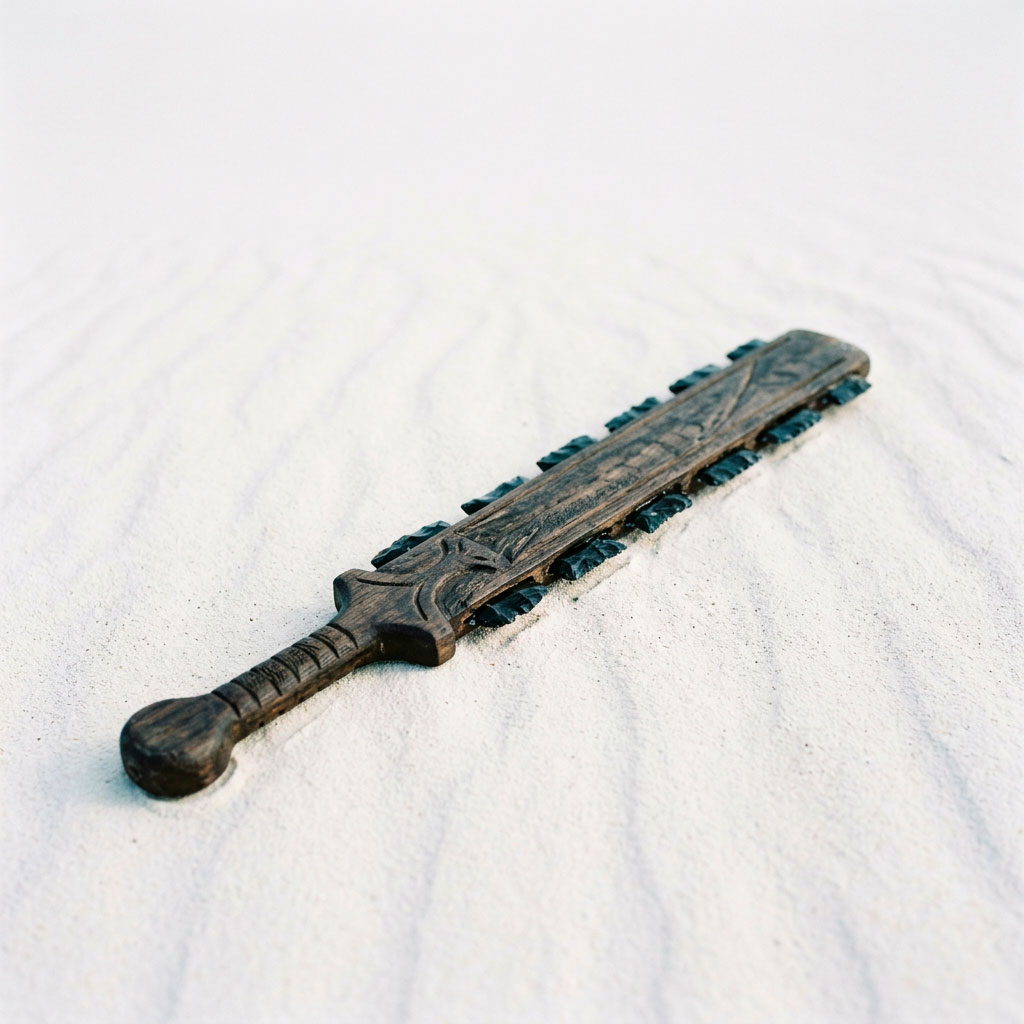
On the battlefield, the star piece was the macuahuitl: a wooden club with rows of obsidian blades set into its sides, the most iconic weapon in the Mexica arsenal.
Obsidian also played a very direct religious role, not merely a symbolic one: it was used to make sacrificial knives and the blades used in ritual autosacrifice, where priests and rulers pierced themselves to offer their own blood to the gods.
And, patiently polished, it was used for adornments reserved for warriors, priests and rulers: ear ornaments, necklaces, lip plugs, beads and ritual masks, plus the famous decorative inlays in jewelry and sculptures.
Fun fact: the macuahuitl wasn't designed to pierce through like a steel sword, but to cut and tear; its modular design allowed broken obsidian blades to be replaced between battles, quite advanced for a weapon with no metal.
Smoking Mirrors: When Obsidian Looked Into the Spiritual World
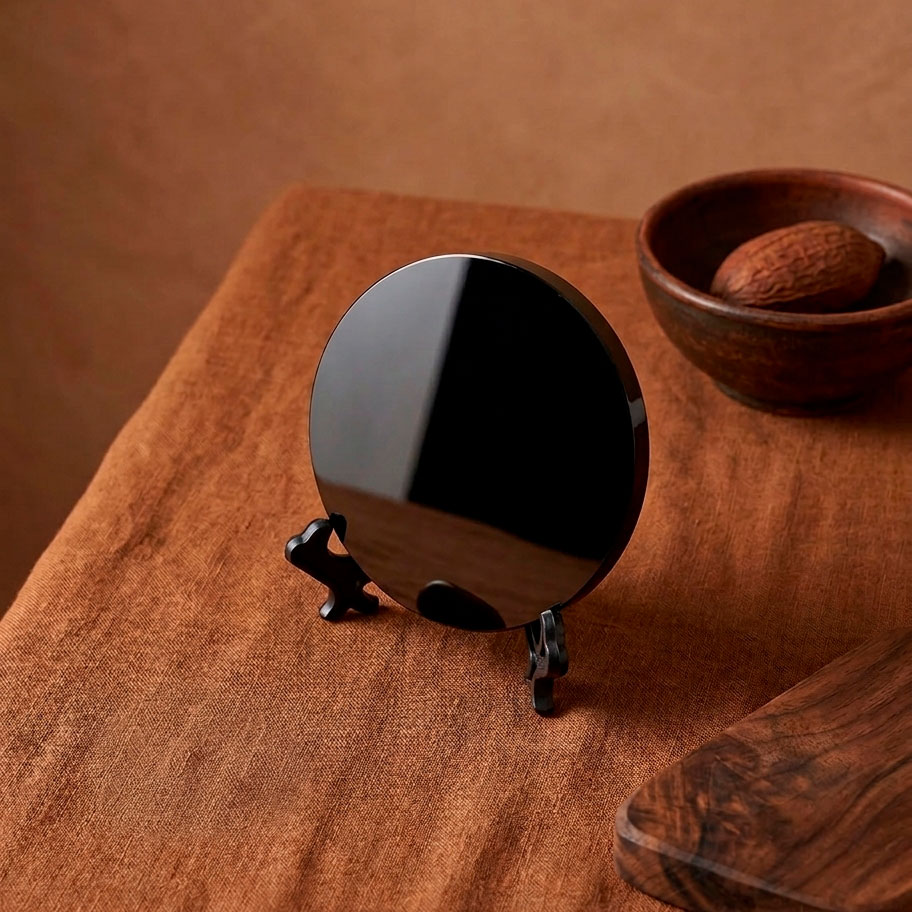
Polished to a shine, obsidian became a mirror. These held a central place in Mexica cosmology, associated with Tezcatlipoca, "Smoking Mirror," one of the most important deities in the Aztec pantheon.
According to the codices, priests and rulers used them in divination rituals and as a symbol of power. Today barely a dozen and a half pre-Columbian examples survive in museums worldwide.
Did you know…? One of those Aztec obsidian mirrors, now in the British Museum, belonged to Elizabethan mathematician and astrologer John Dee, who used it in London, in the 16th century, for his own "scrying" sessions —a curious bridge between pre-Hispanic Mexico and the England of Queen Elizabeth I.

 670-61-16-63 cmd@cristalljoia.com In the heart of Barcelona and online