Different types of jasper at Cristalljoia Barcelona and online

Sardonyx Jasper, Red Jasper, Picture Jasper, Leopard Jasper, Dalmatian Jasper... Why Are There So Many Types of Jasper?

If you've been browsing stones at Cristalljoia and come across this, you've probably thought: "okay, but how many jaspers are there exactly?". Sardonyx jasper, red jasper, picture jasper, leopard jasper, Dalmatian jasper... and the list goes on. It feels like every week a new "jasper" pops up with a different name, and it's only natural to wonder whether these are completely different stones or whether something fishy is going on. Let's break it down calmly, like a friend explaining it to you, because the answer is actually pretty fascinating.

First things first: jasper isn't "a stone", it's a type of rock

Here's the key to everything. Unlike other minerals that have a very specific chemical composition (like amethyst, which is always violet quartz), jasper is a variety of microcrystalline quartz, what geologists call an opaque chalcedony. But the important thing is that jasper forms from sediments and materials that compact and cement together with silica, so its final composition depends heavily on what other minerals and materials were mixed in at the time it formed.

In other words, jasper is more like a "recipe" than a single stone. The base is always microcrystalline silica, but the "extra ingredients" (iron oxides, clays, organic remains, other minerals) are what determine the colour, the pattern, and ultimately the name we give it.

That's why there are so many types: each combination of ingredients and each formation process results in a different jasper, with its own visual appearance. Let's look at some of the best-known ones.

Different types of jasper at Cristalljoia Barcelona and online

Red jasper: the classic everyone knows

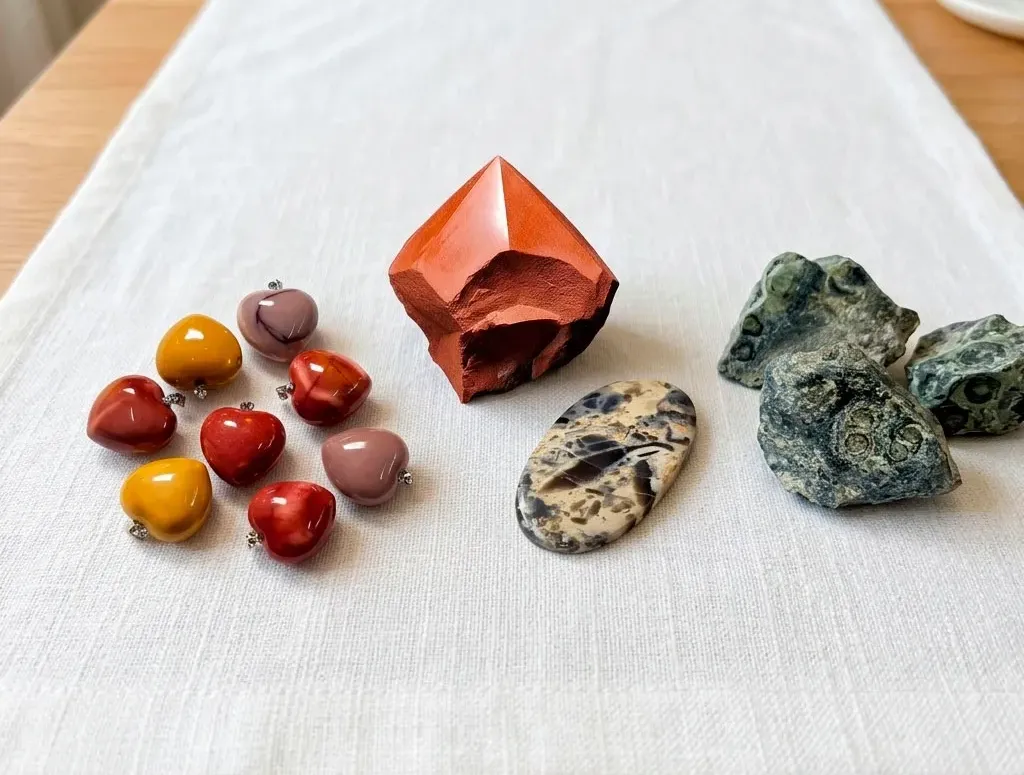
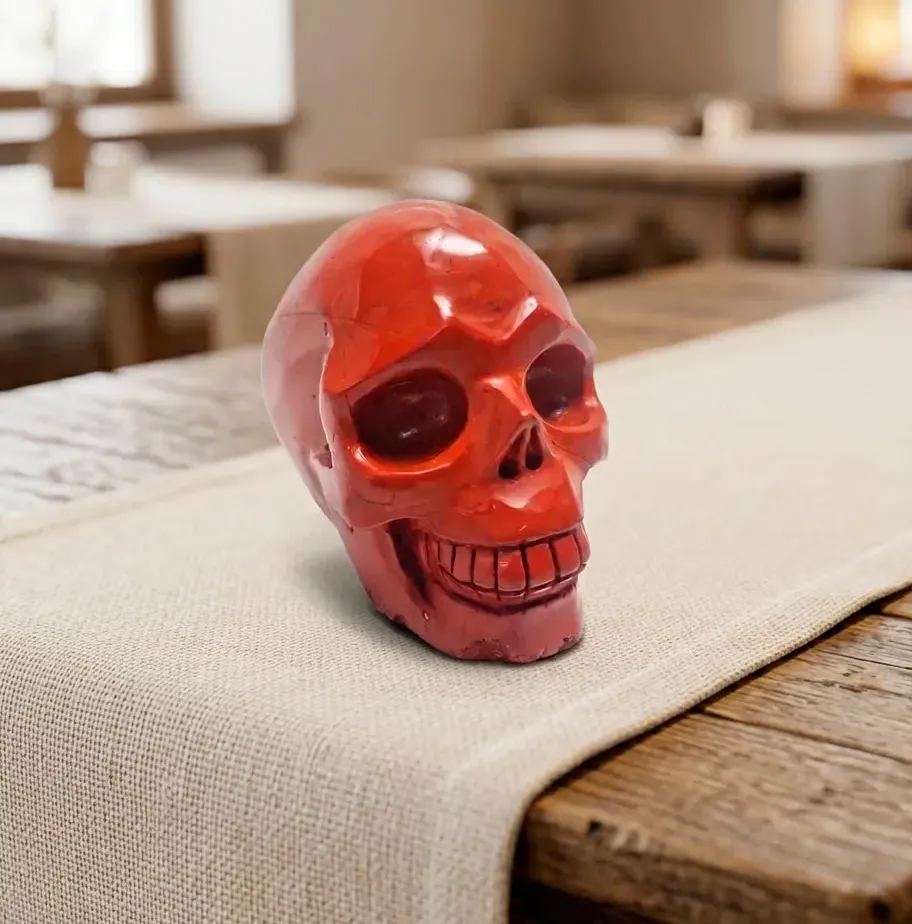
Red jasper is probably the first thing that comes to mind when you think of this stone. Its intense red colour, sometimes with brown or orange tones, comes from iron oxide (hematite) spread throughout the silica mass. The more iron oxide there is and the more evenly it's distributed, the more uniform and vivid the red.

It's one of the most widespread jaspers in the world, and has been used since ancient times for seals, amulets and jewellery, precisely because its intense colour and hardness (it's quartz, so it's very tough) made it perfect for carving.

Sardonyx jasper: the Mediterranean cousin

Sardonyx jasper gets its name from its association with the Mediterranean region (Sardinia and nearby areas are well-known historical sources), although nowadays it's found in many other places around the world. It usually shows reddish and orange tones, similar to red jasper, but with a more earthy look and, often, with veins or patches that resemble miniature landscapes.

This is where the pattern starts to become clear: many jasper names don't describe a different chemical composition, but rather an origin, a visual pattern, or a historical tradition of how that stone has been named in a particular area.

Different types of jasper at Cristalljoia Barcelona and online

Picture jasper: when the stone looks like a painting

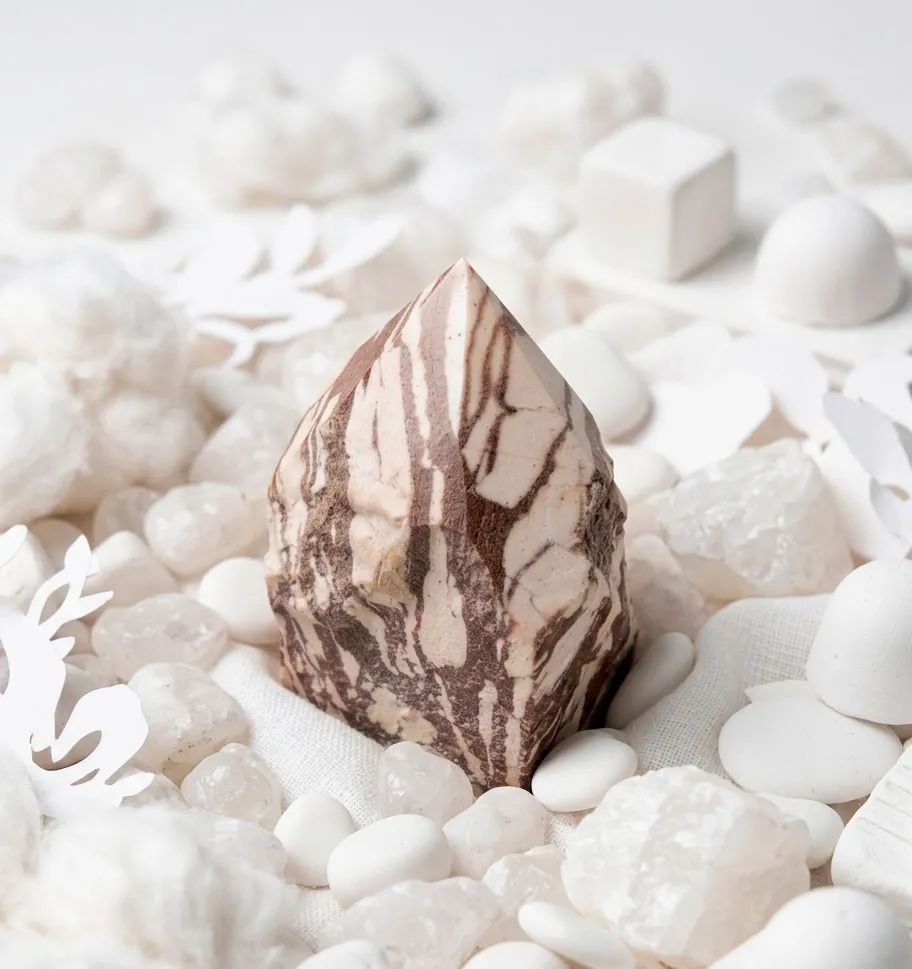
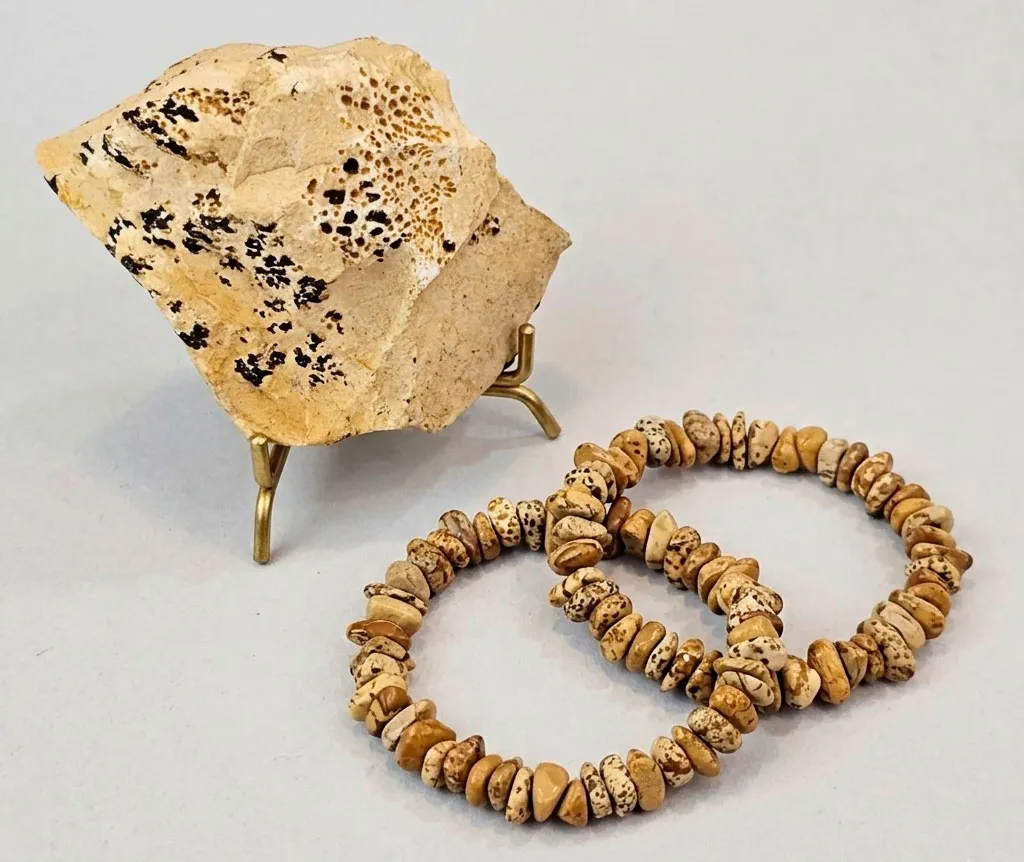
This is a favourite for many people, and for good reason. Picture jasper is characterised by its bands and patches in brown, beige, ochre and sometimes greenish tones, which resemble hills, horizons or desert landscapes seen from a distance.

This "landscape" effect happens because, during its formation, layers of sediment with different concentrations of minerals (mainly iron and manganese oxides) were deposited and later "frozen" into the stone like miniature geological strata. In a sense, each piece of picture jasper is literally a map of how that sediment was deposited, layer by layer, as it formed.

Leopard jasper: spots that aren't random

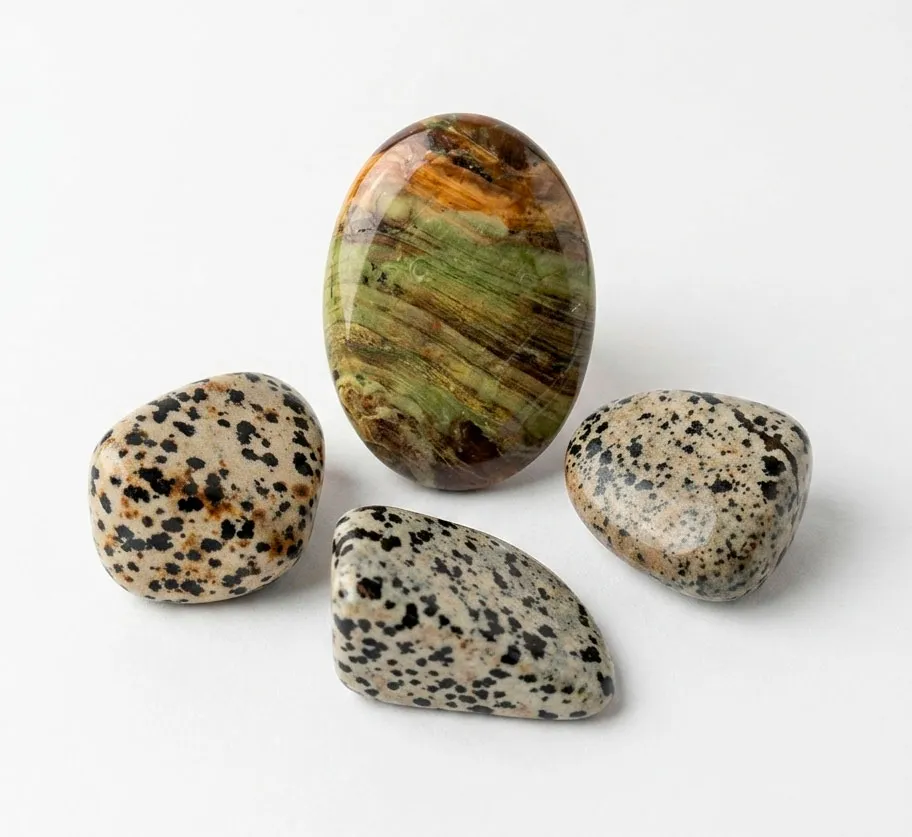
Leopard jasper owes its name, as you can probably guess, to its rounded dark spots on a lighter background, resembling a leopard's coat. These spots usually form from localised concentrations of minerals (often manganese or iron oxides) that clustered into "cores" during the rock's formation, rather than spreading out evenly.

It's a great example of how the same type of "ingredients" (metal oxides) can produce completely different visual results depending on how they're distributed: evenly (red jasper), in layers (picture jasper), or in concentrated spots (leopard jasper).

Dalmatian jasper: straight out of a Disney film

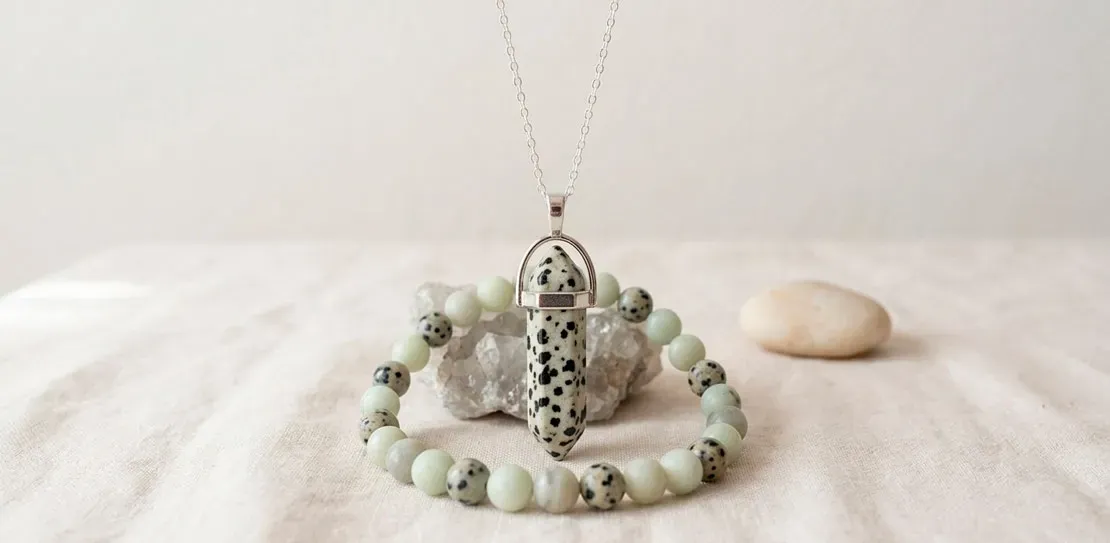
Dalmatian jasper is perhaps the easiest to identify at a glance: a white or cream background with rounded black spots, exactly like a Dalmatian's coat. There's an interesting nuance here: although it's commonly sold as "jasper", from a strict mineralogical standpoint Dalmatian jasper usually has a somewhat different composition from "classic" silica jaspers, often consisting of a feldspar base with black tourmaline inclusions (those famous spots).

Different types of jasper at Cristalljoia Barcelona and online

Mookaite jasper: the Australian one with impossible colours

If picture jasper looks like a painting, mookaite jasper looks like a painter's palette. This variety, originating from the Mooka Creek region in Western Australia (hence its name), combines red, yellow, purple, cream and brown tones within a single piece, often forming patches and veins that blend into each other in a very organic way.

What makes mookaite jasper special from a geological point of view is its origin: it formed from radiolarites, meaning sediments made up of the microscopic remains of radiolarians (a type of marine microorganism with a silica skeleton) that accumulated on the seabed millions of years ago. Over time, these sediments became silicified, and the various minerals present (mainly iron oxides in different oxidation states) painted that characteristic mix of colours.

So when you hold a piece of mookaite jasper, you're actually holding the fossilised, mineralised remains of microscopic marine organisms, coloured by a genuine mosaic of iron oxides. Few stones tell such a literal story about their own origin.

So, is "jasper" always the same thing?

Here's the part that really helps tie everything together. In mineralogy and gemmology, the name "jasper" is used in two ways:

  • In the strict sense: jasper is a variety of opaque chalcedony (microcrystalline quartz), with impurities that give it colour and pattern. Red jasper, sardonyx jasper, picture jasper and leopard jasper all fall into this category, among many others.
  • In the commercial or popular sense: sometimes stones are called "jasper" even if they're not technically chalcedony, simply because they share a similar visual appearance (opaque, with spotted or banded patterns). Dalmatian jasper is an example of this.

We're not telling you this to complicate things, but so you understand why you'll sometimes see stones with very similar names that, if you dig a little, have different geological origins. At Cristalljoia we always try to be clear about the real composition of each piece, while also respecting the names people use and search for when choosing these stones, since at the end of the day those are the names that make sense to them.

Different types of jasper at Cristalljoia Barcelona and online

What all jaspers have in common

Beyond the differences in colour and pattern, almost all jaspers share a few characteristics that make them highly valued:

  • Hardness: being made mainly of microcrystalline silica, they're tough, durable stones, perfect for everyday jewellery
  • Opacity: unlike rock crystal or amethyst, light doesn't pass through them, giving them that solid, "earthy" look they're known for
  • Unique patterns: each piece is literally one of a kind, since it records the exact conditions (minerals present, layers, concentrations) of the time and place where it formed
  • Visible geological history: when you look at a picture jasper or a leopard jasper, you're directly seeing how sediments and minerals were deposited millions of years ago, something very few stones show so clearly

Quick recap so you remember the essentials

  • Jasper = a variety of opaque microcrystalline quartz (chalcedony), whose colour and pattern depend on the impurities present during its formation
  • Red jasper = iron oxide evenly distributed, giving an intense red colour
  • Sardonyx jasper = reddish/orange tones, historically associated with the Mediterranean region
  • Picture jasper = bands and layers of sediment that resemble landscapes
  • Leopard jasper = concentrated patches of oxides, like a leopard's coat
  • Dalmatian jasper = light background with black tourmaline spots, commercially called "jasper" despite a different composition
  • Mookaite jasper = Australian variety formed from fossilised radiolarian sediments, with a colourful mix of iron oxides

So next time you see a jasper with a new name, you'll know it's not that a completely different stone exists for each name, but rather that you're looking at a different geological "recipe": the same silica base, but with its own combination of minerals, layers and patterns, each with its own story to tell.

Different types of jasper at Cristalljoia Barcelona and online

Looking for a specific mineral?

At our physical store in the centre of Barcelona we have many more options than what you see online.

If you can't find what you're looking for online, message me on WhatsApp at +34 670 61 16 63.

I'm Jéssica and I'll be happy to help.

visita virtual 3D
Product added to wishlist
Product added to compare.

Looking for a mineral? Write us