Quartz and Chalcedony: The Difference That Explains Half the Stones in the Shop

Amethyst, carnelian, jasper, agate, citrine, onyx... almost all of them share the same ingredient. What changes is the size of the crystal

If you look closely at the catalogue of almost any mineral shop, you'll notice that a huge percentage of the "pretty" stones — the translucent ones, or the ones with vivid colours — are actually the same substance, over and over, disguised in a thousand different ways. That substance is silica, and it takes two very different paths depending on how it crystallises: quartz and chalcedony.

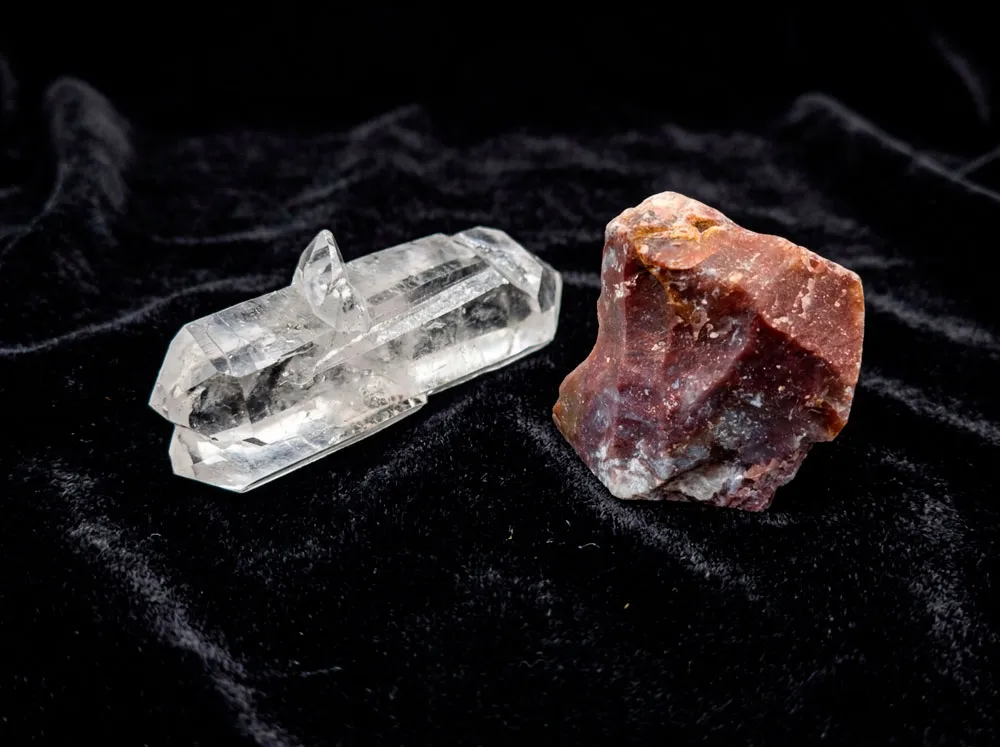
In one sentence: quartz and chalcedony are exactly the same material (silicon dioxide), but quartz forms large crystals you can see with the naked eye, while chalcedony forms crystals so tiny that the stone looks smooth and uniform on the outside. That difference in size is what separates amethyst from agate, and citrine from carnelian.
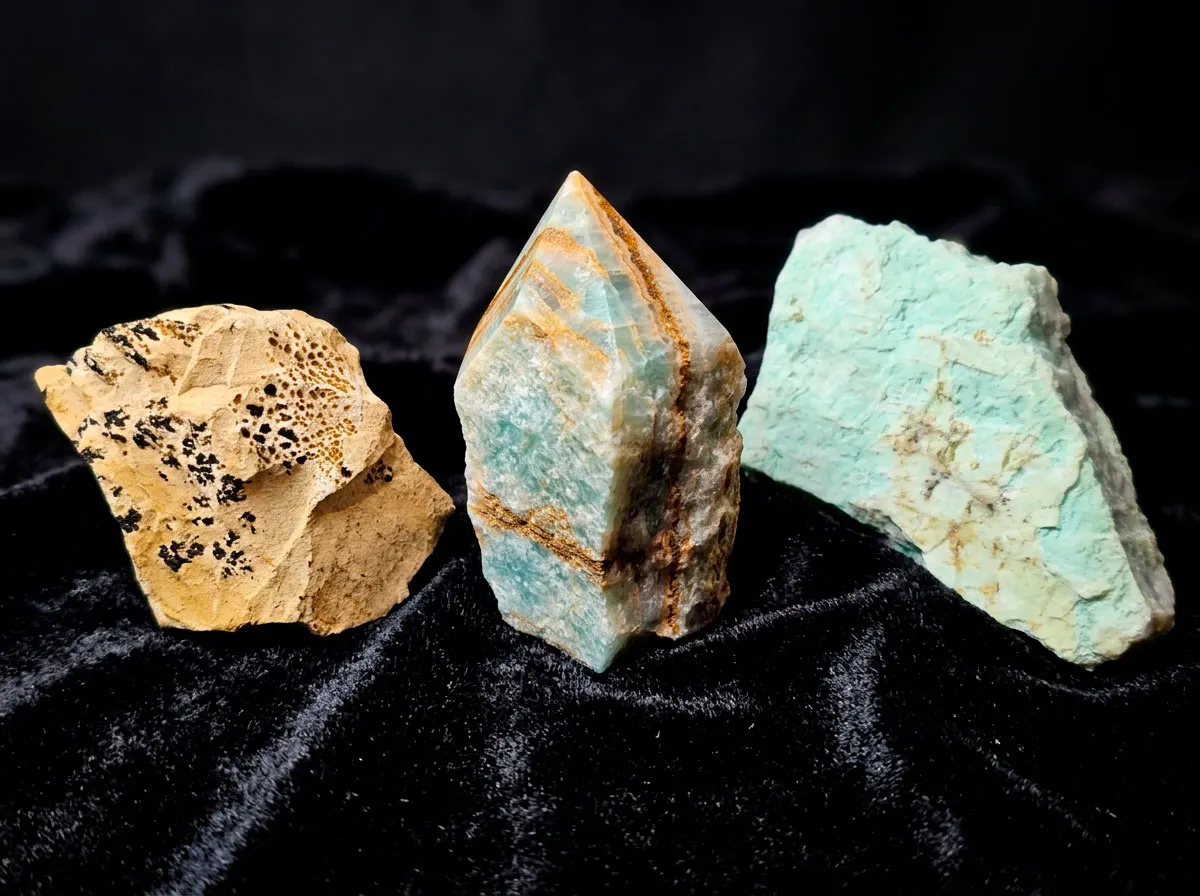
Quartz - Chalcedony. Cristalljoia

1. First, the basics: what is silicon dioxide?

Before getting into quartz and chalcedony, it helps to be clear on the foundation of it all:

  • Silicon dioxide (SiO₂) is a compound made up of two very common elements: silicon and oxygen. In nature it's also known as silica.
  • It is, by far, the most abundant compound in the Earth's crust: a large part of the sand on beaches, for example, is silica.
  • It can organise itself in several different ways: into large, ordered crystals (that's quartz), into interlocking microscopic crystals (that's chalcedony), or even with no crystalline structure at all (that's opal, which is a different story altogether).
  • In other words: quartz and chalcedony aren't "relatives" of silica — they literally are silica. The only difference is how their atoms organised themselves as they formed.
Quartz - Chalcedony. Cristalljoia

2. The key difference, with an easy analogy

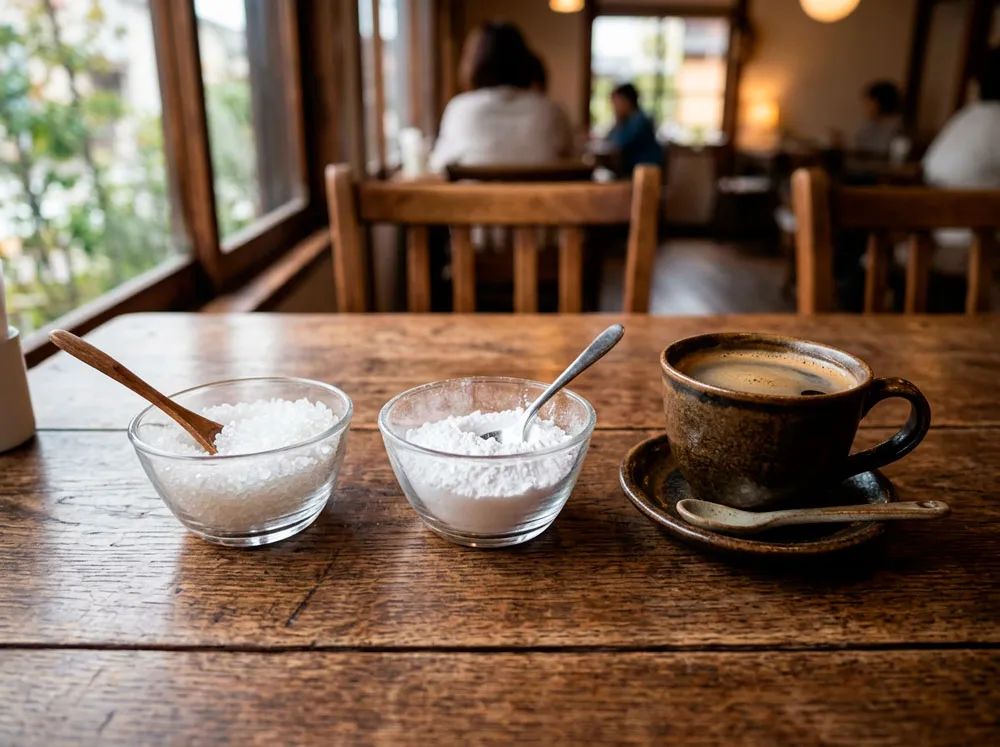
Think about sugar:

  • Granulated sugar has large crystals you can see, and even pick up one by one. That's quartz: macroscopic crystals, with flat faces and, very often, a characteristic point.
  • Icing sugar is the same substance, but ground into particles so fine that you can no longer make out individual crystals — you just see a uniform powder. That's chalcedony: silica organised into crystals so tiny that not even a magnifying glass can pick them out separately.
The trick to telling them apart at a glance: if the stone has flat faces, edges, and often a point, it's quartz. If it looks smooth, somewhat waxy or matte, with no visible faces, it's almost certainly chalcedony.
Quartz - Chalcedony. Cristalljoia

3. Why they form in such different ways

The difference in size is no accident: it comes from how the silica gets there in the first place.

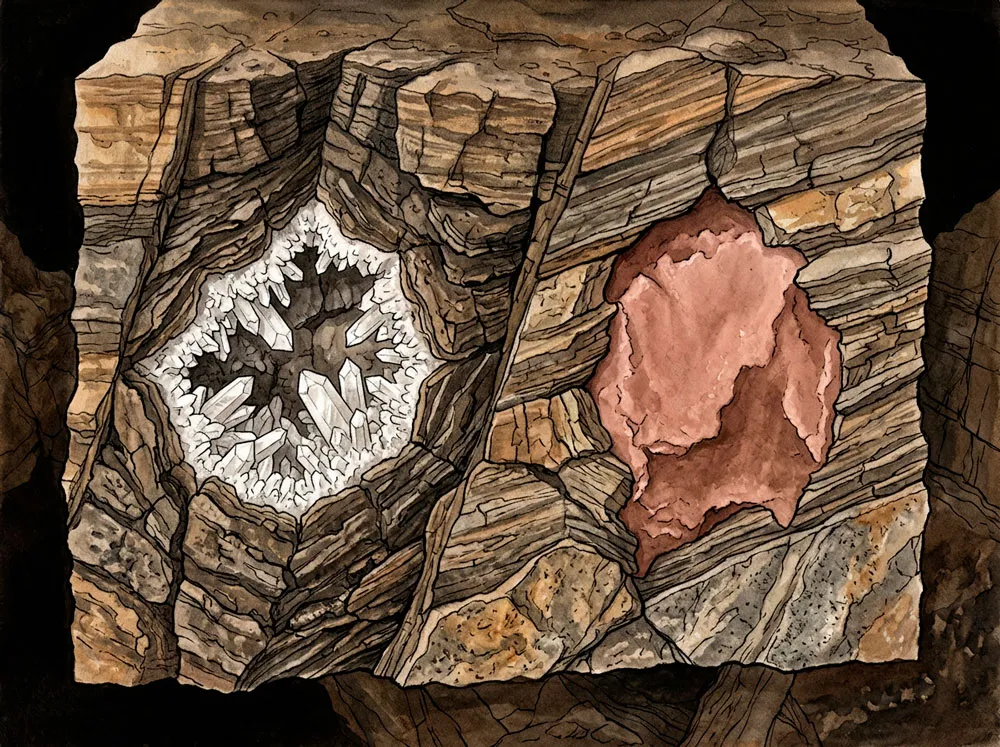
  • Quartz forms when hot water carrying dissolved silica cools very slowly inside an open cavity (a crack, a geode). Because it happens slowly, the atoms have time to line up one behind another, forming one large, ordered crystal.
  • Chalcedony forms differently: the silica arrives as a kind of thick gel, which fills small cavities (like the gas bubbles in volcanic rock) and gradually hardens. Since it doesn't crystallise from a single starting point but from millions of tiny points at once, the result is a tangle of interlocking microscopic crystals.
Quartz - Chalcedony. Cristalljoia

4. The most common varieties of quartz

All of these are exactly the same mineral. The only thing that changes is which traces got trapped inside the crystal as it formed:

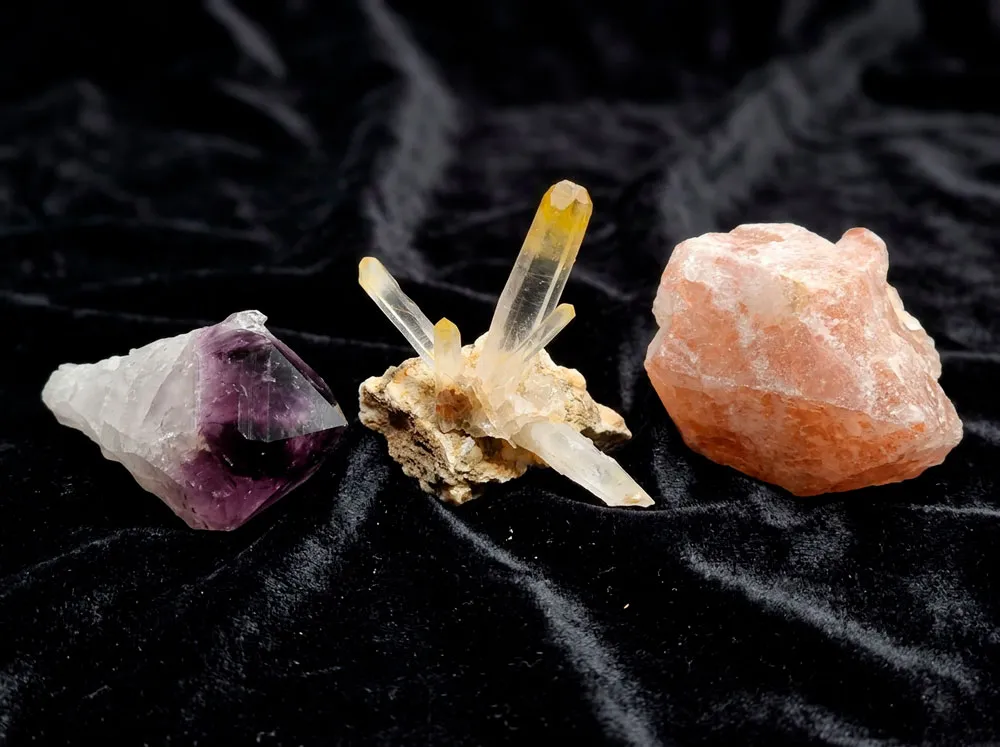
  • Rock crystal. Transparent, colourless quartz, with no extra traces at all.
  • Amethyst. Owes its violet colour to traces of iron inside the crystal which, after millions of years of natural background radiation, change state and produce that colour.
  • Citrine. Practically the same process as amethyst, but with the iron in a different state: that's why amethyst and citrine can even appear together in the same crystal (that's ametrine).
  • Rose quartz. The pink tone comes from traces of aluminium, phosphorus or manganese, or from tiny fibres of another pink mineral trapped inside.
  • Smoky quartz. Grey or brown from exposure to natural radiation, a process very similar to amethyst's but without iron playing a role.
Quartz - Chalcedony. Cristalljoia

5. The most common varieties of chalcedony

Here, the colour and transparency depend mainly on which impurities mixed into that silica "gel" as it hardened:

  • Agate. Translucent chalcedony with bands of colour, formed because the composition of the silica gel kept changing in layers as it filled the cavity — a bit like the rings of a tree.
  • Carnelian. Its distinctive reddish-orange comes from iron oxide (mainly hematite) very finely dispersed within the silica.
  • Onyx. Like agate, but with straight, parallel bands, usually in black and white.
  • Jasper. Here the silica mixed with quite a few more impurities — clays, other oxides — which removes its transparency and gives it that opaque look, with patterns and colours that vary widely depending on where it formed.
  • Chrysoprase. Its distinctive apple-green comes from traces of nickel.
So, are jasper and agate cousins? Yes, literally: both are chalcedony, and the only difference is the amount of impurities they carry inside. Little impurity, well dissolved → translucent (agate, carnelian). Lots of impurity, poorly dissolved → opaque (jasper).
Quartz - Chalcedony. Cristalljoia

6. So why are there so many stones that are quartz or chalcedony?

It's no coincidence — there's a very simple reason behind it:

  • As mentioned at the start, silica is one of the most abundant compounds on the planet. It's available in practically every type of rock.
  • It's relatively easy for groundwater to dissolve it and redeposit it in gaps and cavities, so it forms in a huge range of different geological environments: volcanic, sedimentary, hydrothermal...
  • It's highly resistant to erosion and wear, far more so than other minerals, so it survives intact for millions of years while the surrounding rock erodes away.
  • And, to top it off, it can absorb a great many different impurities while still remaining silica, which is what produces that enormous variety of colours and patterns from a single base ingredient.

Amethyst, carnelian, jasper or rock crystal: different name, different colour, but underneath it all, the same silica telling a different story depending on the size of its crystals.

In short: quartz and chalcedony are both silicon dioxide, but quartz forms large crystals with visible faces (rock crystal, amethyst, citrine, rose quartz), while chalcedony forms crystals so tiny that the stone looks uniform on the outside (agate, carnelian, onyx, jasper, chrysoprase). The colour of each variety depends on which traces or impurities got trapped as it formed, and silica gives rise to such a wide variety of stones because it's abundant, easy to dissolve and transport in water, and highly resistant to the passage of time.

Looking for a specific mineral?

At our physical store in the centre of Barcelona we have many more options than what you see online.

If you can't find what you're looking for online, message me on WhatsApp at +34 670 61 16 63.

I'm Jéssica and I'll be happy to help.

visita virtual 3D
Product added to wishlist
Product added to compare.

Looking for a mineral? Write us