How to care for your minerals: a guide by stone type and format

Not all stones are cared for the same way, and knowing why helps them last a lifetime

It's common to think that a mineral, being a stone, is indestructible. And in part it's true: many took millions of years to form underground. But that same geological history is what determines its hardness, porosity and sensitivity to water, light or knocks. A selenite and a quartz can look equally "hard" to the eye and behave in completely different ways when faced with a simple damp cloth. Knowing these differences is basic mineralogy, and it's what separates a collection that stays intact over the years from one that fades or breaks.

Key fact: the factor that most determines how to care for a stone isn't its name, but three physical properties: hardness (Mohs scale), porosity (whether it absorbs water or oils), and chemical stability (whether it contains water in its structure or changes with light).

Hardness: why some scratch at the slightest touch and others barely scratch at all

The Mohs scale measures scratch resistance, from 1 (talc, scratches with a fingernail) to 10 (diamond). It's the most useful reference when storing stones together: a harder piece can always scratch a softer one if they rub against each other in a drawer or bag.

Some useful references: talc and gypsum/selenite (1-2, scratch with a fingernail), calcite and fluorite (3-4), apatite (5), feldspars such as labradorite or amazonite (6), quartz, amethyst, citrine and agate (7), topaz (8), corundum/sapphire (9). The closer two stones are on this scale, the lower the risk of them scratching each other.
How to care for your mineral - Cristalljoia

Can it get wet? It depends on porosity and composition

This is where most mistakes happen, because instinct says "it's a stone, it can handle water." But there are three quite different groups.

Minerals that tolerate water well: quartz in all its varieties (clear, amethyst, citrine, rose quartz, tiger's eye), agate, jasper, obsidian, garnet, topaz. A damp cloth or a brief rinse with lukewarm water won't affect them.

Porous or soft minerals, best avoided or only briefly exposed to water: turquoise, malachite, larimar, opal, lapis lazuli, sodalite, azurite. They're porous or contain inclusions that can absorb moisture, lose color or develop micro-cracks over time. They clean better with a dry or lightly dampened cloth, never submerged.

Minerals that water can directly damage or dissolve: selenite and gypsum (can eventually dissolve with prolonged exposure), halite/salt (dissolves literally), pyrite (water can promote its oxidation over time). With these, never use water — only a dry cloth or a soft brush for dust.

In short: when in doubt, lukewarm water and a soft cloth are almost always safe for hard, compact stones; for everything else, a dry cloth is best until you've confirmed which mineral it is.
How to care for your mineral - Cristalljoia

What about sunlight? Not all stones react the same way to light

Prolonged exposure to direct sunlight can affect some stones in two ways: fading and cracking from sudden temperature changes.

Fade with sun exposure: amethyst (can pale to lighter tones with very prolonged exposure), citrine, amber (besides darkening, heat can make it brittle), fluorite, kunzite, some pink tourmalines.

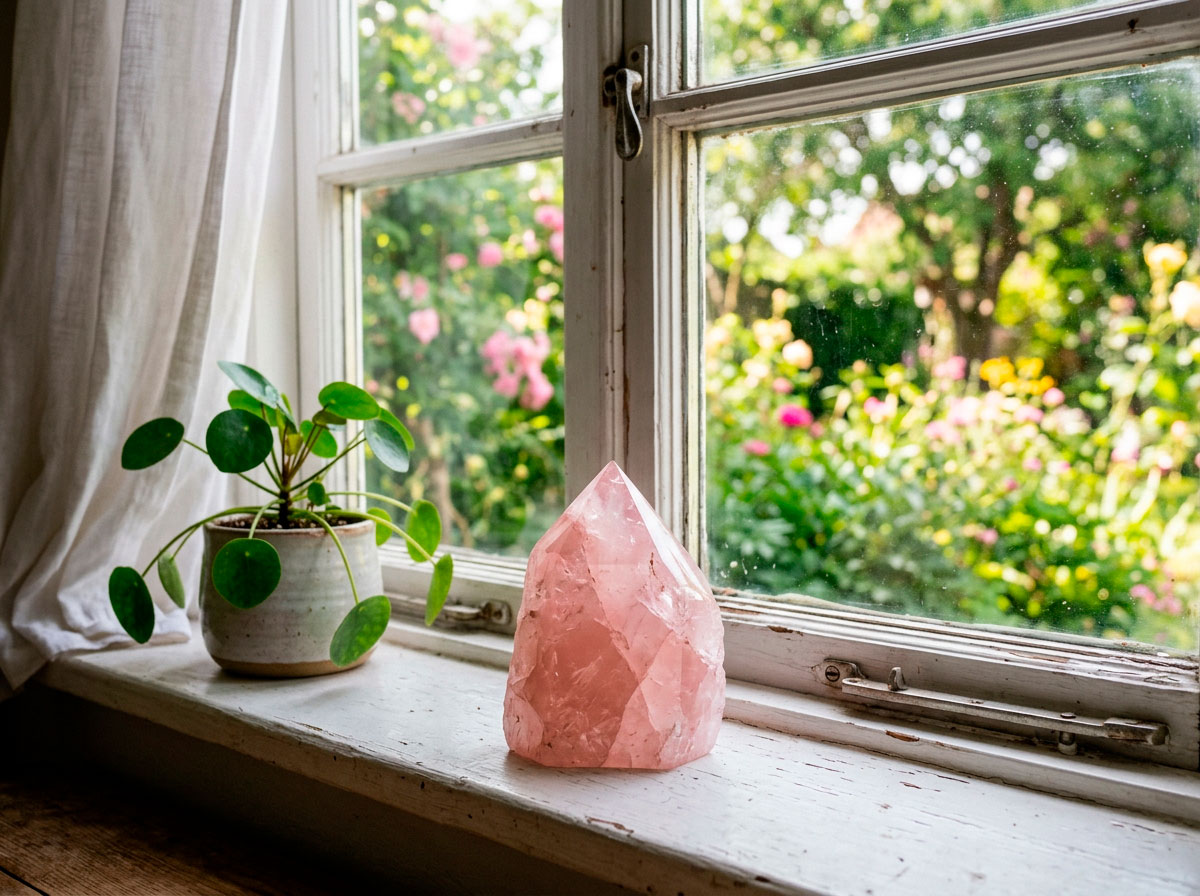
Tolerate normal sunlight well: clear quartz, agate, jasper, obsidian, garnet. Even so, no stone benefits from spending months right up against a window in the middle of summer: the sharp temperature swings between day and night can create internal stress even in hard minerals.

How to care for your mineral - Cristalljoia

Care also depends on the piece's format

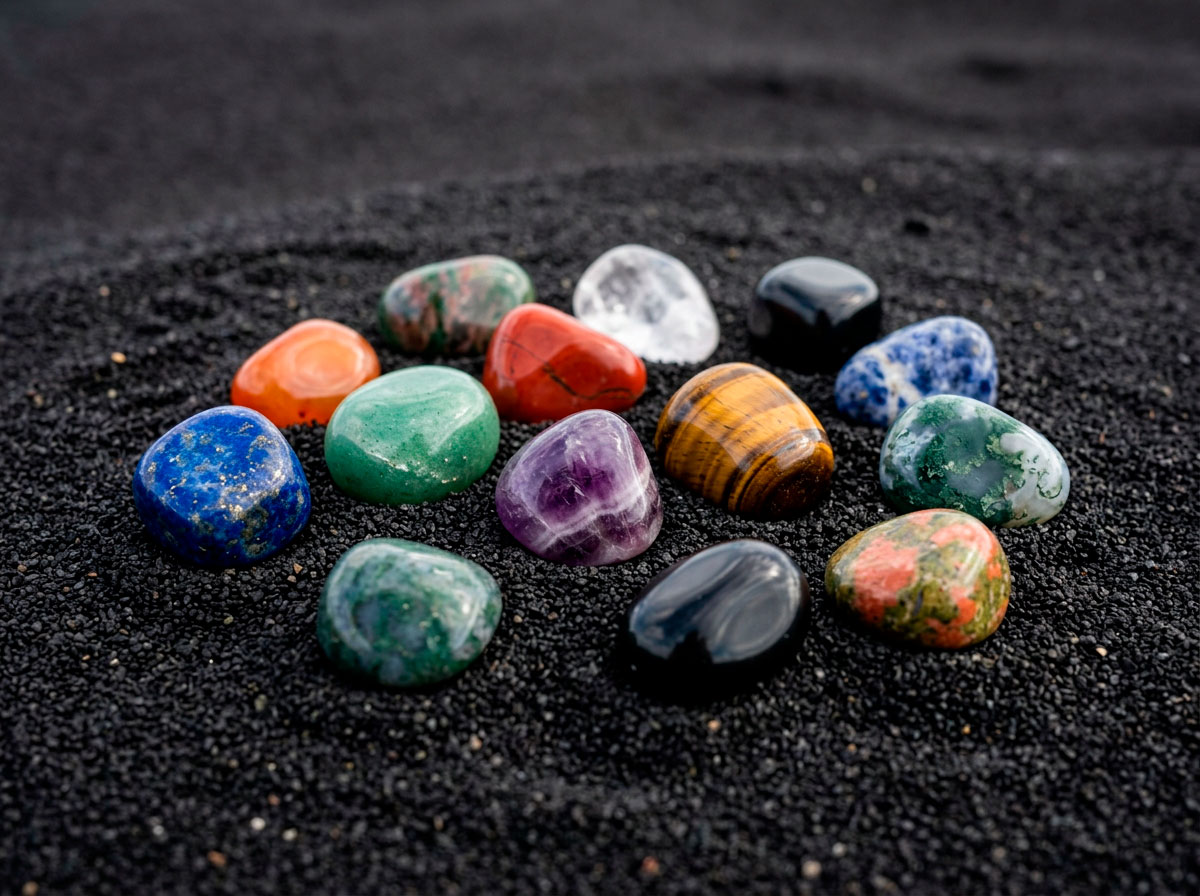
Tumbled stones: being polished on every face, they're the most resistant to everyday handling, since they have no fragile edges or points. This is the safest format to carry in a pocket or bag.

Rough stone: keeps its natural formation faces, often with more delicate edges or points that can chip on impact. A fixed spot is recommended, without handling it daily, and cleaning it only with a soft brush or a dry cloth for dust.

Points: the tip is the most fragile part of the whole piece, especially in long, thin quartz points. It's best to store them lying down or on a stand that doesn't put weight on the tip, and to avoid letting them knock against other stones when moving them.

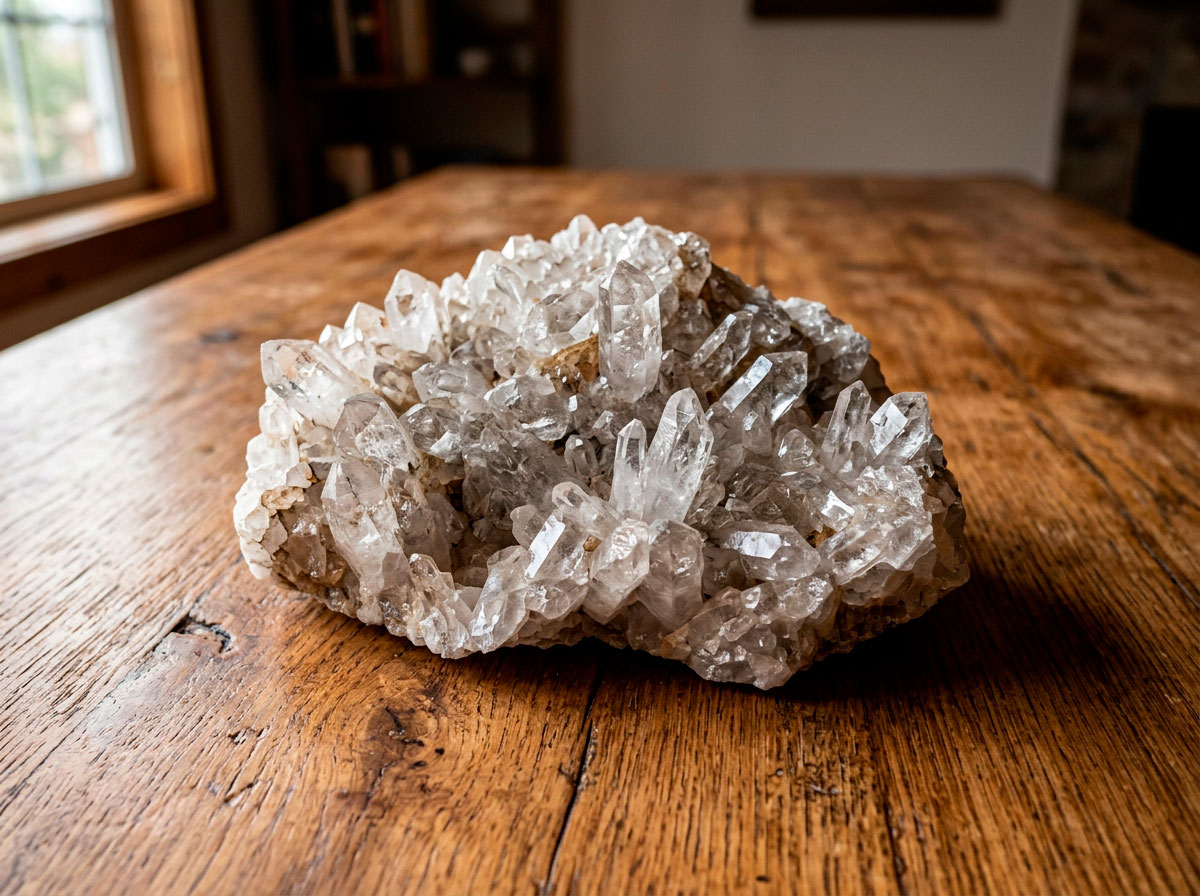
Druzy clusters: the entire surface is made up of tiny individual crystals, making them extremely sensitive to friction and almost impossible to clean with a cloth without pulling off small crystals. The safest approach is a soft brush or a puff of air, always storing them face-up and separated from other pieces.

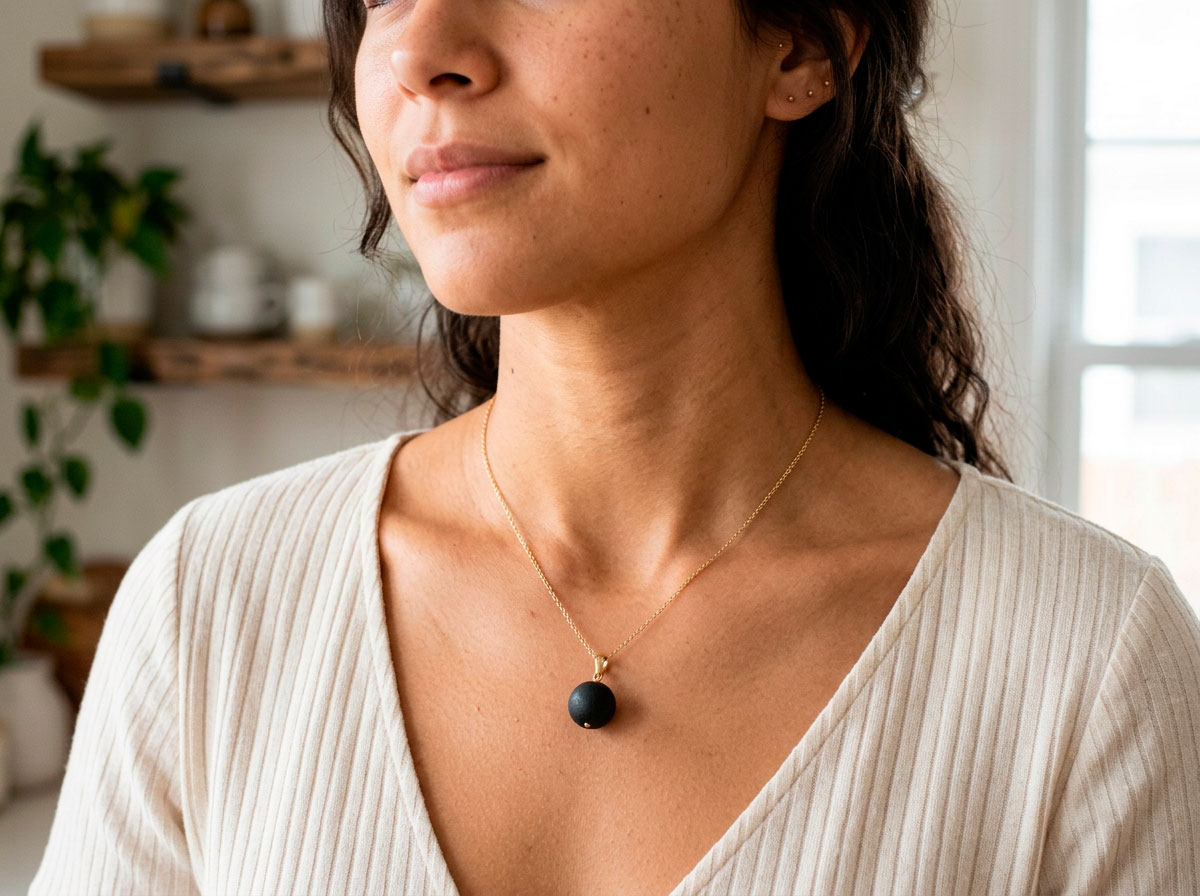
Pendants and set pieces: here there are two materials to care for at once. The stone follows the rules for its type, but the silver setting can tarnish (turn black) from air, sweat or certain products. Clean it with a cloth specifically for silver, avoiding direct contact between the product and the stone, especially if it's porous like turquoise or larimar.

A good habit regardless of format: take off pendants and bracelets before showering, exercising, swimming, or applying creams and perfume. It's not just about the stone: chlorine, sweat and cosmetics are among the most common causes of deterioration in both porous minerals and metal settings.
How to care for your mineral - Cristalljoia

How to store them so they don't scratch each other

The golden rule, going back to the Mohs scale: keep each piece in its own compartment, cloth bag, or wrapped in a soft cloth, so stones of different hardness never touch directly. A quartz (7) stored loose next to a selenite (2) will end up marking it within weeks, even if the contact seems minimal.

Practical tip: if you're unsure whether your stone can handle water, always start with the most conservative option: a lightly dampened cloth, never full submersion or hot water. It's much easier to go from "a little" to "more" than to undo damage that's already been done.

Frequently asked questions

Can I clean any stone with water and soap?

No. It's safe for quartz, agates, jaspers and other hard, non-porous stones, but it can damage porous minerals (turquoise, larimar, malachite) or directly dissolve others (selenite, halite). When in doubt, a dry cloth is the safer choice.

Why does my amethyst seem to have lost some of its color intensity?

Amethyst can fade with prolonged exposure to direct sunlight, an effect that's been recognized in mineralogy for a long time. Storing it or displaying it away from a sunny window helps preserve its color.

Can druzy clusters be washed with water?

They can, if the base mineral tolerates it (a quartz druzy, for example), but never by rubbing: a gentle stream of water or a soft brush works better than a cloth, which can pull off the smallest crystals from the surface.

Do I need to store each stone separately?

It's the safest approach, especially when combining stones of very different hardness. A simple individual cloth bag or its own compartment prevents scratches that, on polished stones, are irreversible.

Looking for a specific mineral?

At our physical store in the centre of Barcelona we have many more options than what you see online.

If you can't find what you're looking for online, message me on WhatsApp at +34 670 61 16 63.

I'm Jéssica and I'll be happy to help.

visita virtual 3D
Product added to wishlist
Product added to compare.

Looking for a mineral? Write us