Optical calcite: the stone that guided the Vikings across the sea

How a transparent crystal may have helped Norse sailors find the sun even through clouds and fog

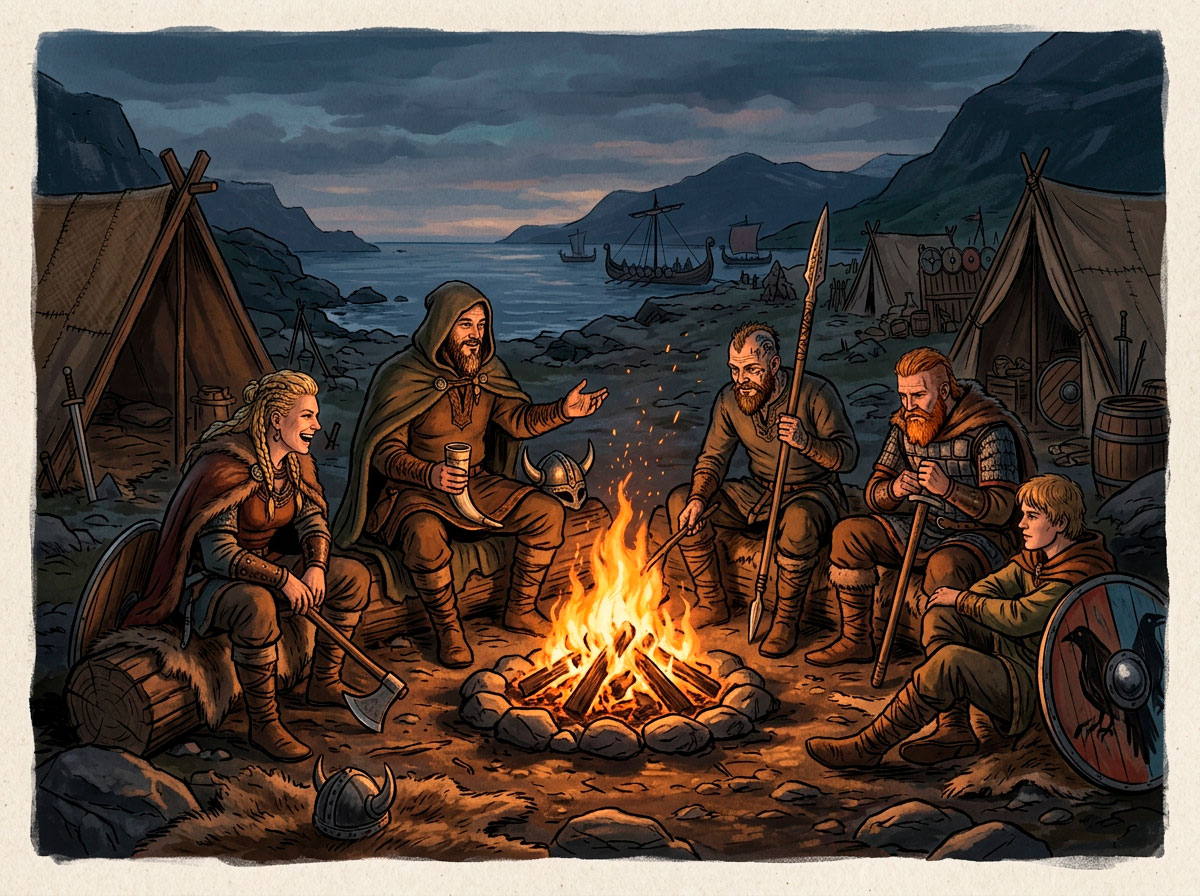
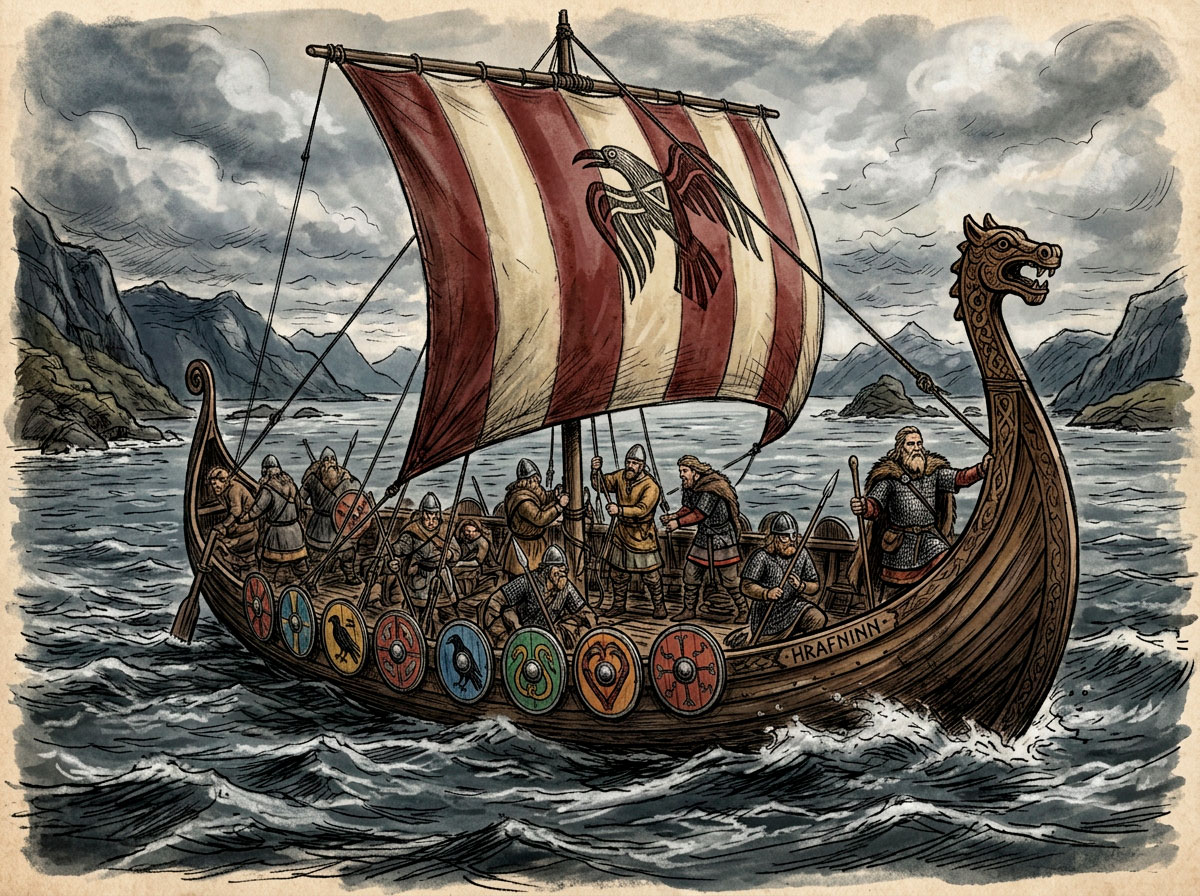
Long before the magnetic compass reached Europe, the Vikings were already crossing the North Atlantic to reach Iceland, Greenland, and even North America. They navigated by the sun, the stars, and their deep knowledge of the sea. But what did they do on cloudy days, so common at those latitudes? The Norse sagas speak of a mysterious "sunstone" (sólarsteinn) capable of revealing the sun's position even through the clouds.

Key fact: since 1967, the most widely accepted hypothesis among researchers is that this "sunstone" was Iceland spar, a variety of transparent calcite abundant across Scandinavia and Iceland.
Optical Calcite Guided the Vikings

What makes calcite so special?

Optical calcite (or Iceland spar) has an uncommon physical property: birefringence. When light passes through the crystal, it splits into two rays, creating a double image of anything viewed through it. You can see this for yourself by placing a transparent calcite crystal over printed text: the letters will appear doubled.

Calcite is also polarizing: the two images it produces have different brightness depending on how the crystal is oriented relative to the light. And this is the key to navigation: skylight, even under cloud cover, is polarized by the atmosphere in a way that's predictable relative to the sun's position.

How was it used? the navigator would raise the crystal toward the sky and slowly rotate it. When the brightness of the two images matched, the crystal was aligned with the sun's position, even if it was hidden by clouds, fog, or below the horizon.
Calcita óptica guiaba a los vikingos

Modern science puts the legend to the test

For decades, the idea of the sunstone was seen as little more than a legend with no real basis. That changed with studies like the one led by physicist Guy Ropars and his team at the University of Rennes, who demonstrated experimentally in 2011 that a calcite crystal, mounted in a simple wooden device with a central hole, could locate the sun with remarkable precision, even under overcast skies.

Later simulations, published in Royal Society Open Science, calculated that by using the sunstone every one to two hours during a voyage, Viking navigators could have successfully reached Greenland on the vast majority of their trips.

Worth noting: the exact identity of the Viking sunstone remains a matter of scientific debate. Other minerals, such as cordierite or tourmaline, have also been proposed as candidates. To date, there is no direct, undisputed archaeological proof that the Vikings used calcite for navigation; the evidence is mainly experimental and textual (the sagas).
Optical Calcite Guided the Vikings

An unexpected clue: the Elizabethan shipwreck

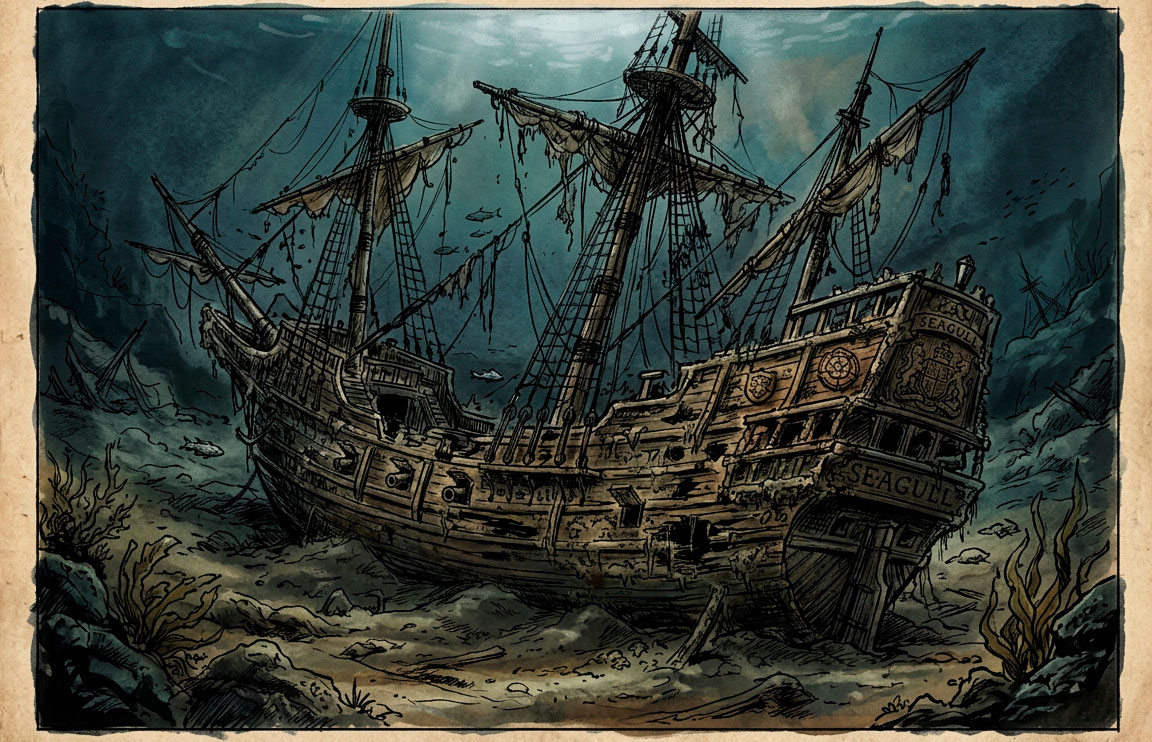
In 2013, the discovery of a calcite crystal was announced among the remains of an English ship that sank in 1592 off the island of Alderney, in the English Channel. Curiously, that ship already carried iron cannons and likely magnetic compasses, which suggests that, even centuries after the Vikings, sailors may have kept calcite crystals as a backup method, perhaps because the iron on board could deflect the compass needle.

Geological curiosity: flawless, perfect Iceland spar, the same type used in precision optical instruments, has sold for more than $1,000 per kilogram. During World War II it was even used in the manufacture of bombsights.
Optical Calcite Guided the Vikings

Frequently asked questions

Are optical calcite and Iceland spar the same thing?

Yes. Iceland spar is the traditional name for the transparent, colorless variety of calcite (calcium carbonate, CaCO₃), well known for its strong birefringence.

Has it been proven with certainty that the Vikings used the sunstone?

Not definitively. The sagas mention it and modern experiments show the method would work, but no Viking archaeological finds confirm its direct use as a navigation tool.

Does calcite work for finding the sun even at night or when it's below the horizon?

Yes, within certain limits: twilight is still polarized in a way that allows the sun's position to be estimated before sunrise or after sunset.

Where is this type of calcite found today?

Iceland and Scandinavia are the best-known historical locations, though optical-quality Iceland spar is also found in other deposits around the world.

Looking for a specific mineral?

At our physical store in the centre of Barcelona we have many more options than what you see online.

If you can't find what you're looking for online, message me on WhatsApp at +34 670 61 16 63.

I'm Jéssica and I'll be happy to help.

visita virtual 3D
Product added to wishlist
Product added to compare.

Looking for a mineral? Write us