Why Brazil Produces So Many Spectacular Minerals

It's neither coincidence nor luck: it's geology. A look at the three reasons — ancient rock, volcanoes and plenty of time — that make Brazil the world's leading gem supplier

Just open any mineral catalog to see it for yourself: giant amethysts, tourmalines in every color, imperial topaz, emeralds, rose quartz... a huge share of the most spectacular pieces on the market carry the label "Brazil." This isn't marketing or geographic coincidence: it's the result of several distinct geological stories coexisting within a single country, each one on its own capable of producing an exceptional type of mineral.

Beautiful minerals from Brazil

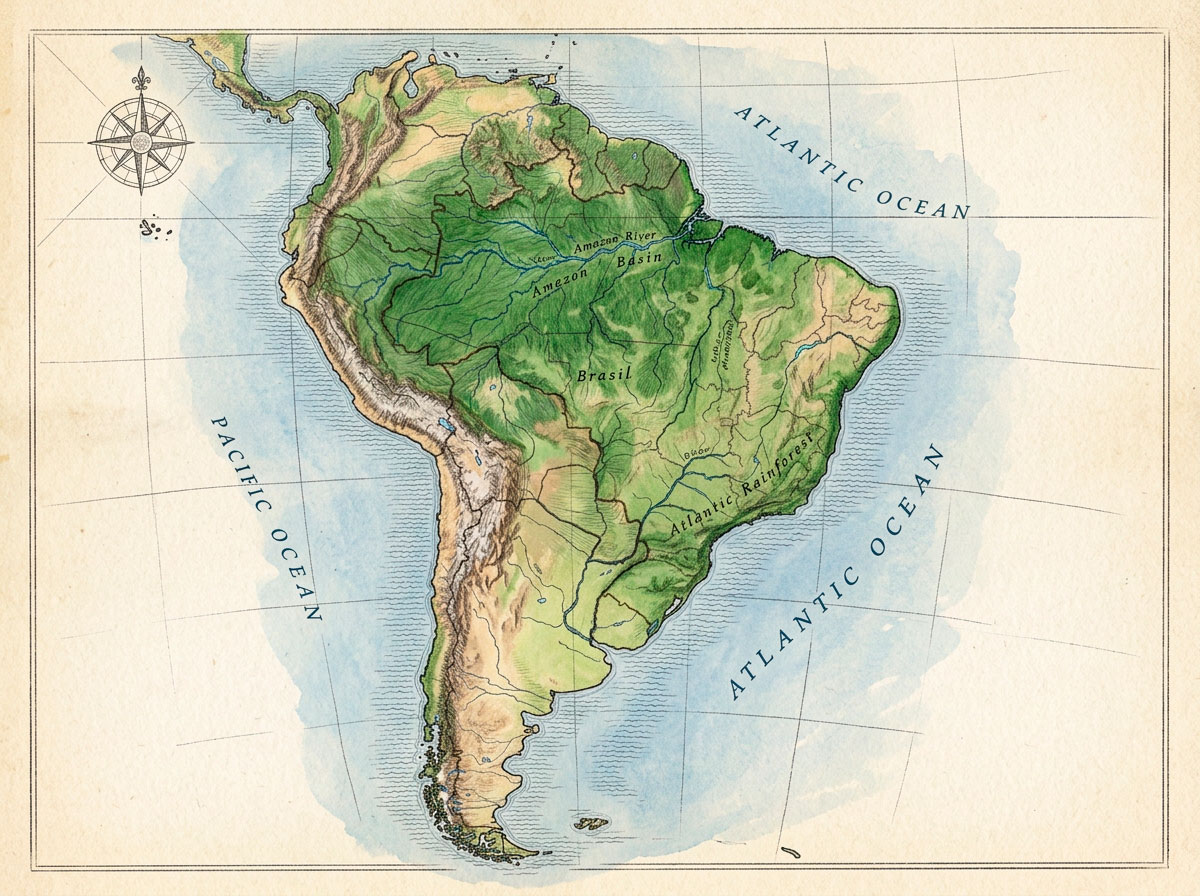
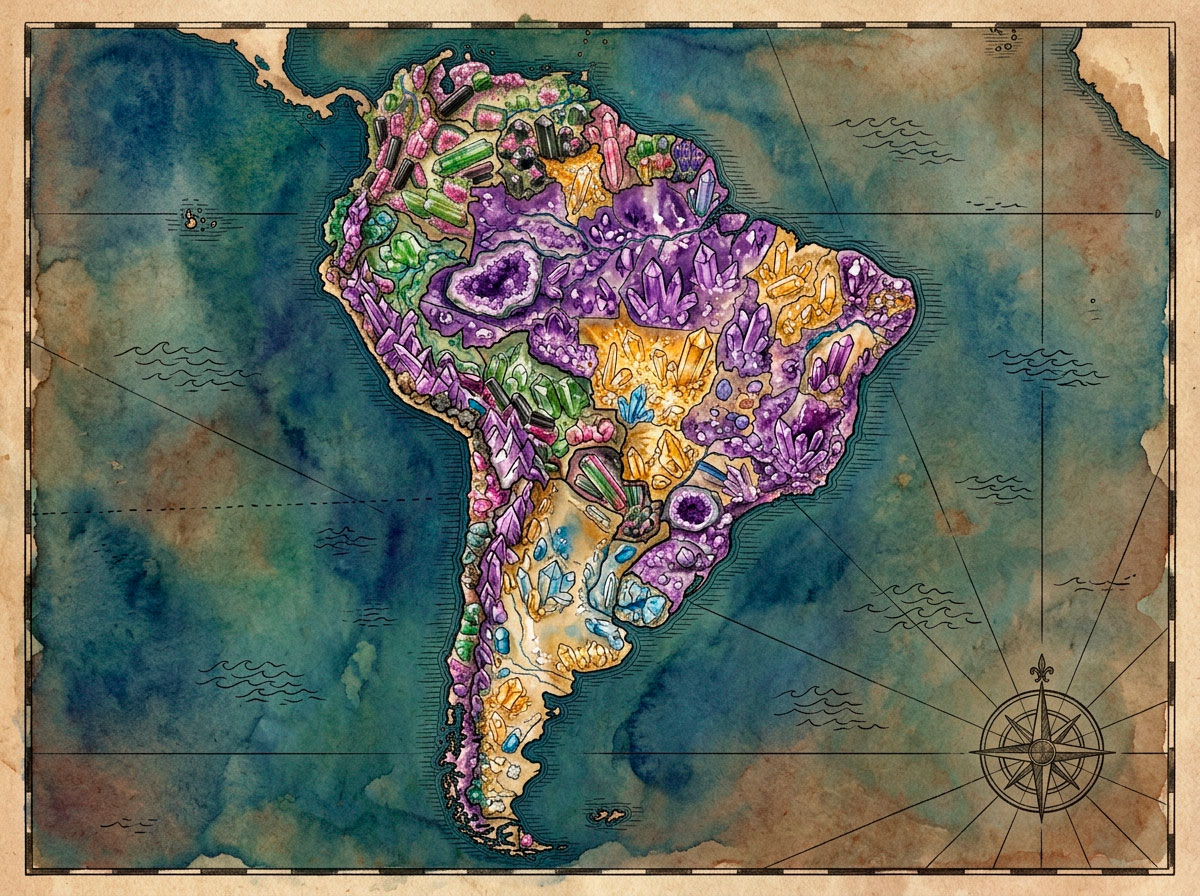
Brazil isn't a single giant deposit, but the sum of several pieces: in the center and east of the country there is very old, very stable rock, ideal for forming huge crystals; in the south, millions of years ago there was enormous volcanic activity that left geodes scattered everywhere; in other parts of the country rock has slowly changed from within, without ever fully melting, giving rise to emeralds; and on top of all that there's a centuries-old mining tradition that has known how to find and make the most of each of these stories.

In a nutshell: Brazil has, on one hand, extremely old rock — over a billion years old — that has had more than enough time for huge crystals to grow; and on the other, much more recent volcanic zones in the south that produced amethyst and agate geodes on an industrial scale. Few countries bring both scenarios together at once, and none does so across such a vast territory.
Beautiful minerals from Brazil

Rock So Old It Has Had Time to Spare

A large part of central and eastern Brazil sits on a very old block of the Earth's outermost solid layer — the crust, the "shell" of rock we live on — which has remained practically unmoved and unmelted for more than a billion years. To put it in perspective: while the crust in other parts of the planet has been recycled over and over by earthquakes, volcanoes and new mountain ranges, here that "ground" has stayed still since before dinosaurs, fish, or even the first land plants existed.

That geological calm is exactly what's needed for two things: on one hand, it allows magma to cool very slowly underground, giving crystals time to grow large and well-formed instead of staying tiny; on the other, it provides millions of years of gentle erosion, free of major upheavals, which gradually releases minerals from the original rock and concentrates them in rivers and sediments. Neither process happens fast: both require eons of calm.

Beautiful minerals from Brazil

Minas Gerais: the Planet's Biggest Gem Factory

The state of Minas Gerais, in east-central Brazil, holds — according to GIA's Gems & Gemology magazine — the world's largest concentration of a special type of rock called pegmatite, well known for producing gem-quality beryl, chrysoberyl, topaz, tourmaline and kunzite. These rocks have been mined for more than 400 years, and in the last century alone Brazil has come to supply most of the world market for those five gems.

In simple terms, a pegmatite is what's left when magma that's almost finished cooling becomes concentrated in water and rare elements, instead of solidifying like ordinary granite. That special "leftover," combined with very slow cooling, is what allows crystals to grow much larger — and in a much wider range of colors — than in any other rock. In fact, no other rock type on the planet produces such a variety and quantity of gems as pegmatites.

The result is an almost unique catalog: the Belo Horizonte area, in Minas Gerais, produces emerald, aquamarine, pink and green tourmaline, imperial topaz, alexandrite and amazonite, all linked to these same rocks. That's why Brazil produces one of the widest ranges of gems and semiprecious stones in the world.

A single family of rocks — the pegmatites of Minas Gerais — is capable of producing, in different spots, pink tourmaline, golden topaz, blue aquamarine and lilac kunzite: the variety doesn't come from mixing different deposits, but from small shifts in composition within a single rock as it cools.

Beautiful minerals from Brazil

The Other Brazil: Younger Volcanoes and Amethyst Geodes

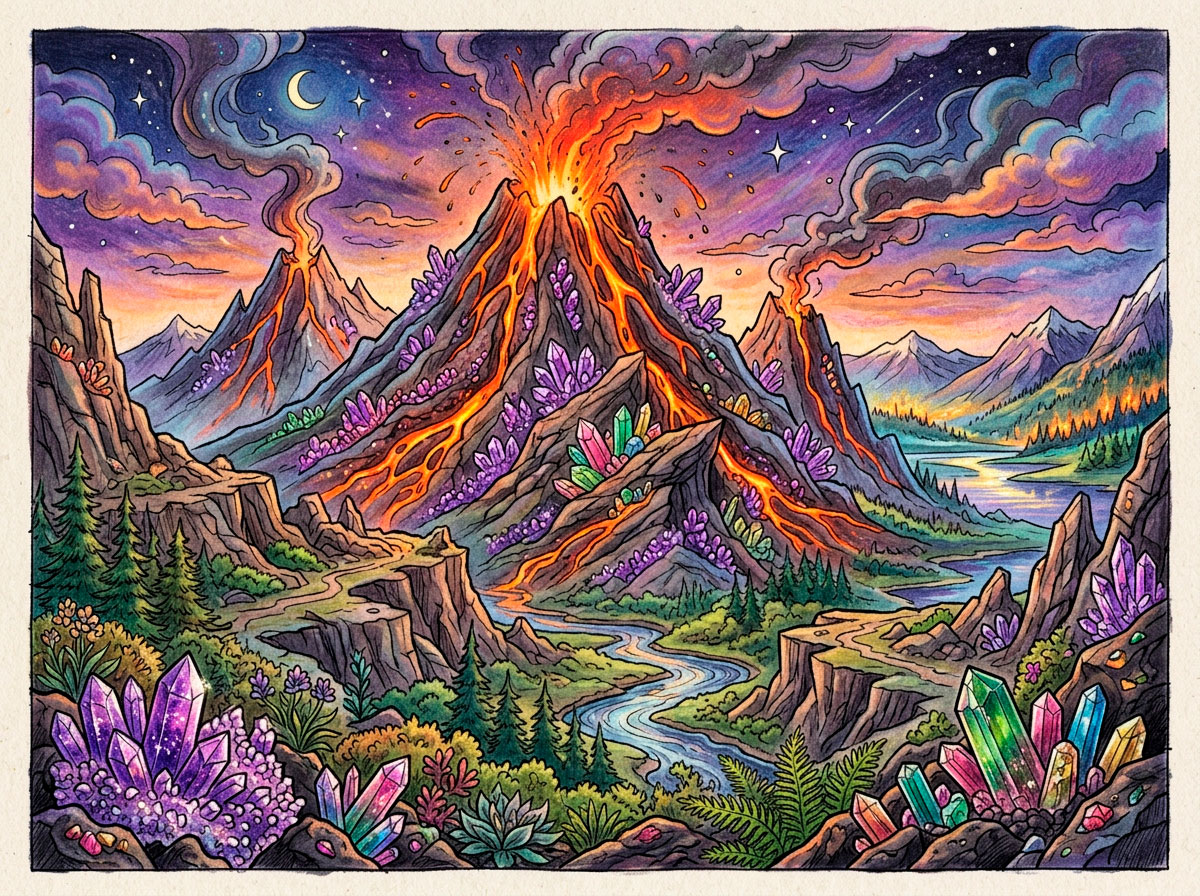
Far from Minas Gerais, in the far south of the country, the story is completely different and much more recent: around 130 million years ago (when dinosaurs already existed), one of the largest volcanic eruptions in Earth's history covered much of southern Brazil with layer upon layer of basaltic lava, forming an area known as Serra Geral.

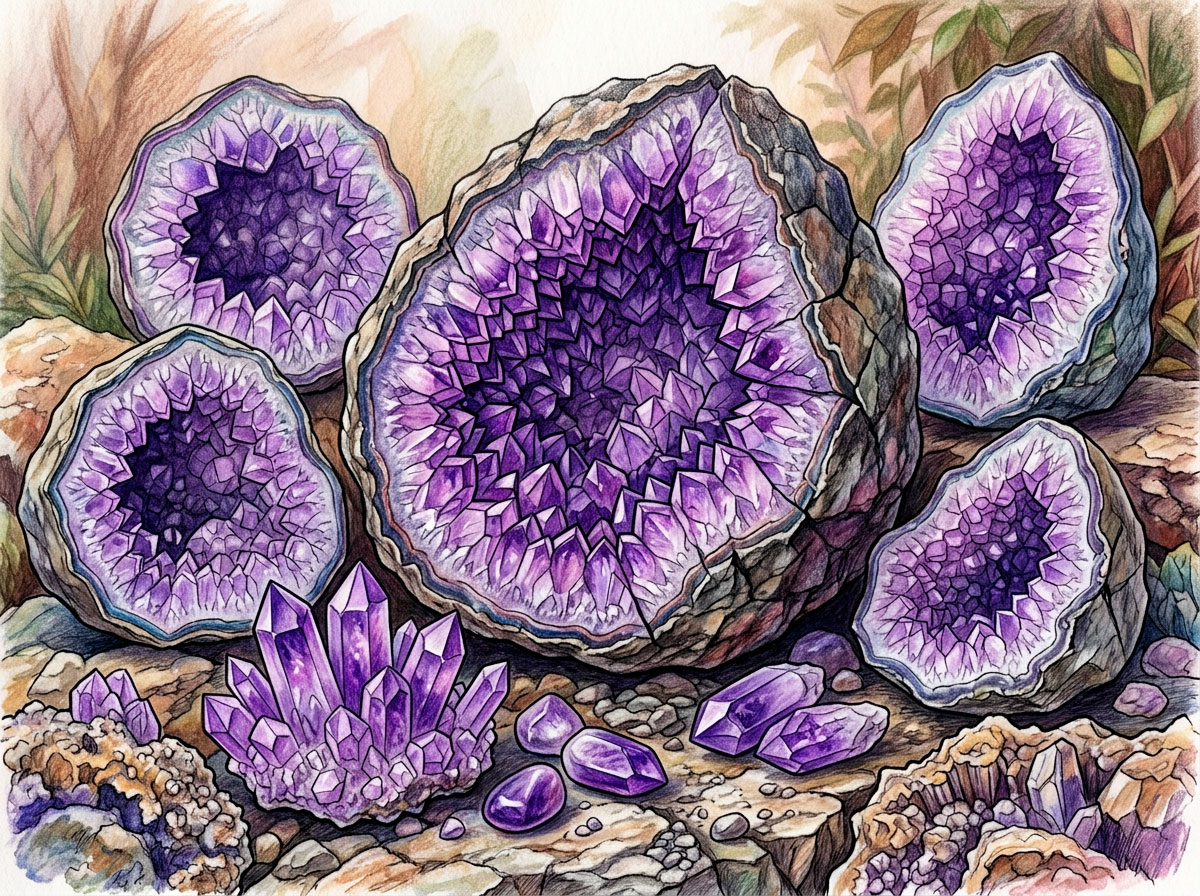
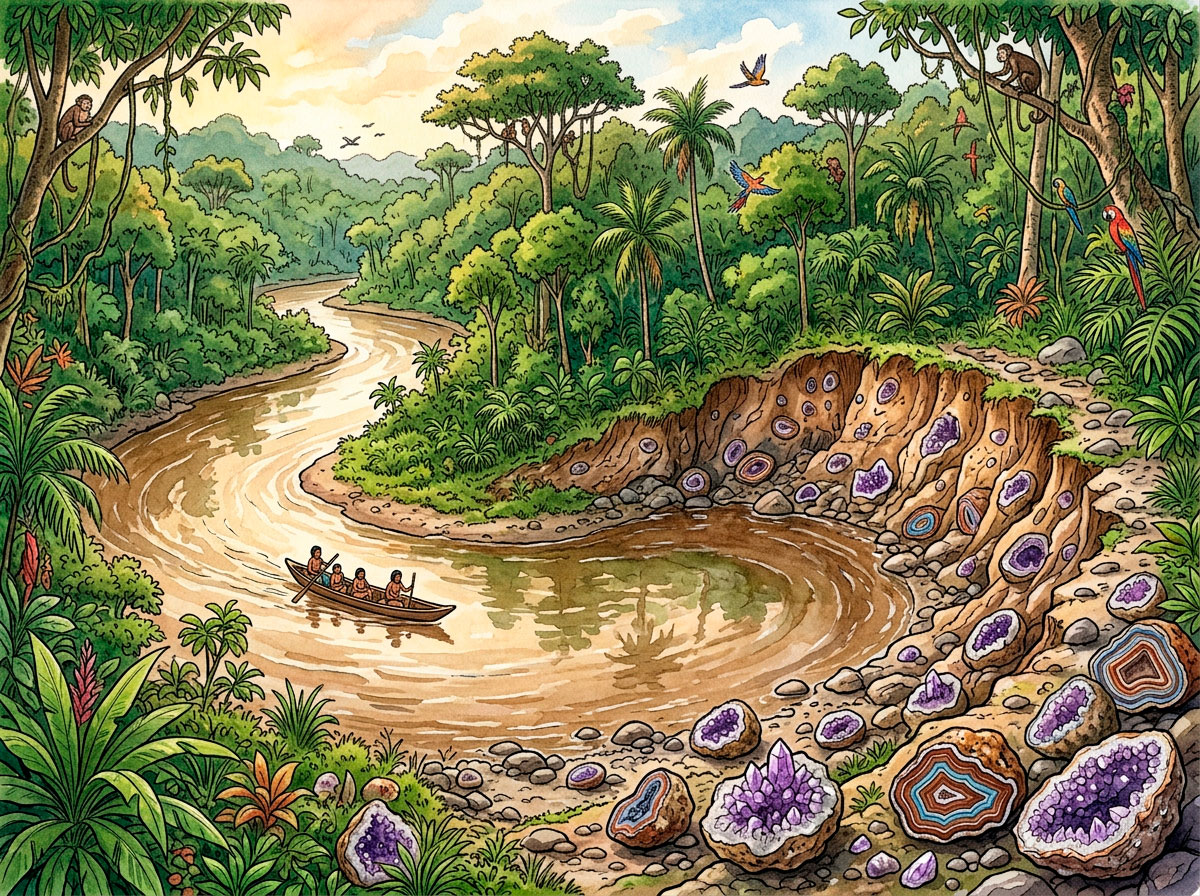
As that lava cooled, large gas bubbles became trapped inside it. Over time, silica-rich groundwater — silica being the main component of quartz, also found in sand — seeped into those bubbles and gradually filled them, layer by layer: first agate, then quartz, which crystallized as amethyst thanks to traces of iron. The result is the giant geodes that have made the Ametista do Sul region, in southern Brazil, world-famous as the planet's largest producer of amethyst geodes.

A geode basically forms in two steps. First the "hollow" is created: a gas bubble trapped inside the lava rock as it cools. Then, much more slowly, groundwater fills that hollow from the outside in, depositing layers of mineral one on top of another until almost no empty space is left. That's why an amethyst geode can end up weighing several tons.

That same type of lava also explains the huge agate deposits of Salto do Jacuí, a bit further south, where it's mined in open pits.

Beautiful minerals from Brazil

Emeralds: When Rock Changes From Within Without Ever Melting

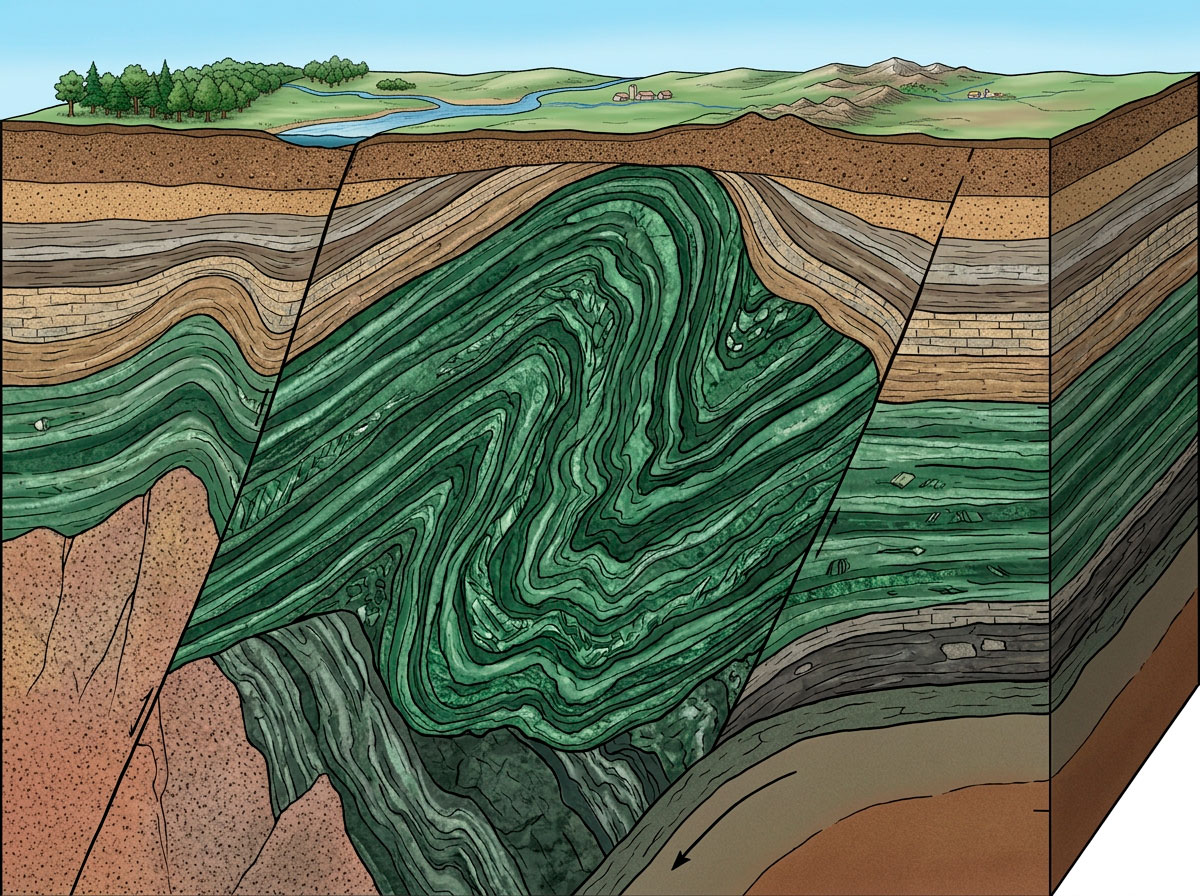
Not all Brazilian emeralds form in pegmatites (those slow-cooling rocks we saw earlier, in Minas Gerais). In areas such as Bahia or Goiás they form in a different way, through what geologists call metamorphism: a process in which rock that already existed in the terrain, subjected for millions of years to intense heat and pressure, gradually changes from within without ever fully melting, ending up as a new type of rock. That's why these rocks are called metamorphic rocks.

When chromium is present in the surrounding environment during that process — an element that also gives other stones their green color — it tints the beryl crystals as they form, and the result is emerald. It's exactly the opposite of what happens with pegmatites: there, the mineral is born from magma as it cools; here, it's born from solid rock that transforms without ever melting.

It's a bit like kneading bread: you don't need to melt the flour for it to turn into something different — heat, pressure and plenty of time working it are enough. Something similar happens with rock, except the process takes millions of years instead of minutes, and the result is new minerals that didn't exist in the original rock.
Beautiful minerals from Brazil

And There's More: a Huge Country With Centuries of Mining

To these three geological reasons — ancient rock, volcanoes in the south, and rock that transforms without melting — two more factors must be added, neither of them geological. The first is size: Brazil is an immense country, and the more territory there is, the more likely it becomes that, purely by statistics, the exact conditions for an exceptional deposit will occur somewhere.

The second is human: mining has been part of Brazilian culture since colonial times, with generations of prospectors locating deposits on the ground, alongside a modern industry that has built up technical expertise over centuries. Without that mining tradition, much of these deposits would still lie undiscovered beneath the jungle or the volcanic rock.

In summary: Brazil isn't one deposit, but several distinct geological countries packed into a single territory. The ancient rock of the center-east explains the tourmaline, topaz, aquamarine and kunzite of Minas Gerais; the volcanoes of the south explain the amethyst and agate; and the rock that transforms without melting explains its emeralds. No single factor would be enough on its own: it's the combination of all three, across such a vast country, that makes Brazil the world's leading gem producer.

Frequently Asked Questions

Why does Minas Gerais concentrate so many different gems?

Because it holds the world's largest amount of a special type of rock, pegmatite, which forms when magma that's almost done cooling becomes enriched in water and rare elements. That allows large, varied crystals to grow: tourmaline, topaz, aquamarine, chrysoberyl and kunzite, among others.

How do the amethyst geodes of southern Brazil form?

In two steps: first a hollow forms — a gas bubble trapped as a lava flow cooled around 130 million years ago; then groundwater very slowly fills that hollow with layers of agate and quartz, which ends up crystallizing as amethyst at the center.

Do all Brazilian gems come from the same kind of deposit?

No. Brazil brings together at least three very different origins: ancient, slow-cooling rock in the center-east, much more recent volcanoes in the south, and rock that has changed from within over millions of years without ever melting, giving rise to emeralds in areas such as Bahia or Goiás.

Why don't Brazil's emeralds form the same way as its tourmalines or topaz?

Because they follow a different path: they don't come from cooling magma, but from rock that already existed and, subjected to intense heat and pressure over millions of years, transforms from within without ever fully melting (a process called metamorphism). If chromium is present nearby during that process, it tints the forming crystals green, giving rise to emerald.

Is Brazil the only country with these kinds of deposits?

No, pegmatites and basaltic lava flows exist elsewhere in the world. What sets Brazil apart is having both at once, on a large scale, plus centuries of mining tradition to locate them.

Looking for a specific mineral?

At our physical store in the centre of Barcelona we have many more options than what you see online.

If you can't find what you're looking for online, message me on WhatsApp at +34 670 61 16 63.

I'm Jéssica and I'll be happy to help.

visita virtual 3D
Product added to wishlist
Product added to compare.

Looking for a mineral? Write us