Why Madagascar produces such spectacular minerals: the story behind every piece

Celestine, dumortierite, apatite, labradorite, ammonites... the red island isn't just the biodiversity paradise we all know: underneath, it's hiding a story that's just as rich

Anyone who has turned a labradorite over in their hand and watched it flash blue and green, or held a celestine geode with crystals the size of a finger, has asked the same question: why does so much of this come from Madagascar, and in such variety? It's not chance. This island has been through, one after another, several things that almost never line up in the same place: it's a chunk of extremely old rock that one day broke away from a much bigger continent; that "breaking away" left cracks through which magma rose and built real factories for large crystals; part of the island, on top of that, was under the sea in a much more recent era, so there the story is completely different, one of oceans and fossils; and to top it off, today's rain and heat have spent thousands of years "scrubbing" the surface clean, leaving crystals almost sitting in plain sight.

No single one of these things on its own would explain the variety found today in one country. It's the combination that means the same catalogue can hold pieces that took millions of years to cook underground alongside fossils from a sea that no longer exists.

In one sentence: Madagascar has such a wide range of minerals because it's a chunk of extremely old rock that split off from a bigger continent, because that split opened up cracks where magma rose and formed pockets giving crystals plenty of time to grow large, because part of the island was under the sea in a much more recent era and formed completely different pieces there (fossils, geodes), and because today's climate erodes the land hard enough to leave much of all this almost at ground level.
Minerals from Madagascar. Cristalljoia

1. A piece of continent, not just any island

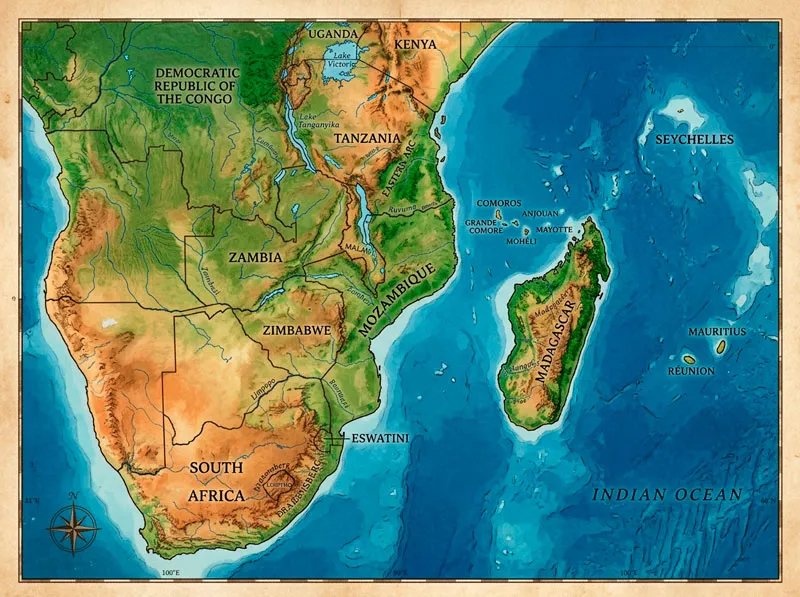
The first thing to know is that Madagascar wasn't born as an island: it was born attached to other continents. The rock making up the eastern two-thirds of the island is among the oldest on Earth — in some areas we're talking over 2.5 billion years, from a time before complex life even existed on the planet. About 165 million years ago, Madagascar sat wedged between what are now Africa and India, all part of a single supercontinent. When that supercontinent began to break apart, Madagascar separated first from Africa and, many millions of years later, from India too, ending up isolated in the middle of the Indian Ocean, exactly as it is today.

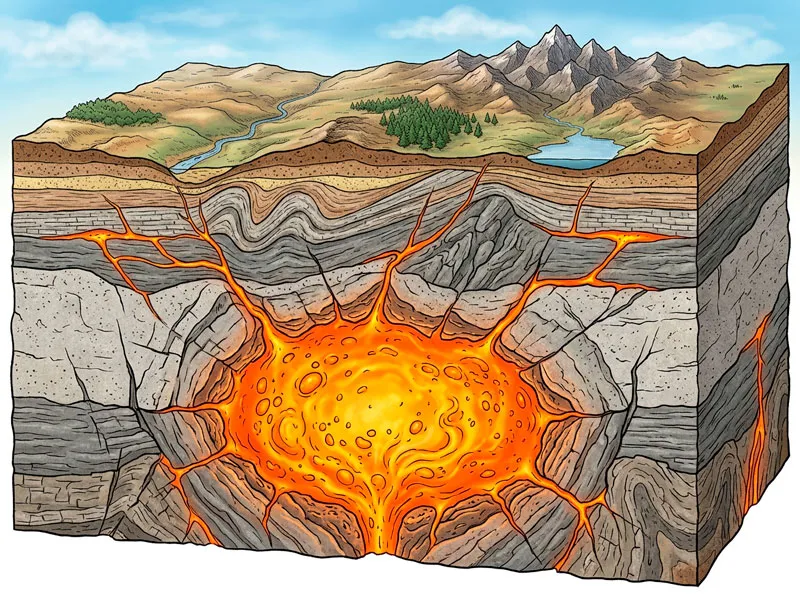
Think of it like a plate breaking when it falls: it doesn't break cleanly, cracks shoot out everywhere. Each of those continental cracks became a path magma could rise through from deep inside the Earth, and along which very hot water loaded with dissolved minerals could travel. That activity, repeated several times throughout the island's history, is what "seeded" the land with pockets of crystals everywhere.

Minerals from Madagascar. Cristalljoia

2. The pockets where crystals get time to grow

Many of Madagascar's most eye-catching pieces — from rose quartz to apatite — are born in what mineralogists call a pegmatite, but you can just picture it as a big "pocket" of magma that got trapped deep underground and took an eternity to fully cool. That extremely slow cooling is the whole secret: when magma cools fast (like when it erupts from a volcano), crystals don't get time to grow and come out tiny. But when it cools over thousands or millions of years, unhurried, those same atoms have all the time in the world to find their place, one after another, and the crystal can end up huge and remarkably clean inside.

On top of that, those magma pockets concentrate, almost like the "dregs" left in the liquid, the rarest and least common elements: that's where beryl, tourmaline, mica, or the phosphorus behind apatite show up. Madagascar has thousands of these pockets scattered across the centre and south of the island, each with its own mix of ingredients, which is why there's so much variety of stone in areas that are relatively close to each other.

Minerals from Madagascar. Cristalljoia

3. Two different stories in the same country

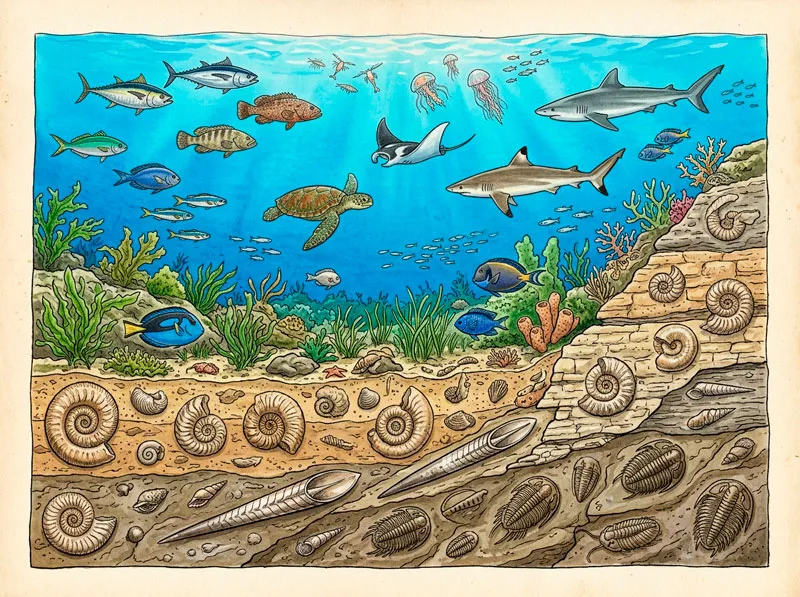
Here's one of the lesser-known things about the island: Madagascar is really two geological stories stuck side by side. The eastern two-thirds are that extremely old rock we mentioned, formed long before there was life on Earth. The western third, on the other hand, is much "younger": it's an area that was under the sea, mainly between about 170 and 65 million years ago (back when, say, dinosaurs were still roaming the planet), and it gradually filled up with layers of mud and sand that are now sedimentary rock.

That western half is what explains a type of piece completely different from anything formed in magma pockets: marine fossils like ammonites, nodules formed around animal remains like septarian stones, or celestine, which formed inside those layers of mud and sand when strontium-rich water moved very slowly through the sediment, around 65 million years ago. In other words: within a few hundred kilometres of each other, Madagascar holds both a billions-of-years-old story of fire and magma and a much more recent story of the sea, and each one gives rise to a completely different kind of stone.

Minerals from Madagascar. Cristalljoia

4. The climate, acting as a free "excavator"

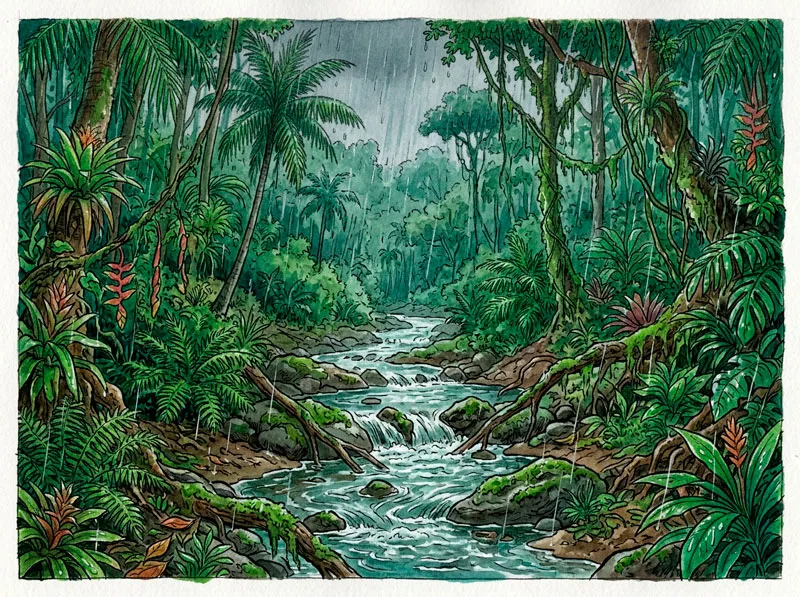
A gorgeous crystal is no good to anyone if it's still buried hundreds of metres underground. This is where Madagascar's current climate comes in: intense rain and year-round heat break down surface rock very quickly, turning it into that red soil so typical of the island (which is why it's called "the red island" when seen from the air). That process gradually "eats away" the softer rock, while the toughest crystals — quartz, apatite, feldspars — end up loose and collected near the surface, or right there in the soil itself.

That's why so much of Madagascar's mining is small-scale and close to the surface: in many areas there's no need to drill into the original pocket of magma, just to gather what the rain and heat have already been digging up for centuries. And, just as in Morocco, there's an important human side to this too: generations of local miners who know the ground inch by inch and know exactly where to look.

Every Malagasy piece tells a different story depending on which Madagascar it comes from: the one that cooked slowly underground for millions of years, or the one deposited on the floor of a sea that no longer exists.

The Madagascar pieces we carry in the shop

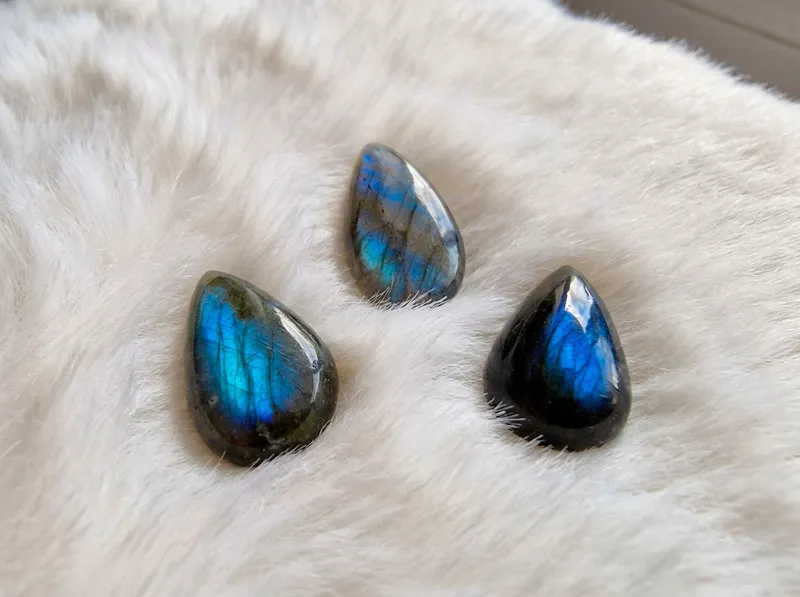
With all that in mind, it makes sense to group our Malagasy pieces by where they come from: the ones born in those magma "pockets", the one that comes from a different kind of fire-born rock, and the ones that come from ancient seas or from volcanic activity.

Minerals from Madagascar. Cristalljoia

Born in magma pockets: dumortierite, green apatite, blue apatite and rose quartz

Dumortierite. A stone in an intense blue, almost violet, that grows as fine needles or compact masses inside a rock from the central highlands (the Ambatofinandrahana area). That rock was once an ordinary sediment, but as it was heated and squeezed during the island's tectonic movements, it "recooked" from the inside and gave rise to these unmistakable blue clusters.

Green and blue apatite. Apatite is the same type of mineral that makes up part of our bones and teeth, though here we're talking about its transparent, crystallised version. The greenish-blue colour, so similar to paraiba tourmaline, comes from traces of two elements (cerium and neodymium) trapped inside the crystal as it formed. Madagascar's apatite is born in the south of the island, in deposits where it crystallised more than 500 million years ago alongside other minerals, out of a magma especially rich in phosphorus.

Rose quartz. This is ordinary quartz (the same mineral as clear rock crystal) whose pink tone comes from tiny traces of other elements, or from minuscule fibres of another pink mineral trapped inside. Madagascar's rose quartz is born in those magma "pockets" in the centre and south of the island — there are mines known for more than a hundred years near Antananarivo — and it's considered one of the finest rose quartz varieties in the world for how even its colour is and how transparent it can get, which is unusual for this stone.

Minerals from Madagascar. Cristalljoia

Born in the ancient seas: celestine, opalized ammonite and septarian

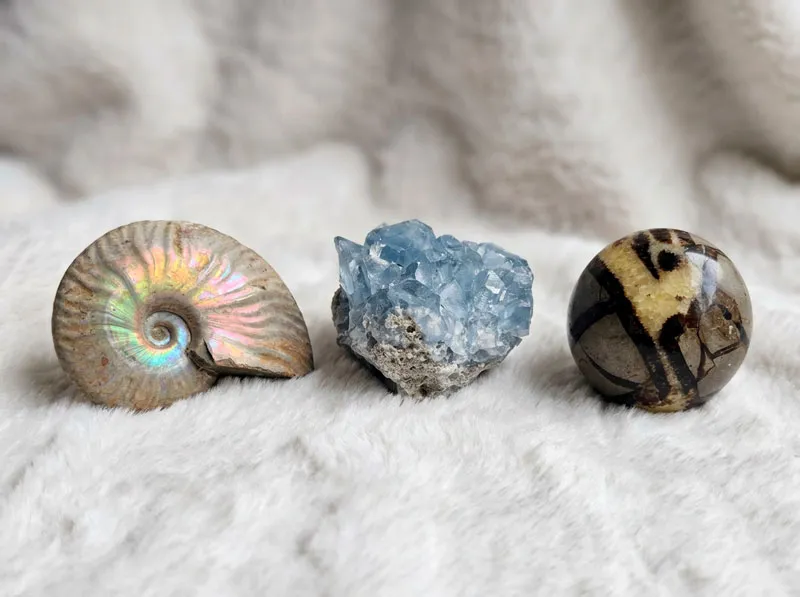
Celestine. Its name comes precisely from that sky-blue colour that's so its own. The deposit that made it famous is in the northwest of the island, near Katsepy: there it turns up inside geodes — some over half a metre across — tucked into a layer of mud and sand laid down about 65 million years ago. It formed once the sediment was already compacted, when water moved very slowly through it carrying the element that gives it its colour and its name (strontium), while the decomposition of organic remains trapped in the mud supplied what was needed for the crystal to slowly precipitate inside those cavities.

Opalized ammonite. One thing to clear up first: "opalized" is a name used a lot in the trade, but it has nothing to do with real opal. Ammonites were marine animals a bit like a squid inside a coiled shell, distant relatives of today's nautilus, that lived between about 100 and 170 million years ago. Madagascar's ammonites come mostly from the island's northwest, where they were buried on the sea floor of the time. That beautiful play of colour some pieces show — flashes of red, green and blue across the shell — isn't opal at all: it's extremely thin layers of the shell's own material which, by reflecting light at different angles, produce colour, exactly the same optical trick that makes the inside of a mussel shell shimmer.

Septarian. These are balls of mud that formed on the sea floor between about 145 and 170 million years ago, usually around the decomposing remains of some animal. As that ball of mud dried out and shrank, it cracked on the inside in a pattern that looks like a spiderweb. Later, over time, mineral-rich water filled those cracks with yellow crystals and a thin brown line, creating that striking contrast between the dull grey outside and the colourful interior you see once it's cut open.

Minerals from Madagascar. Cristalljoia

Born of the volcano: jasper and carnelian

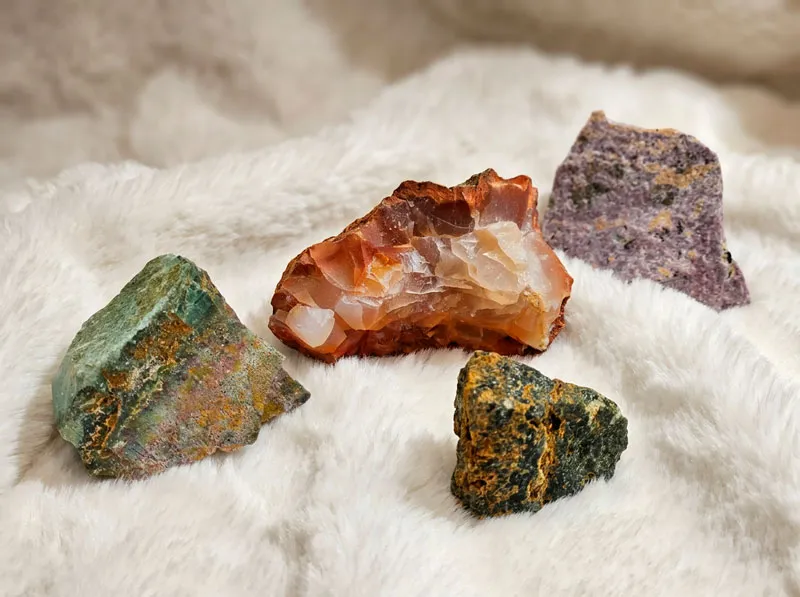
Jasper and carnelian are, deep down, close cousins: both are varieties of chalcedony, a form of quartz made of crystals so tiny they can't even be seen with the naked eye. Both usually form in volcanic rock: when a lava flow or a layer of ash ends up full of tiny cavities (a bit like the little holes in a honeycomb candy bar), groundwater loaded with dissolved silica gradually fills those gaps over a long stretch of time, until that fill eventually hardens into stone. What tells one apart from the other is mostly colour: carnelian gets its characteristic orange-red from traces of iron oxide spread very finely throughout, while jasper is opaque by definition and can take on far more colours and patterns depending on what other minerals get caught up in its formation. In Madagascar, much of this material comes from volcanic areas in the island's northwest.

In summary: Madagascar has such a range of minerals because it's a chunk of extremely old rock that split off from a bigger continent and ended up full of magma "pockets" where crystals had plenty of time to grow large (dumortierite, apatite, rose quartz); because it also has an area made of a different kind of fire-born rock that gives us labradorite; because part of the island was under the sea in a much more recent era, leaving fossils and geodes behind (celestine, ammonites, septarian); because there was volcanic activity that gave rise to jasper and carnelian; and because today's climate keeps digging all of this up on its own, with barely any need to excavate.

Looking for a specific mineral?

At our physical store in the centre of Barcelona we have many more options than what you see online.

If you can't find what you're looking for online, message me on WhatsApp at +34 670 61 16 63.

I'm Jéssica and I'll be happy to help.

visita virtual 3D
Product added to wishlist
Product added to compare.

Looking for a mineral? Write us