Can You Buy Moon Minerals?
Let's be clear here: the samples brought back by the Apollo missions are the property of the United States government, and their private sale or possession is illegal (in fact, there have been cases of people arrested for trying to sell stolen fragments). What does circulate legally in the collectors' market are certified fragments of lunar meteorites that fell naturally to Earth, backed by independent scientific analysis.
True story: some of the small lunar rock fragments NASA gave away as "goodwill" gifts to different countries in the 1970s ended up lost, stolen, or misplaced in government storage, and today they're sought after as genuine treasures.
Typical Moon Minerals and Rocks
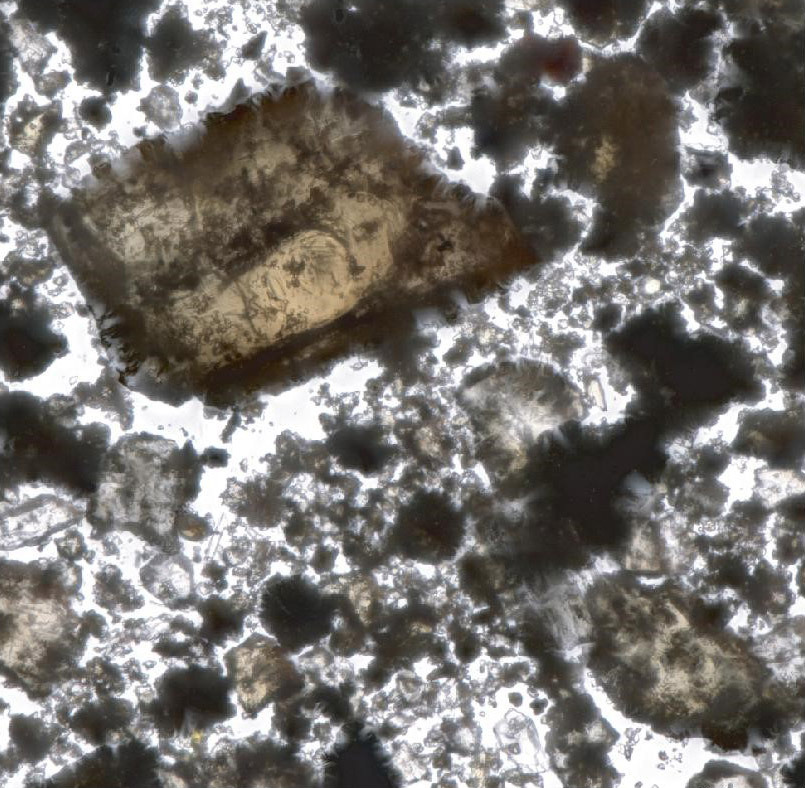
Although every lunar sample is unique, a handful of "classics" show up again and again in rocks brought back by the Apollo missions and in lunar meteorites:
- Anorthosite: the light-colored rock that makes up much of the highlands.
- Lunar basalt: the dark rock filling the "seas," similar to terrestrial basalt but with more iron and titanium.
- Pyroxene and olivine: greenish, dark minerals also very common in volcanic rocks on Earth.
- Ilmenite: an iron-titanium mineral especially abundant in the lunar seas.
- Volcanic glass: tiny colored beads, like the famous "orange beads" from Apollo 17.
- Lunar breccia: a kind of "mosaic" of different rock fragments, welded together by ancient impacts.
Minerals Once Thought to Exist Only on the Moon
- Armalcolite: discovered in Apollo 11 samples and named by combining the surnames of the mission's three astronauts (ARMstrong, ALdrin, COLlins). For years it was believed to be exclusive to the Moon, until minute traces were also found on Earth.
- Tranquillityite: named after the Sea of Tranquility, where it was first found. It was considered a 100% lunar mineral for more than forty years, until in 2011 it was also discovered in rocks from Western Australia.
Both cases are a good reminder that in geology, "exclusive" sometimes just means "we haven't found it anywhere else yet."
Frequently Asked Questions About Moon Minerals
What are the dark and light areas of the Moon made of?
- The light areas are the highlands, older in age and grayish in tone.
- The dark areas are the lunar "seas," even though they never held water.
- That contrast is what makes the "face" of the Moon visible to the naked eye.
How does a piece of the Moon reach Earth?
- An asteroid strikes the lunar surface and ejects fragments into space.
- Those fragments drift for a long time, sometimes millions of years.
- If they eventually fall to Earth, they become lunar meteorites.
Is it legal to buy a lunar meteorite?
- Yes, as long as it's a meteorite that fell naturally, not a sample from a space mission.
- Samples brought back by astronauts are government property and cannot be sold.
- Always ask for a certificate confirming its lunar origin.
Why did lunar dust cause so many problems for astronauts?
- It has never been eroded, so its particles are extremely sharp.
- It stuck to suits, cameras, and mission instruments.
- Some astronauts even noticed a distinctive smell when removing their helmets.
Why are lunar minerals so expensive?
- They're extremely rare: only a few hundred are catalogued worldwide.
- Authenticating them requires rigorous, costly scientific analysis.
- That combination of rarity and verification drives up their collector value.

 670-61-16-63 cmd@cristalljoia.com In the heart of Barcelona and online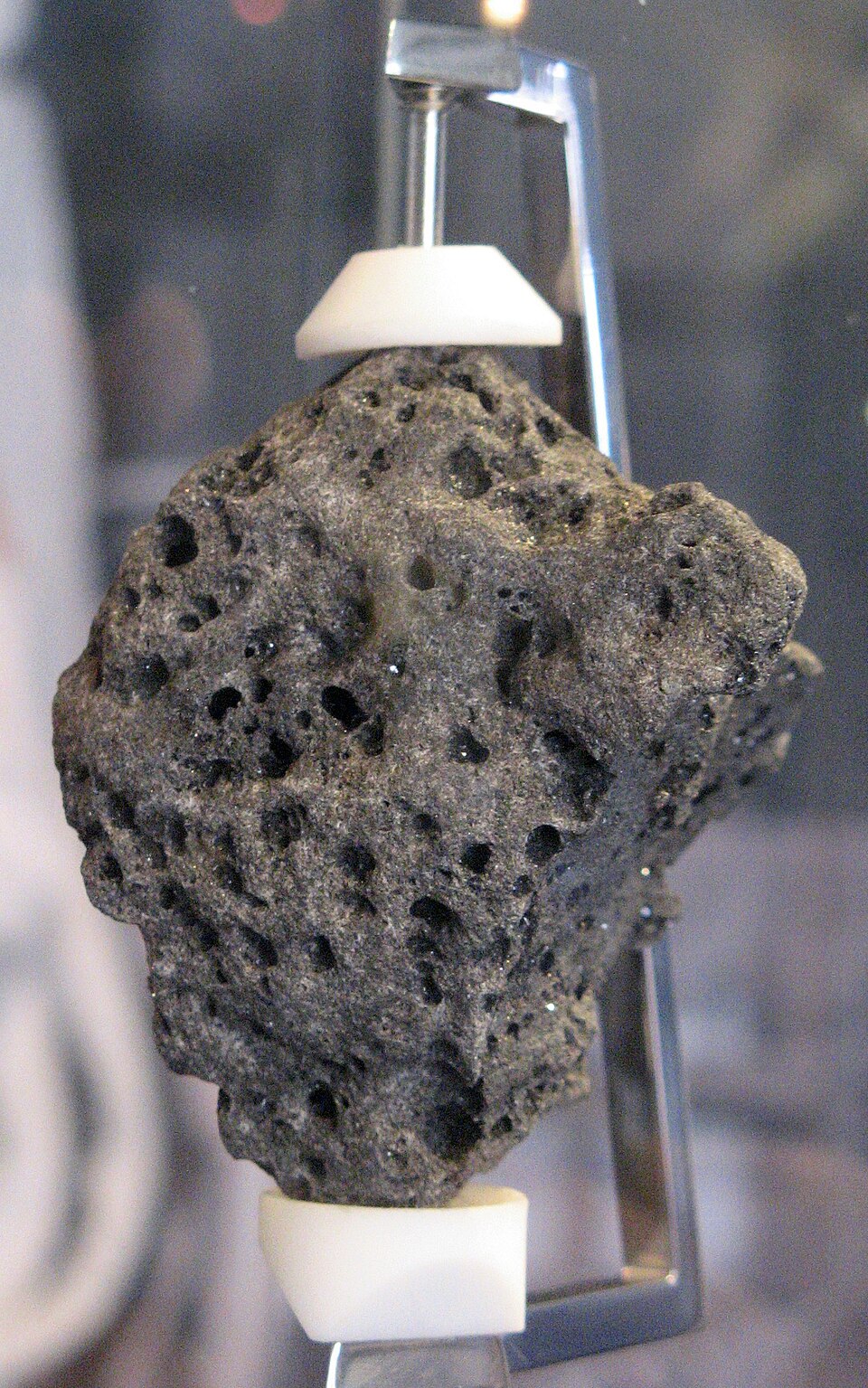
_(Northwest_Africa_6950_Meteorite)_1_(17196194310).jpg)