Natural amethyst: the difference between Brazilian and Uruguayan origin. Cristalljoia Barcelona.

Uruguayan Amethyst: small points and deep violet. Brazilian Amethyst: large points and lighter colour. Why?

Amethyst is one of the most recognisable stones in the mineral world. That unmistakable violet — ranging from soft lilac to the deepest purple. But not all amethysts are the same — and the difference begins millions of years before they reach your hands.

The two great world sources of amethyst geodes are Brazil and Uruguay. Same continent, same volcanic rock of origin. And yet, when you see them side by side, they look nothing alike.

Natural amethyst: the difference between Brazilian and Uruguayan origin. Cristalljoia Barcelona.

The same origin, two different worlds

130 million years ago, when South America separated from Africa, enormous volcanic eruptions formed what we now know as the Paraná Basin. Gas bubbles became trapped in that basalt. Future geodes. The mould where, over time, amethyst would crystallise.

Same rock. Same origin. The difference lies in how the water entered — and how long it took.

Natural amethyst: the difference between Brazilian and Uruguayan origin. Cristalljoia Barcelona.

Uruguayan amethyst: small, dense points and deep violet

In Uruguay, ancient rainwater filtered for millions of years through tiny cracks in the basalt. At low temperature. Unhurried. With no room to grow.

The amethyst quartz crystals grew slowly, accumulating iron in each layer. The result is an amethyst stone with small, compact points and a violet so concentrated it sometimes shows blue and red flashes.

  • Colour: dark, intense violet — almost jelly-like in depth
  • Crystals: small, dense, tightly packed
  • Geodes: contained in size, with deep walls
Natural amethyst: the difference between Brazilian and Uruguayan origin. Cristalljoia Barcelona.

Brazilian amethyst: large, luminous points and soft violet

In Brazil the cavities are enormous — cathedral-style geodes that can measure metres in height. With so much space, crystals grow faster and longer. The iron spreads more thinly.

The result is a natural amethyst with long, spectacular points and a lighter, more transparent violet that captures light in a completely different way.

  • Colour: soft violet, from lilac to mid-purple
  • Crystals: large, with greater transparency
  • Geodes: can be enormous, visually striking

Which one is better?

Neither. They are two different answers to the same question the Earth has been asking itself for millions of years: what happens when water and time meet inside a rock?

Uruguayan amethyst stands out for the intensity of its colour — it is the favourite among high-end jewellers and collectors. Brazilian amethyst impresses with its size and luminosity — ideal for decorative pieces and spaces.

Natural amethyst: the difference between Brazilian and Uruguayan origin. Cristalljoia Barcelona.

Amethyst properties throughout history

Beyond geology, amethyst has accompanied people for centuries. The Greeks called it amethystos — "not intoxicated" — and associated it with mental clarity. In medieval Europe it adorned bishops' rings as a symbol of wisdom. Today, the properties of amethyst continue to be valued in meditation and wellbeing traditions: calm, intuition, balance.

Whatever the reason it draws you in, one thing is undeniable: millions of years of geology written into every violet point.

At Cristalljoia we carry amethyst geodes, amethyst druzes and amethyst points from both origins. Because understanding where a stone comes from is part of knowing what you are choosing.

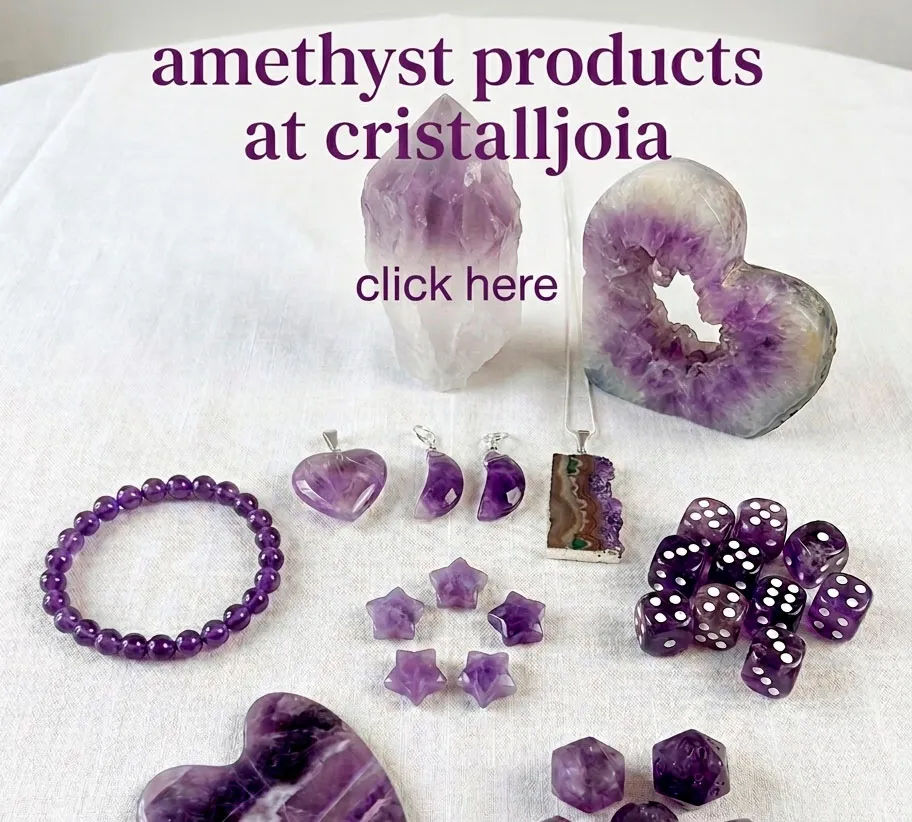
Natural amethyst stone products at Cristalljoia Barcelona

Looking for a specific mineral?

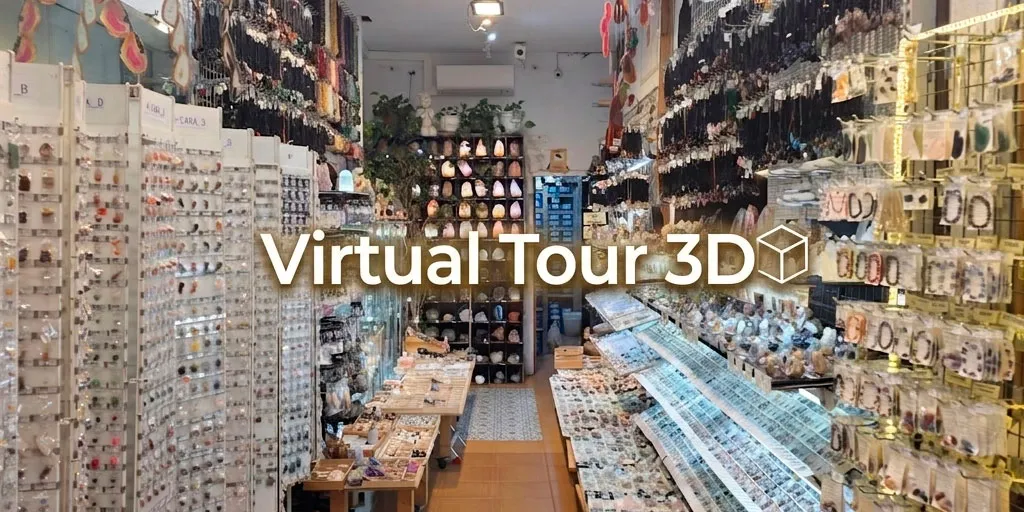
At our physical store in the centre of Barcelona we have many more options than what you see online.

If you can't find what you're looking for online, message me on WhatsApp at +34 670 61 16 63.

I'm Jéssica and I'll be happy to help.

visita virtual 3D

Related products

Product added to wishlist
Product added to compare.

Looking for a mineral? Write us