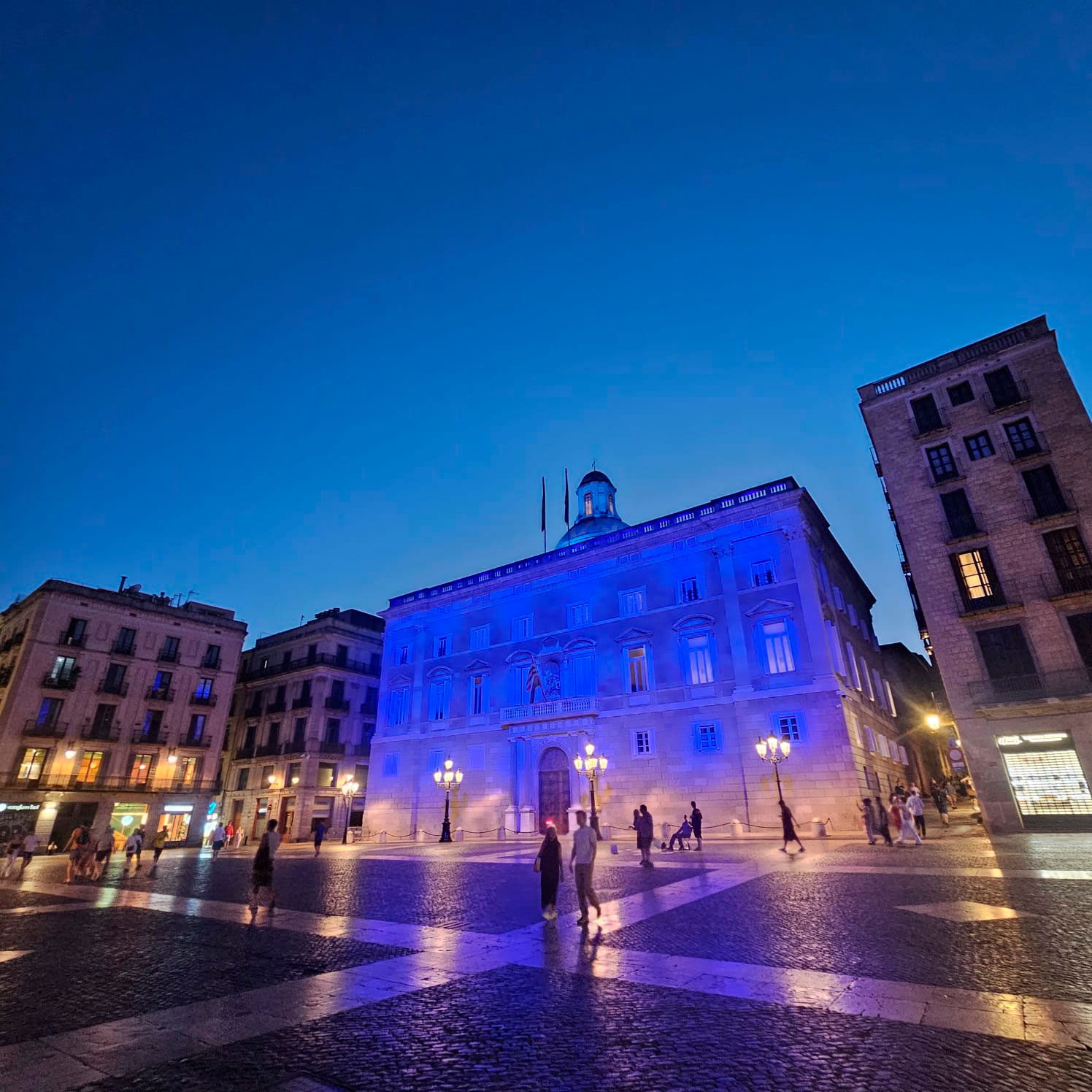
The Palau de la Generalitat: Catalonia's institutional heart with over 600 years of history

A walk through its courtyards, façades and halls, among centuries-old columns, bronze bells and centuries of Catalan history

Right in the heart of Barcelona's Gothic Quarter, directly facing the City Hall, stands one of the oldest government buildings in Europe still serving the very purpose it was built for. We're talking about the Palau de la Generalitat, the seat of the Catalan Government for more than six centuries. We took advantage of the Sant Jordi open-doors day to explore it at our own pace, camera in hand, and uncover some of its most surprising corners and curiosities.

1. Where it is

The Palau de la Generalitat is located in Plaça de Sant Jaume, right in the historic center of Barcelona, within the Gothic Quarter. It shares the square with Barcelona's City Hall, standing directly opposite, making this small space the true institutional center of the city. Its other two façades face Carrer del Bisbe and Carrer de Sant Honorat, two of the most photographed streets in the old town.

Key fact: Carrer del Bisbe, with its famous neo-Gothic bridge connecting the Palau to the Casa dels Canonges, isn't actually part of the original building — it was added in 1928, though its style makes many visitors believe it's medieval.
Palau de la Generalitat de Catalunya

2. Key parts of the Palau de la Generalitat

The building is actually a layering of styles and periods, the result of construction work that stretched from the early 15th century to the mid-17th century. The main façade, facing Plaça de Sant Jaume, is the work of architect Pere Blai (1596-1602) and draws on Renaissance Roman palaces, very much in the style of the Palazzo Farnese. By contrast, the façade on Carrer del Bisbe, by Marc Safont, and the one on Carrer de Sant Honorat are Gothic, with the latter opening precisely onto the old Call, the city's medieval Jewish quarter.

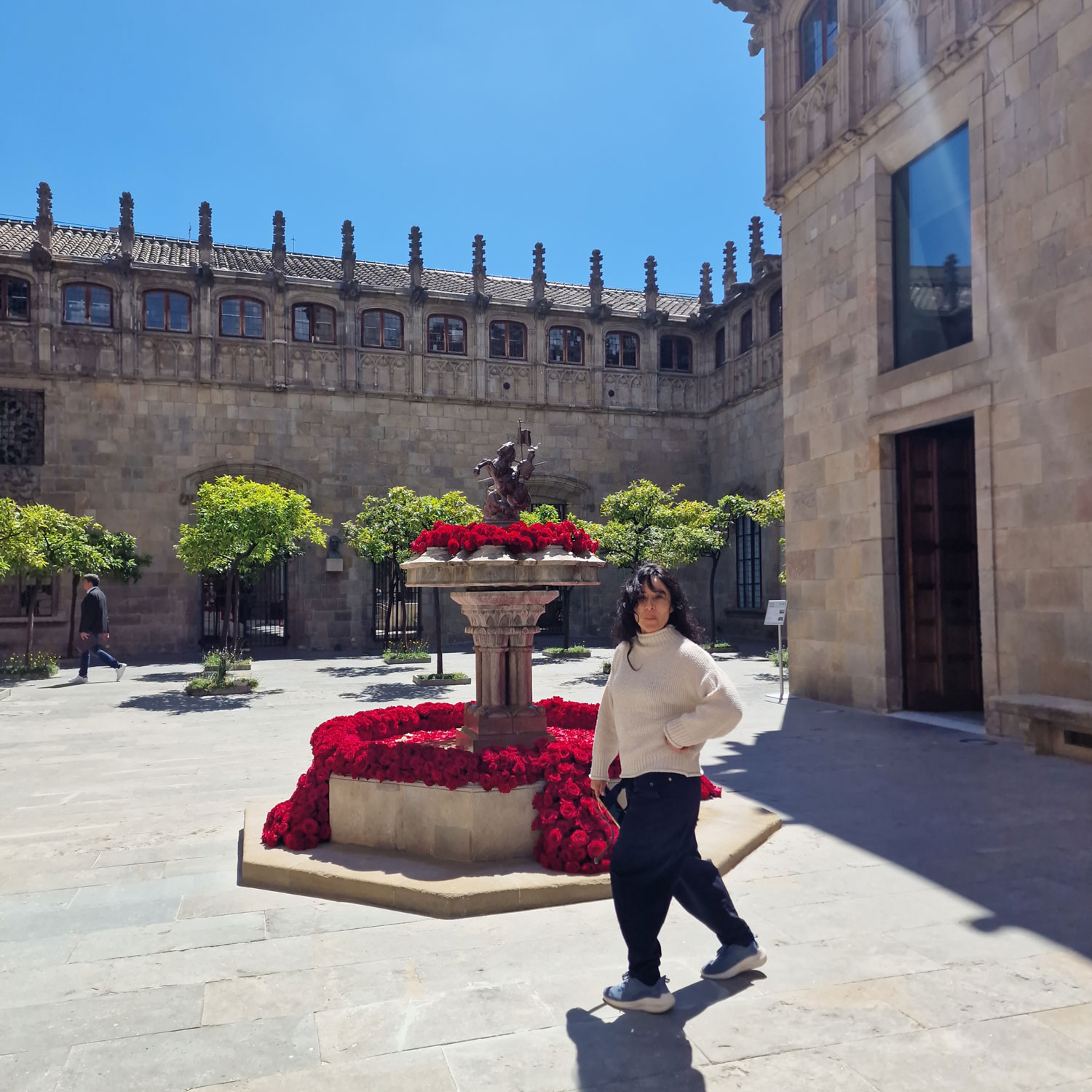
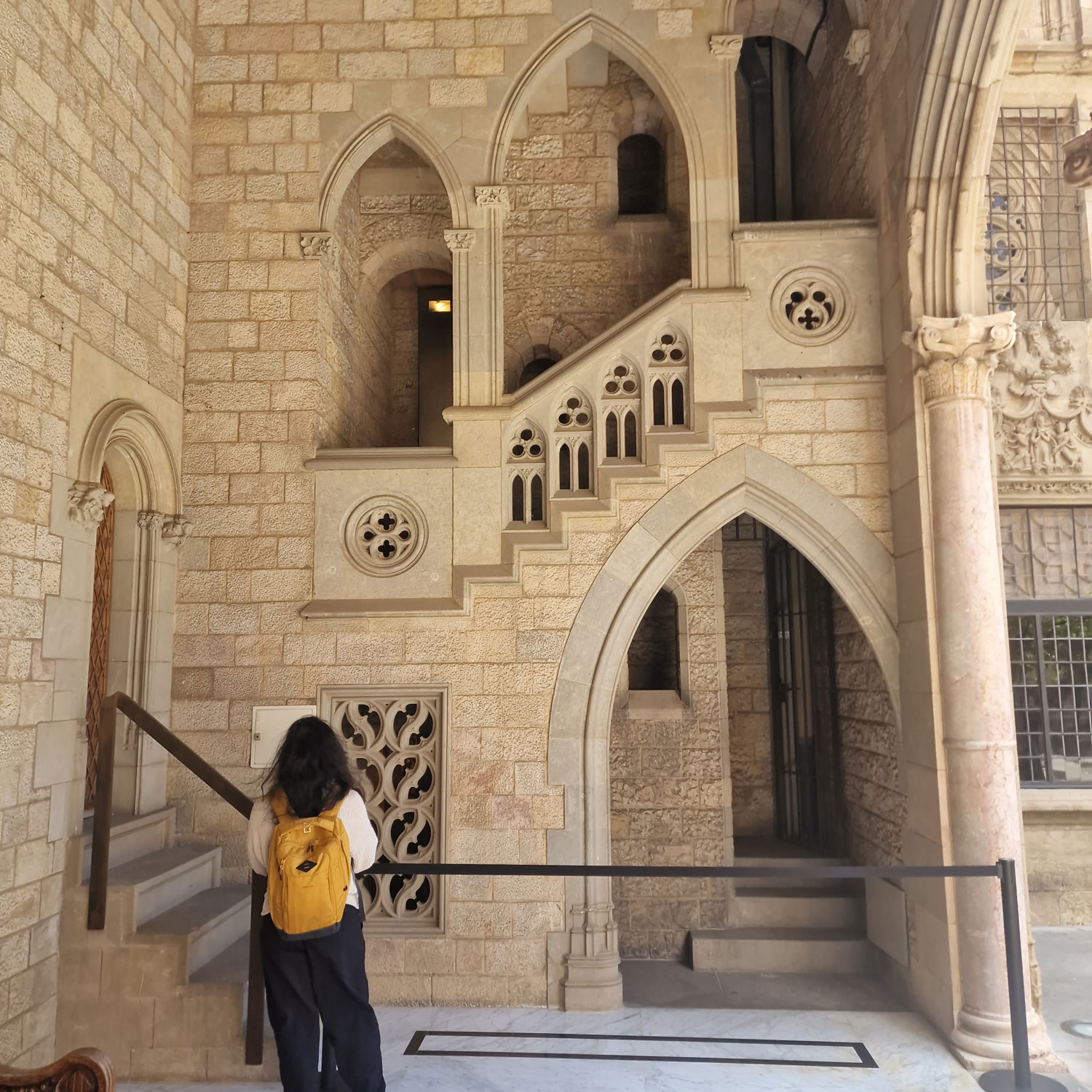
Inside, the Pati dels Tarongers (Courtyard of the Orange Trees) stands out, built between 1532 and 1547 — a Renaissance corner with orange trees that remains the setting of choice for many official Govern events today. Also notable are the Gothic gallery on the first floor and the Gothic staircase, both by Marc Safont, along with the Chapel of Sant Jordi, in Flamboyant Gothic style, and the Saló de Sant Jordi (1597), originally conceived as a chapel and now used for receptions and formal ceremonies.

Curiosity: above the main door, in a niche, sits the sculpture of Sant Jordi, patron saint of Catalonia, the work of sculptor Andreu Aleu from 1860. Together with the coat of arms bearing the cross of Sant Jordi, it's the image that welcomes every visitor.
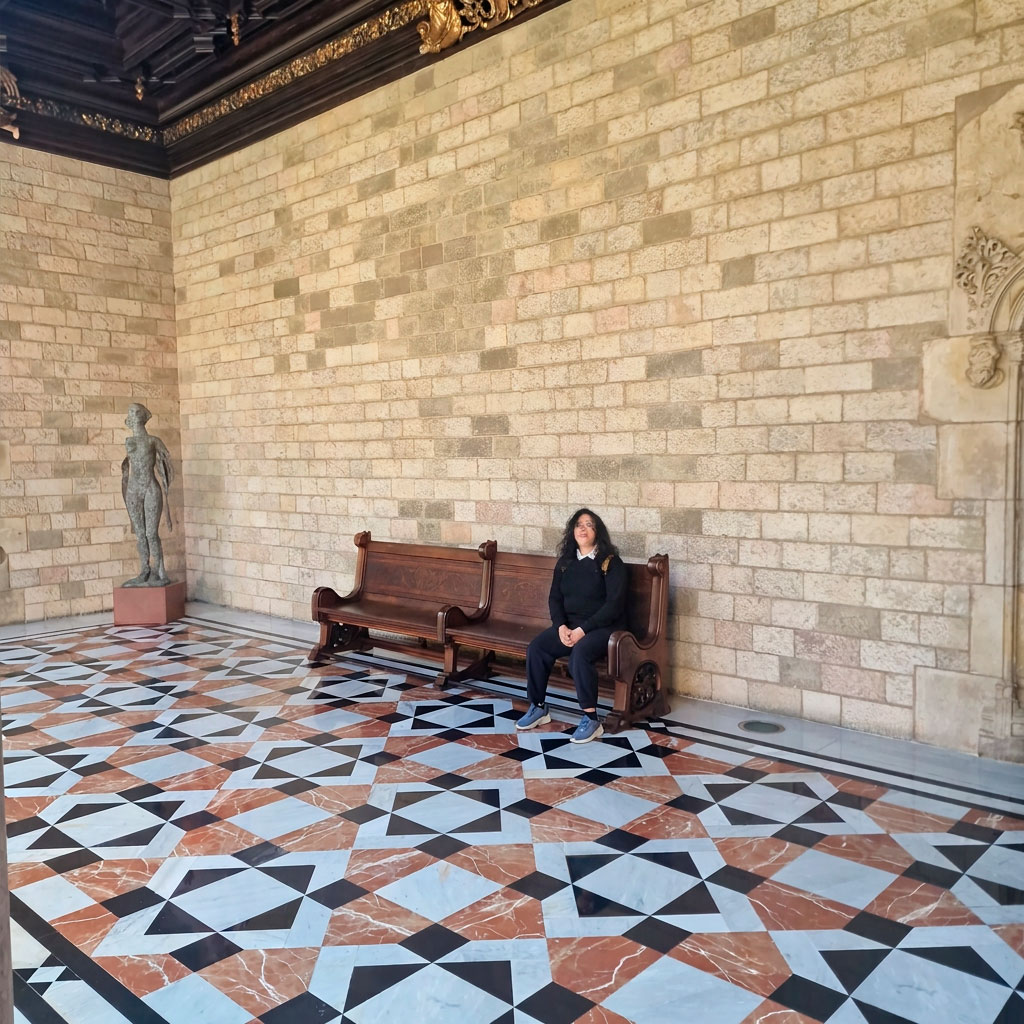
According to some guided tours, part of the columns inside the Palau are said to be nearly 1,900 years old and to come from the region of ancient Troy, in present-day Turkey. It's one of those anecdotes passed from guide to guide; it's best taken as a visitor's curiosity rather than a verified archaeological fact.
Palau de la Generalitat de Catalunya

3. History of the Palau de la Generalitat

The Palau's origins date back to 1289, when the Catalan Corts — considered by many historians to be one of the first parliaments in Europe — formed a standing commission to collect the taxes the Corts granted to the king. This commission, the Diputació del General, eventually needed a permanent home, and in 1400 its representatives purchased a house on Carrer de Sant Honorat, next to the old synagogue of the Call.

Throughout the 15th century, under the direction of architect Marc Safont, that house was transformed into a true Gothic palace. In the 16th century, elements such as the Cambra Daurada (Golden Chamber) and the first Pati dels Tarongers were added, and by the late 16th and early 17th century, with Pere Blai overseeing the works, the Renaissance façade we know today as the main one was built.

During the 20th century, the institution went through different periods: it was reinstated during the Second Republic and dissolved after the Civil War, in 1939. It wasn't until 1977, following Franco's death and Spain's transition to democracy, that the Generalitat was restored. That year, the then president, returning from exile, Josep Tarradellas, spoke from the Palau's main balcony in words that would go down in history: "Catalans, ja sóc aquí!" ("Catalans, I am here at last!").

Key fact: from Berenguer de Cruïlles in 1359 to the present day, more than 130 presidents have led this institution, making the Palau one of the few medieval-origin buildings in Europe that still serves as the seat of government of the very institution that built it.
Palau de la Generalitat de Catalunya

4. What it's used for

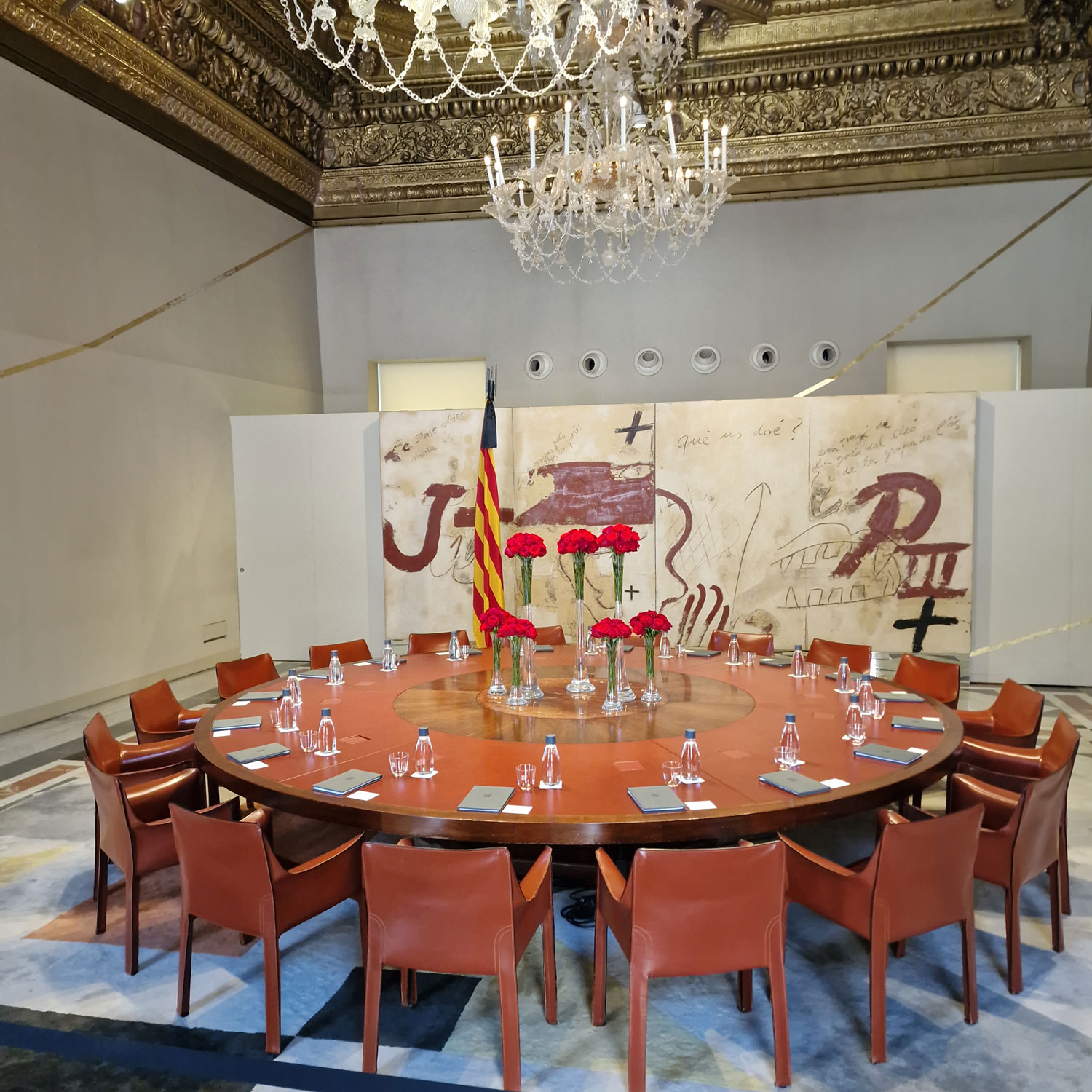
Today the Palau de la Generalitat is, above all, a working building: the official seat of the Government of Catalonia and the Presidency of the Generalitat. This is where the president meets with the government ministers (consellers) to make decisions affecting all of Catalonia, and the Sala Tàpies is where the Executive Council holds its meetings. The Pati dels Tarongers, beyond its ornamental role, is still used for official events and receptions.

5. Celebrations and commemorations

Beyond its daily institutional work, the Palau hosts several public events throughout the year. The best known is the Sant Jordi open-doors day, but there are also special concerts for the Mercè and Sant Esteve festivities, as well as the Barcelona International Carillon Festival, which each July fills the Pati dels Tarongers with open-air music performed by carillonneurs from various countries.

The Palau's current carillon has 49 bronze bells, weighs nearly 4,900 kilos, and was built in the Netherlands, inaugurated in 1976, shortly before the Generalitat was restored. Its largest bell, named "Catalunya," weighs 905 kilos on its own.

The Palau's main balcony, located above the entrance door and presided over by the sculpture of Sant Jordi, is also the customary stage for sporting celebrations. When a Catalan team wins a major title — as has happened on several occasions with FC Barcelona's various sections — tradition has it that the delegation is received institutionally at the Palau and that the players step out onto that same balcony to greet the fans gathered in Plaça de Sant Jaume, before crossing the square to repeat the gesture at the City Hall. It's also common for the Govern to welcome Catalan athletes who have competed at the Olympic or Paralympic Games at the Palau, in recognition ceremonies usually held in the Saló de Sant Jordi.

Curiosity: that same balcony has witnessed very different moments throughout history, from 20th-century political proclamations to, on a more festive note, the sporting celebrations that today draw thousands of fans to Plaça de Sant Jaume.
Palau de la Generalitat de Catalunya

6. When to visit the Palau de la Generalitat

The most popular way to visit is by taking advantage of the Sant Jordi open-doors day, held every April 23rd from 1 pm to 8 pm, with free prior registration and access via Carrer de Sant Sever and Carrer de Sant Honorat. On that day you can tour much of the building — the Government hall, the Chapel of Sant Jordi, the president's office, the Gothic courtyard, or the Pati dels Tarongers — as well as enjoy special carillon recitals at 12 pm and 6 pm.

Outside of Sant Jordi, the Palau also organizes free guided tours on the second and fourth weekends of each month, with prior booking required. And if all you want is to enjoy the carillon, you can hear free recitals from the street Monday through Friday at 12 pm and 6 pm, or attend the concerts held on the first Sunday of each month (except August and September) at noon.

Practical tip: if you're going on Sant Jordi, arrive early or save some time for late afternoon: lines to get in tend to be long around midday, when the square is buzzing with the roses-and-books atmos
Palau de la Generalitat de Catalunya

Frequently asked questions

Can you visit the Palau de la Generalitat at any time of year?

Yes, though access is limited. Since it's a working government building, access is restricted to the guided tours held on the second and fourth weekends of each month, the Sant Jordi open-doors day, and the carillon concerts, all requiring prior registration.

Is the visit free?

Yes, both the monthly guided tours and the Sant Jordi open-doors day, as well as the carillon concerts, are completely free, although in most cases advance registration is required.

How long does a visit to the Palau take?

Official guided tours last around one hour. The Sant Jordi open-doors day allows for a more leisurely visit, since it runs from 1 pm to 8 pm.

What's the difference between the Palau de la Generalitat and Barcelona's City Hall?

Although they face each other across the same square, they are the seats of two different institutions: the Palau de la Generalitat is the seat of the Government of Catalonia, while the building opposite is the seat of the City Hall — that is, Barcelona's municipal government.

Product added to wishlist
Product added to compare.

Looking for a mineral? Write us